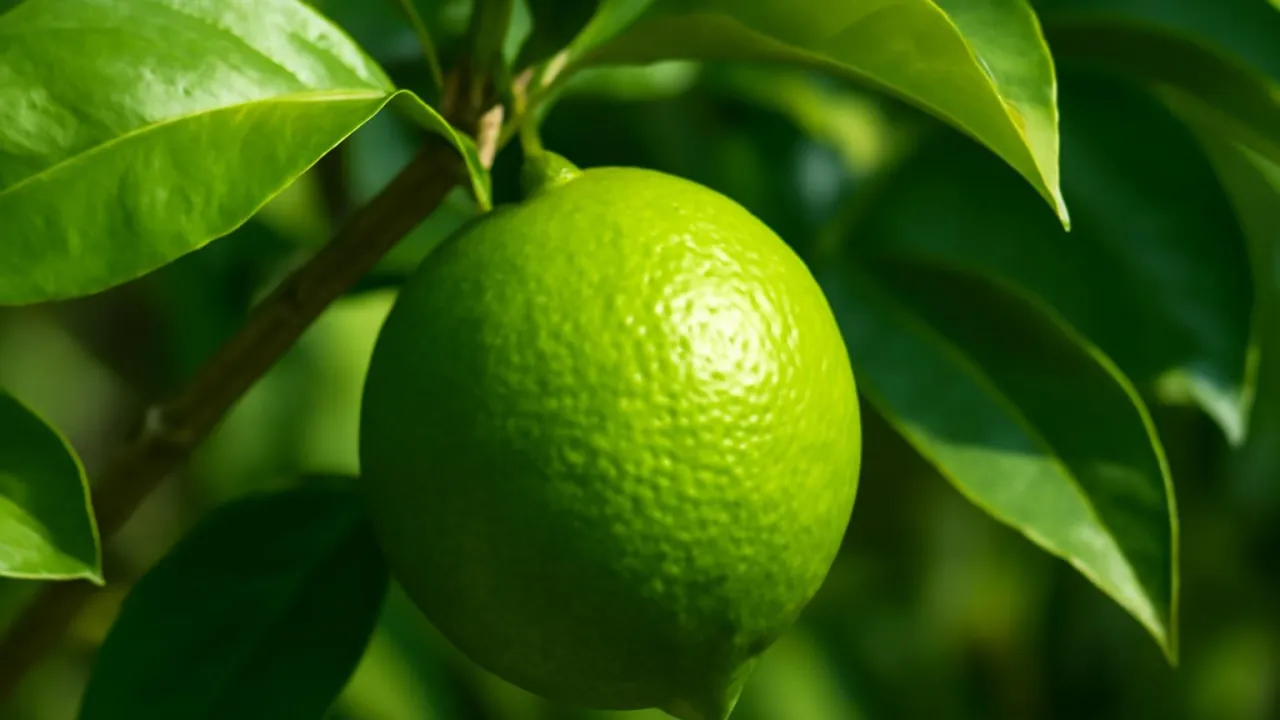
Persian limes are mostly seedless, making them easy to eat and use.
✨ Word Sparks (Grade 2 Glossary)
Tap 🔊 to hear
harvest
To pick fruits when they are ready
ripe
When fruit is ready to eat
climate
The usual weather in a place
🪝
Have you ever tasted a lime that has no seeds inside?
1
What Persian Limes Look Like
Persian limes are bright green and round with smooth skin. They grow on tall trees in warm places. When , they turn a lighter green color. People pick them to use in food and drinks.
2
How They Grow and Live
These limes grow best in sunny, warm with plenty of water. The lime trees need good soil and care to make juicy fruits. Farmers watch the limes carefully until they are ready to . The trees can grow many limes each season.
3
A Special Lime Feature
One cool thing about Persian limes is that they usually have no seeds inside. This makes them easy to use in cooking and drinks. They have a strong sour taste that adds flavor to many dishes. People love their fresh, tangy smell.
The thick skin of Persian limes protects them from pests and keeps juice inside.
✨ Word Sparks (Grade 3 Glossary)
Tap 🔊 to hear
adaptation
A change to help survive better
pollinate
When bees help flowers make fruit
nutrients
Food in soil that plants need
🪝
Did you know Persian limes have a special way to stay juicy and tasty?
1
How Persian Limes Look and Feel
Persian limes are bright green and smooth, which helps protect their juicy insides. Their thick skin acts as a shield against pests and weather changes. The round shape holds lots of sour juice inside. This helps the lime stay fresh longer.
2
Where Persian Limes Grow
These limes grow in tropical and subtropical climates where there is warm sun and enough water. They need rich soil full of to grow strong. The trees adapt well to their environment by shedding leaves during dry seasons. This helps them save water.
3
Why Seedless Limes Are Special
Most Persian limes have no seeds, which is unusual for fruits. This seedless trait is helpful for farmers and cooks because it makes the fruit easier to use. It also means the lime spreads by grafting, not by seeds. This is a special .
4
How Limes Help Other Living Things
Persian limes provide food for many animals and insects, including pollinators like bees. These insects help the flowers so new limes can grow. People also rely on limes for cooking and drinks, showing their important role in the food web.
Because Persian limes are seedless, farmers use grafting to grow new trees with the same traits.
✨ Word Sparks (Grade 4 Glossary)
Tap 🔊 to hear
grafting
Joining parts of two plants to grow one
pollinator
An animal that helps plants make fruit
ecosystem
A community of living things and environment
🪝
How does the Persian lime’s seedless trait affect its growth and farming?
1
Physical Traits and Survival
The Persian lime’s thick, smooth skin helps protect it from insects and harsh weather conditions, which increases its survival chances. Its bright green color signals ripeness to animals that help spread its seeds, although this lime mostly reproduces through . The juicy pulp inside contains acids that deter some predators, aiding in the fruit’s defense.
2
Growing Conditions and Geographic Range
Persian limes thrive in tropical and subtropical climates, especially in regions like Mexico, the United States, and parts of the Mediterranean. These trees require well-drained soil, full sun, and regular watering to produce healthy fruit. Seasonal temperature changes influence flowering and fruiting cycles, making climate a key factor in lime farming success.
3
Ecological Role and Food Web
Persian lime trees provide food and habitat for various insects, birds, and small mammals. such as bees play a crucial role by transferring pollen between flowers, enabling fruit production. Humans harvest these limes for culinary uses, which connects agriculture with natural and supports local economies.
4
Human Impact and Agricultural Practices
Farmers often use to propagate Persian lime trees because the fruit is seedless, ensuring consistent quality and yield. Sustainable farming practices help protect soil health and water resources, which benefits the environment. However, pesticide use can affect , so integrated pest management is important for balanced .
2. What role do pollinators play for Persian limes?
🤯 Mind-Blowing Fact • Grade 5
Persian limes are a hybrid citrus fruit that usually contain no seeds due to their unique genetic makeup.
✨ Word Sparks (Grade 5 Glossary)
Tap 🔊 to hear
hybrid
A plant made by mixing two kinds
citric acid
A sour chemical in citrus fruits
grafting
Joining plant parts to grow new trees
🪝
What makes the Persian lime a unique citrus fruit in science and farming?
1
Taxonomy and Scientific Context
The Persian lime, scientifically named Citrus × latifolia, is a citrus fruit believed to be a cross between Citrus aurantiifolia and Citrus limon. It belongs to the Rutaceae family, which includes other citrus fruits like oranges and lemons. This hybridization results in a seedless fruit with unique physical and chemical properties that distinguish it from other limes.
2
Physiological Mechanics and Growth
Persian lime trees require tropical to subtropical climates with consistent temperatures between 77 and 95 degrees Fahrenheit to thrive. Their thick, glossy green rind protects the fruit from dehydration and pest damage, while the internal juice vesicles store high concentrations of , giving the lime its characteristic sour taste. The trees reproduce mainly through due to their seedless nature.
3
Conservation and Agricultural History
Originally cultivated in Southeast Asia, Persian limes spread globally through trade and agricultural development. Modern farming techniques emphasize to maintain fruit quality and disease resistance. Conservation efforts focus on sustainable water use and minimizing pesticide impact to protect pollinators essential for flower fertilization and crop yield.
4
Ecological and Economic Importance
Persian lime trees contribute to ecosystem biodiversity by supporting pollinators like bees and providing food for various animals. Economically, they are a significant crop in countries such as Mexico and the United States, with annual production measured in millions of tons. Their seedless trait and flavorful juice make them popular in culinary and beverage industries worldwide.
5
Quantitative Comparisons and Interesting Data
A typical Persian lime measures about 2 to 3 inches in diameter and weighs approximately 100 grams. The fruit contains roughly 30 to 40 milliliters of juice, with concentration ranging from 5 to 6 percent. Persian lime trees can produce several hundred fruits per year under optimal conditions, making them highly productive compared to other citrus varieties.