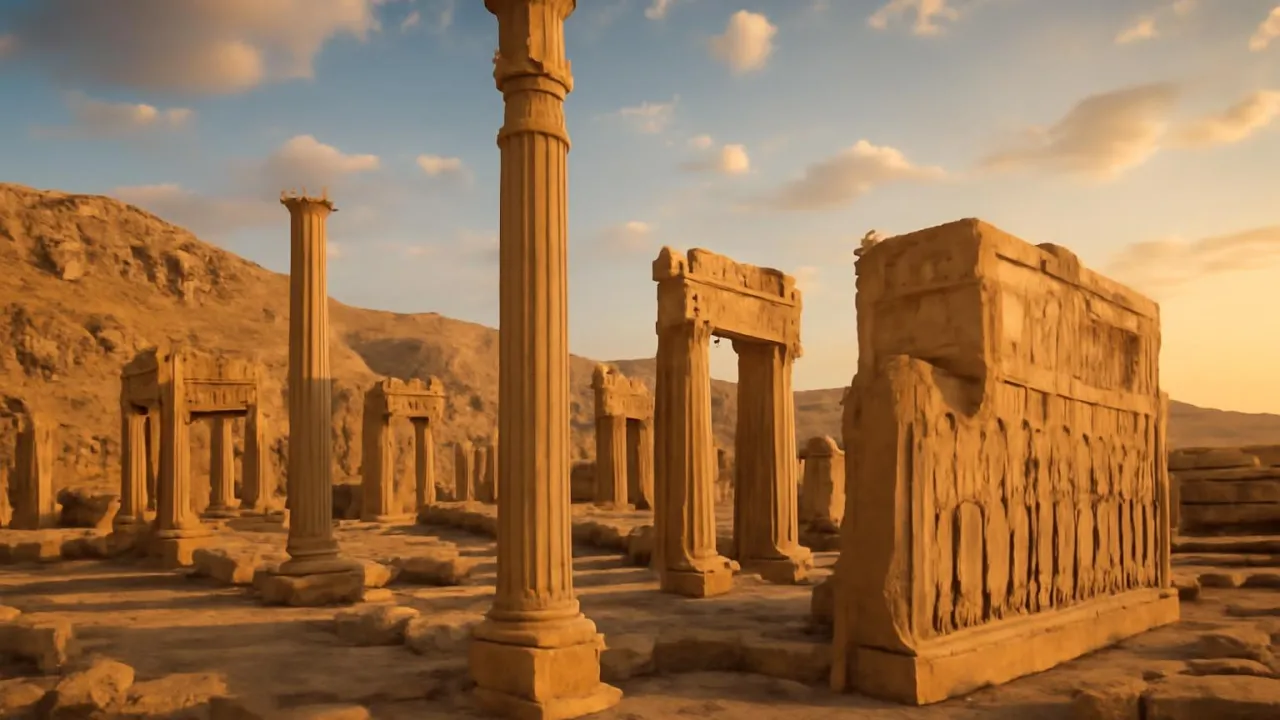
Persepolis was built over 2,500 years ago by Persian kings!
✨ Word Sparks (Grade 2 Glossary)
Tap 🔊 to hear
ancient
Very, very old
empire
A land ruled by kings
relief
A picture raised from stone
🪝
What if you found a city made of stone lions and tall columns?
1
A City of Stone
Persepolis was built long ago with huge stone blocks and tall columns. The steps are wide and smooth, and the sun shines on the broken walls. Visitors can climb the steps and see the city from above.
2
Amazing Carvings
Stone lions and kings are carved into the walls. Each carving tells a story about the people who lived there. Some carvings show parades or gifts for the king.
3
Exploring the Ruins
People visit Persepolis to learn about times and explore the ruins. The columns are very tall, and the wind makes a soft sound through the empty halls. It feels like walking in a secret place.
Some of Persepolis’s columns weigh over 40 tons each!
✨ Word Sparks (Grade 3 Glossary)
Tap 🔊 to hear
relief
A picture carved into stone
erosion
Wearing away by wind or rain
platform
A flat raised area
🪝
Imagine your footsteps echoing where ancient kings once celebrated—what secrets would the stones tell?
1
A Palace Among the Stones
Persepolis rises from the desert plateau, its stone columns reaching toward the sky. Built by the Achaemenid kings, the city was a place of festivals and royal ceremonies. Visitors today walk up grand stairways, passing through gateways decorated with carved mythical animals. The hot sun casts long shadows across the broken halls.
2
Stories in Stone Reliefs
The walls of Persepolis are covered with , which are pictures carved into the stone. These reliefs show people from many lands bringing gifts to the Persian king. You can see lions, bulls, and even flowers carved with amazing detail. Each carving helps historians learn about ancient Persian culture and traditions.
3
Engineering Marvels
The builders of Persepolis used strong limestone and mudbrick to create their grand palaces. Columns were carefully placed to support heavy roofs, showing an understanding of balance and weight. The city’s was built to protect it from floods and . Even after thousands of years, many columns and carvings still stand.
4
Exploring the Ruins Today
People travel from all over the world to visit Persepolis and imagine life in ancient Persia. The ruins are a UNESCO World Heritage site, protected for future generations. Walking among the columns, you can almost hear echoes of ancient music and celebration. Persepolis reminds us how people’s creativity can last through time.
Persepolis’s Apadana Hall once had 72 columns, each nearly 20 meters tall!
✨ Word Sparks (Grade 4 Glossary)
Tap 🔊 to hear
ceremonial
Used for special celebrations
tribute
Gifts for a ruler
lintel
A stone beam over a doorway
🪝
What would it feel like to stand in the shadow of Persepolis’s towering columns, where ancient empires once gathered?
1
The Heart of Ancient Persia
Persepolis was the capital of the Achaemenid Empire, built by King Darius I around 518 BCE. Its location on a broad stone terrace was chosen for its impressive view over the Marvdasht plain. The city’s design reflects Persian power, with grand stairways, massive gateways, and rows of columns rising up to 62 feet high. Every year, people from across the empire gathered here for the New Year festival called Nowruz.
2
Masterpieces in Stone Relief
The stone reliefs at Persepolis are famous for their detail and storytelling. They show delegations from many lands bringing to the Persian king, each group dressed in their own traditional clothing. These reliefs also feature lions, bulls, and mythical creatures, all carved with remarkable skill. Historians study these images to learn about ancient cultures, art styles, and even the plants and animals of the time.
3
Engineering Against Time and Nature
Persepolis’s architects used advanced engineering to protect their city. The entire complex was built on a raised platform to guard against flooding and erosion from seasonal rains. Builders used limestone for columns and walls, while mudbrick was used for less important structures. The precise placement of columns and use of stone allowed the palaces to support heavy roofs and survive earthquakes for centuries.
4
A World Heritage Treasure
Today, Persepolis is a UNESCO World Heritage site, recognized for its global cultural importance. Tourists and scholars visit from around the world to study its ruins and learn about ancient Persia. The site stands as a reminder of the creativity and engineering skills of early civilizations. Even in ruins, Persepolis inspires awe and curiosity in all who walk its ancient paths.
1. Why did people from many lands come to Persepolis?
2. How did Persepolis’s platform help protect the city?
🤯 Mind-Blowing Fact • Grade 5
Persepolis’s reliefs show 23 different nations bringing gifts to the Persian king!
✨ Word Sparks (Grade 5 Glossary)
Tap 🔊 to hear
Achaemenid
The first Persian royal dynasty
drainage
A way to move water away
inscription
Words carved into stone
🪝
If you could travel back to a royal festival at Persepolis, what sights, sounds, and stories would surround you?
1
The Ceremonial Heart of an Empire
Persepolis, founded by Darius I in 518 BCE, served as the ceremonial capital of the vast Empire. Its location in the Marvdasht plain was carefully selected for both strategic defense and breathtaking views of the surrounding mountains. The city’s design features a massive stone terrace covering approximately 125,000 square meters, with grand staircases and monumental gateways that once welcomed delegations from across the empire. Each New Year, known as Nowruz, Persepolis became the stage for elaborate celebrations attended by nobles, soldiers, and visitors from dozens of nations.
2
Architectural and Engineering Marvels
The builders of Persepolis demonstrated advanced engineering skills by constructing a raised platform to prevent flood damage and erosion from seasonal rains. Seventy-two towering columns, some reaching 62 feet (19 meters) in height, supported the Apadana Hall’s immense roof. The use of precisely carved limestone blocks and stone lintels allowed the palaces to withstand earthquakes and the passage of centuries. Intricate systems channeled rainwater away from the structures, preserving the city’s foundations and preventing water damage.
3
Stories Carved in Stone Reliefs
Persepolis is world-renowned for its stone reliefs, which vividly depict scenes of tribute, ceremony, and imperial power. These reliefs show delegations from 23 different nations, each group identified by their unique clothing, hairstyles, and gifts. Mythical creatures such as winged bulls and lions stand guard at gateways, symbolizing strength and protection. The artistic style blends influences from Egypt, Mesopotamia, and Greece, reflecting the empire’s vast reach and cultural diversity. Scholars analyze these carvings to learn about ancient diplomacy, art, and daily life.
4
Preservation and Global Significance
Despite being partially destroyed by fire and centuries of erosion, Persepolis remains a UNESCO World Heritage site and a symbol of ancient Persian ingenuity. Archaeologists continue to study its ruins, uncovering artifacts and that reveal details about the empire’s administration and ceremonies. The site attracts thousands of visitors annually, inspiring awe with its monumental scale and artistic achievements. Persepolis stands as a testament to the enduring legacy of early civilizations and their ability to shape history.
5
Legacy and Lessons from Persepolis
Modern engineers and historians draw inspiration from Persepolis’s innovative construction techniques and cultural inclusiveness. The city’s raised platform, advanced , and earthquake-resistant design demonstrate early mastery of civil engineering principles. Persepolis’s reliefs remind us of the importance of cultural exchange and respect among diverse peoples. As we study its stones and stories, Persepolis challenges us to preserve our own world heritage for future generations. Its silent columns continue to spark curiosity and wonder in all who visit or learn about this ancient marvel.