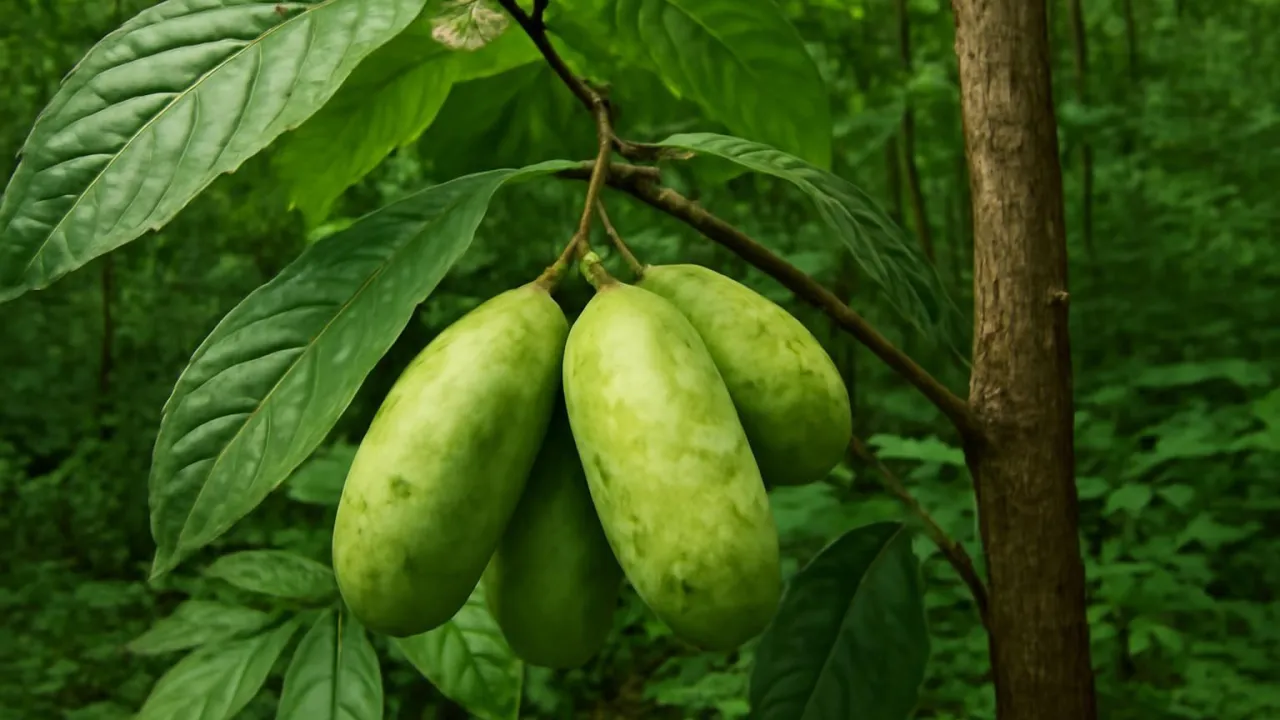
Pawpaw is the largest fruit native to North America and tastes like tropical fruits!
✨ Word Sparks (Grade 2 Glossary)
Tap 🔊 to hear
ripe
Ready to eat and tastes sweet
forest
A place with many trees and animals
seeds
Small parts that grow into new plants
🪝
Have you ever smelled a fruit that smells like a banana and mango?
1
What Pawpaw Looks Like
The pawpaw fruit is green and turns yellow when . It grows on small trees in . The fruit feels soft and smells sweet like banana and mango.
2
Where Pawpaw Grows
Pawpaw trees grow in warm, moist in eastern North America. They need sunlight and water to grow well. Animals like birds help spread the far away.
3
Why Pawpaw Is Special
Pawpaw is the largest edible fruit native to North America. People and animals eat it because it tastes sweet and creamy. It is a fun fruit to discover and try.
Pawpaw’s large fruit and unique smell help it survive by attracting animals for seed dispersal.
✨ Word Sparks (Grade 3 Glossary)
Tap 🔊 to hear
pollination
When pollen moves to help plants make seeds
dispersal
Spreading seeds to new places to grow
understory
Smaller trees that grow under big trees
🪝
Did you know the pawpaw fruit is the largest edible fruit native to North America?
1
Pawpaw’s Appearance and Smell
The pawpaw fruit is green when young and turns yellow as it ripens. It has a soft texture and a sweet aroma like banana and mango. This smell helps attract animals to eat the fruit. The fruit’s skin is thin but protects the soft inside.
2
Where Pawpaw Grows Naturally
Pawpaw trees grow mainly in eastern North American forests. They prefer moist, fertile soil and partial sunlight. These trees are part of the , growing beneath taller trees. Their leaves help the tree absorb sunlight for nutrients.
3
How Pawpaw Survives and Spreads
Animals such as birds and mammals eat the fruit and spread its seeds through droppings. This seed helps the pawpaw grow in new places. The tree’s large leaves help shade the soil to keep moisture. This adaptation helps the tree survive hot summers.
4
Pawpaw’s Role in the Ecosystem
Pawpaw fruits provide food for many animals, including squirrels and raccoons. The tree supports by flies attracted to its flowers. This pollination helps produce more fruit each year. Pawpaw trees contribute to forest diversity and health.
Pawpaw’s survival depends on animal seed dispersal and its ability to grow in shaded forest understories.
✨ Word Sparks (Grade 4 Glossary)
Tap 🔊 to hear
biodiversity
Many different plants and animals living together
pollination
Moving pollen to help plants make seeds
habitat
The natural home where plants and animals live
🪝
Have you ever wondered how a fruit native to North America smells like tropical fruits?
1
Pawpaw’s Unique Appearance and Growth
Pawpaw trees grow 15 to 30 feet tall and thrive in moist, fertile soils of eastern North America. The fruit starts green and ripens to a yellow color with a soft, custard-like texture that attracts many animals. The tree’s large leaves capture sunlight efficiently, helping it survive in the forest understory. This growth pattern allows pawpaw to thrive beneath taller canopy trees.
2
Ecosystem Role and Seed Dispersal
Pawpaw fruits serve as an important food source for wildlife including raccoons, squirrels, and birds that disperse seeds through their droppings. This mutual relationship helps pawpaw trees spread across forests and maintain . The flowers of pawpaw attract flies for , ensuring fruit production each year. These ecological roles support a balanced forest ecosystem.
3
Human Uses and Conservation
Historically, Native Americans and early settlers valued pawpaw fruit for its sweet flavor and nutrition. Today, pawpaw is gaining popularity as a unique fruit in local markets and home gardens. However, loss and forest fragmentation threaten wild pawpaw populations. Conservation efforts focus on protecting forest habitats and encouraging pawpaw cultivation.
4
Geographic Distribution and Adaptations
Pawpaw naturally grows from southern Ontario to Florida and west to Texas, preferring temperate climates. Its large leaves shade the soil, reducing evaporation and conserving moisture during hot summers. The tree’s ability to grow in shaded understory environments is an important adaptation for survival. These traits allow pawpaw to occupy a unique niche in North American forests.
Pawpaw is the largest native North American fruit, weighing up to one pound with a tropical scent.
✨ Word Sparks (Grade 5 Glossary)
Tap 🔊 to hear
deciduous
Trees that lose leaves in fall
pollination
Transfer of pollen to make seeds
biodiversity
Variety of life in an ecosystem
🪝
Did you know the pawpaw is the largest edible fruit native to North America with a tropical scent?
1
Scientific Classification and Physical Traits
The pawpaw, scientifically named Asimina triloba, belongs to the Annonaceae family, which includes tropical flowering plants. It is a tree growing between 15 and 30 feet tall, with large, oblong leaves that efficiently capture sunlight in forest understories. The fruit is the largest edible native fruit in North America, weighing up to one pound and measuring 3 to 6 inches long. Its custard-like pulp emits a tropical aroma reminiscent of banana, mango, and melon.
2
Physiological Adaptations and Growth
Pawpaw trees thrive in temperate forests, preferring moist, well-drained soils and partial shade environments. Their large leaves reduce soil evaporation by shading the ground, conserving moisture during hot summers. The tree’s flowers emit a faint odor that attracts carrion flies, which are the primary pollinators ensuring successful fruit set. Seed dispersal relies on mammals like raccoons and opossums that consume the fruit and deposit seeds in new locations.
3
Ecological Role and Conservation Status
Pawpaw trees contribute to forest by providing food for various mammals and birds, playing a vital role in local food webs. The species is considered a food source for the endangered zebra swallowtail butterfly, which uses pawpaw as a host plant. Though not currently endangered, pawpaw populations face threats from habitat fragmentation and invasive species. Conservation efforts include habitat protection and promoting cultivation in native ranges.
4
Historical and Cultural Significance
Native American tribes and early European settlers valued pawpaw fruit for its nutritional content and sweet flavor. Historical records show pawpaw was used as a staple food and in traditional medicine. Today, pawpaw cultivation is expanding in North America, with festivals celebrating the fruit’s unique taste and heritage. Research into pawpaw’s phytochemicals explores potential health benefits.
5
Quantitative Comparisons and Interesting Measurements
Pawpaw fruits can weigh up to one pound (about 450 grams), making them the largest native fruit in North America, larger than blueberries or blackberries. The tree grows at a moderate rate, reaching full height in 10 to 15 years. Pawpaw trees tolerate temperatures from -20°F (-29°C) in winter to 95°F (35°C) in summer. Their flowers bloom in early spring, before leaves fully develop, optimizing efficiency.