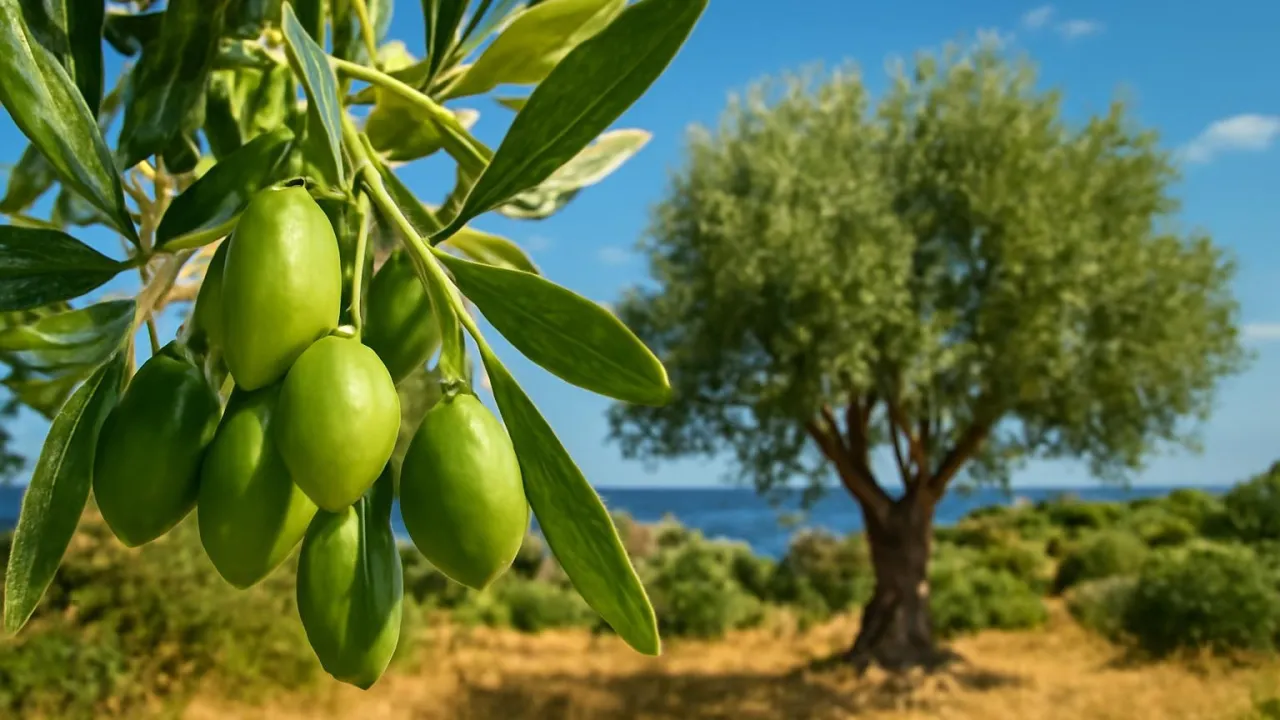
Olive trees can live and produce fruit for over 1,000 years!
✨ Word Sparks (Grade 2 Glossary)
Tap 🔊 to hear
pit
The hard seed inside a fruit
cure
To make food safe and tasty
antioxidant
A natural helper that keeps you healthy
🪝
Have you ever tasted the oily fruit called an olive?
1
Olives Grow on Tall Trees
Olives grow on tall trees that have gray bark and shiny green leaves. These trees need full sun and moderate water to grow well. The fruit starts green and turns black when it ripens. People pick olives to eat or to make oil.
2
Olives Are Small but Special
Olives are small fruits about one inch long with a hard inside. They have a smooth skin that can be green or black. The taste can be bitter at first but becomes tasty after curing. Olive oil made from them is healthy and used in many foods.
3
Olives Help People Stay Healthy
Olive oil is rich in healthy fats and that protect the body. Many people use olive oil for cooking and skin care. Olive trees can live for hundreds of years in warm places. They are important plants in the Mediterranean region.
Some olive trees are over 2,000 years old and still produce fruit!
✨ Word Sparks (Grade 3 Glossary)
Tap 🔊 to hear
pit
Hard seed inside a fruit
antioxidant
A natural substance that protects cells
ecosystem
A community of plants and animals living together
🪝
Did you know olives have a special pit inside that helps them grow?
1
Olive Trees and Their Habitat
Olive trees grow best in warm Mediterranean climates with dry summers and mild winters. Their gray bark and leathery leaves help them survive hot weather. These trees can reach heights of up to 30 feet. They provide shelter for many animals like birds and insects.
2
Olive Fruit and Its Growth
Olives start as small green fruits that slowly ripen and turn black. Inside each olive is a hard that contains the seed for new trees. The fruit’s skin protects it from drying out in the sun. Farmers harvest olives by hand or with machines during fall.
3
Olives and Their Unique Features
Olives have a bitter taste when fresh because of natural chemicals. People cure olives to remove bitterness and make them edible. Olive oil, pressed from the fruit, contains that help protect cells from damage. This oil is a key part of healthy diets worldwide.
4
Olives’ Role in Ecosystems and Humans
Olive trees help prevent soil erosion with their deep roots. They also support food webs by providing food for insects and birds. Humans have cultivated olives for thousands of years, shaping Mediterranean culture and cuisine. Olive farming impacts economies and environments globally.
Ancient olive trees can live more than 3,000 years and still produce fruit annually!
✨ Word Sparks (Grade 4 Glossary)
Tap 🔊 to hear
adaptation
A change that helps a plant or animal survive
soil erosion
When wind or water washes soil away
cultivate
To grow plants for food or use
🪝
How do olive trees survive harsh Mediterranean summers and still feed many creatures?
1
Olive Tree Adaptations and Habitat
Olive trees thrive in Mediterranean climates where summers are hot and dry, while winters remain mild and wet. Their thick, leathery leaves reduce water loss through evaporation, helping them survive drought conditions. The gray bark reflects sunlight, protecting the tree from heat damage. These allow olive trees to live for centuries in challenging environments.
2
Olive Fruit Development and Harvesting
Olives begin as small green fruits that gradually ripen to dark purple or black, signaling readiness for harvest. The fruit’s tough skin and bitter compounds protect it from predators and harsh weather. Farmers harvest olives by hand or mechanical shakers to collect the ripe fruit efficiently. After harvesting, olives are cured or pressed to produce the popular olive oil.
3
Ecological and Human Importance
Olive trees play a vital role in preventing with their extensive root systems stabilizing the ground. They provide food and habitat for various insects, birds, and mammals, supporting local food webs. Humans have cultivated olives for over 7,000 years, deeply influencing Mediterranean culture, cuisine, and agriculture. Olive farming also contributes significantly to regional economies and global trade.
4
Global Distribution and Environmental Impact
While native to the Mediterranean basin, olive cultivation has spread worldwide to regions with similar climates, such as California and Australia. Large-scale olive farming can impact water resources and soil health, requiring sustainable practices to protect ecosystems. Efforts to conserve ancient olive groves help preserve biodiversity and cultural heritage. Olive oil remains a staple in healthy diets around the globe.
1. What helps olive trees reduce water loss in summer?
2. Why is olive farming important to humans?
🤯 Mind-Blowing Fact • Grade 5
The oldest known olive tree is estimated to be over 3,000 years old and still produces fruit today!
✨ Word Sparks (Grade 5 Glossary)
Tap 🔊 to hear
dioecious
Trees with separate male and female flowers
transpiration
Water loss from leaves into the air
polyphenol
A natural antioxidant found in plants
🪝
What makes the olive tree’s biology and history so vital to Mediterranean life and global health?
1
Scientific Classification and Botanical Features
The olive tree, Olea europaea, belongs to the Oleaceae family, which includes jasmine and ash trees. It is an evergreen tree characterized by its silvery-green, leathery leaves and small, oval fruits containing a single hard pit. The tree’s flowers are tiny and white, blooming in spring before fruit development. Olive trees are , meaning some trees produce only male or female flowers, requiring cross-pollination.
2
Physiological Adaptations and Growth
Olive trees have deep root systems that access underground water, enabling survival during prolonged droughts common in Mediterranean climates. Their leaves have a thick cuticle and sunken stomata to minimize water loss through . The fruit develops over six to eight months, changing color from green to black as chlorophyll breaks down and anthocyanins accumulate. These physiological traits support long lifespans exceeding a thousand years.
3
Historical Cultivation and Cultural Significance
Humans have cultivated olives for over 7,000 years, with archaeological evidence from ancient Greece and the Levant showing olive oil’s use in cooking, medicine, and rituals. Olive trees symbolize peace and wisdom in many cultures and are central to Mediterranean diets known for health benefits. Ancient groves still exist, some exceeding 3,000 years old, reflecting the tree’s enduring importance.
4
Ecological Role and Environmental Challenges
Olive trees contribute to ecosystem stability by preventing soil erosion with their extensive root networks and providing habitat for diverse organisms. However, intensive olive farming can lead to soil degradation, water depletion, and biodiversity loss if not managed sustainably. Modern agricultural practices increasingly focus on organic cultivation and water conservation to balance production with environmental health.
5
Quantitative Comparisons and Nutritional Value
Olive fruits typically measure 1 to 2.5 centimeters in length and weigh between 3 to 5 grams each. Olive oil extracted from these fruits contains approximately 70 to 80 percent monounsaturated fats, known to reduce heart disease risk. The oil’s antioxidant compounds, such as , vary based on harvest time and processing. Olive trees can grow up to 30 feet tall and withstand temperatures from -10 to 40 degrees Celsius.