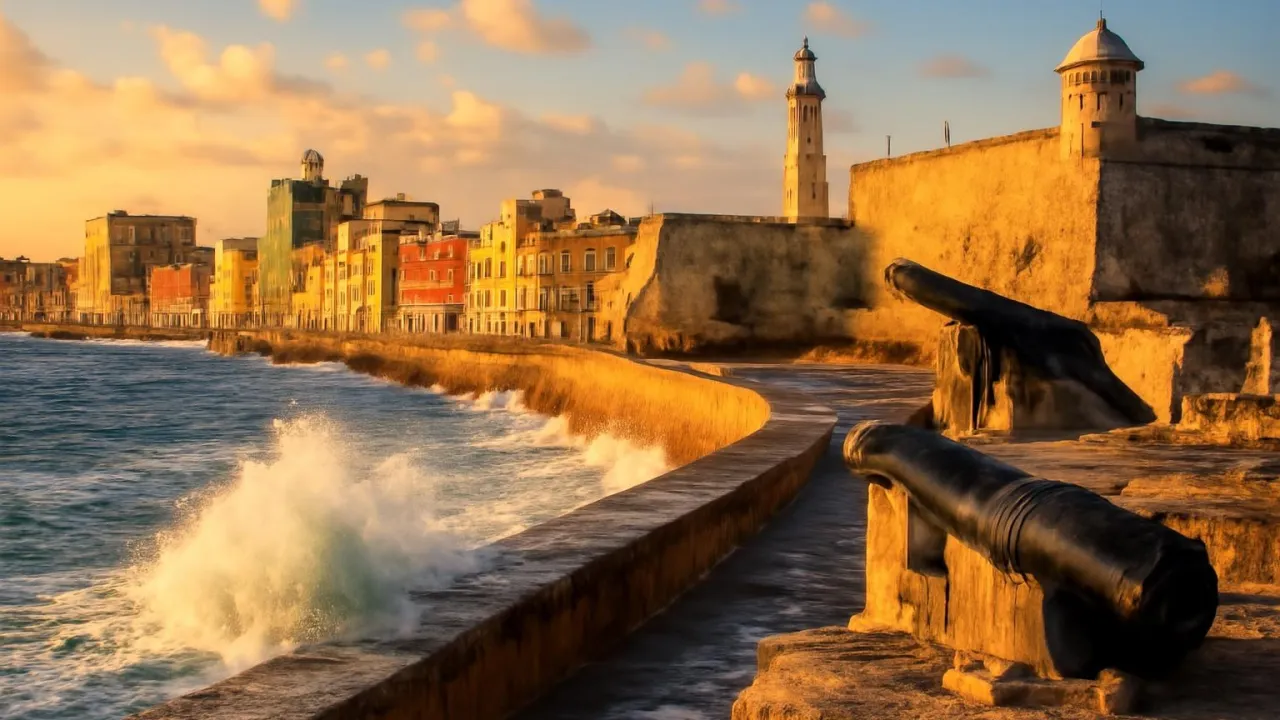
What if you walked beside a giant wall by the sea?
1
The Long Seawall
The Malecón is a long stone wall by the water. Waves crash loudly against the wall every day. People like to walk and watch the blue sea. The wall helps keep the city safe from .
2
Forts with Cannons
Old stone forts stand tall near the Malecón. Long ago, big cannons protected Havana from and enemies. Today, you can visit the forts and see the cannons. The forts tell stories about Havana’s past.
3
A Colorful Place
Families and friends visit the Malecón to relax and play. They see bright houses and watch the sunset over the water. The Malecón is a favorite place for music, fun, and memories.
Morro Castle’s lighthouse still shines to guide ships at night!
✨ Word Sparks (Grade 3 Glossary)
Tap 🔊 to hear
limestone
A strong rock used for building
vibration
A shaking or trembling feeling
harbor
A safe place for ships
🪝
Imagine hearing the echo of waves and old cannons by the sea wall!
1
Guarding the City
The Malecón is a famous seawall stretching along Havana’s coast. It was built to protect the city from strong waves and storms. Behind the wall, three huge stone fortresses stand guard over the . These forts once watched for pirates and enemy ships.
2
Stone, Sound, and Strength
The forts are made from thick blocks. When waves crash, you can hear a deep through the stones. Cannons once created loud echoes across the water. The forts’ arches and towers made them strong against attacks.
3
History in Every Step
The oldest fort, Castillo de la Real Fuerza, was finished in the 1570s. Morro Castle and La Cabaña Fortress followed in the 1600s and 1700s. These buildings show how people used engineering to defend their city. Today, you can walk on the same stones as soldiers from long ago.
4
A Place for Everyone
Now, the Malecón is a lively place for families and friends. People fish, play music, and watch the sunset over the Caribbean Sea. The colorful houses and old forts make Havana’s coast unique. Visitors come from all over the world to explore this special landmark.
La Cabaña Fortress is one of the largest colonial fortresses in the Americas!
✨ Word Sparks (Grade 4 Glossary)
Tap 🔊 to hear
erosion
Wearing away by wind or water
rampart
A high wall for defense
UNESCO
A group that protects world treasures
🪝
What secrets do the thick stone walls of Havana’s coast hide from centuries past?
1
A Seawall Against the Sea
Havana’s Malecón is a massive seawall built along the city’s northern shore, stretching seven kilometers beside the Caribbean Sea. Designed to defend against powerful waves and frequent tropical storms, its thick stone construction has protected Havana for generations. The wall also shields the city from flooding and caused by the relentless ocean. Today, it serves as a gathering place for locals and visitors to enjoy the ocean breeze.
2
Fortresses of Stone and Strategy
Three major colonial fortresses—Castillo de la Real Fuerza, Castillo del Morro, and La Cabaña—stand watch over Havana’s harbor. Built between the 16th and 18th centuries, these forts used advanced engineering for their time, including thick limestone walls, high towers, and arched entryways. Cannons lined their , ready to defend against pirates and enemy navies. Their clever designs made them nearly impossible to capture.
3
Engineering and Endurance
The forts’ strength comes from their stone construction and clever use of arches, which distribute weight and resist impact. The Malecón’s wall was engineered to absorb the vibration of crashing waves, protecting the city’s foundations. Over centuries, these structures have survived hurricanes, battles, and the test of time, showing the power of good engineering. Today, the lighthouse at Morro Castle still guides ships safely into Havana’s harbor.
4
Culture, Color, and Community
The Malecón and its forts are more than just defenses—they are symbols of Havana’s spirit. Colorful houses, lively music, and friendly gatherings fill the area every day. People come to fish, dance, and watch the brilliant sunsets over the sea. This historic coastline is now a World Heritage site, celebrated for its beauty, history, and the stories it continues to tell.
1. How does the Malecón protect Havana from storms?
2. What makes the forts hard to capture?
🤯 Mind-Blowing Fact • Grade 5
Castillo de la Real Fuerza is the oldest stone fort in the Americas, completed in 1577!
✨ Word Sparks (Grade 5 Glossary)
Tap 🔊 to hear
bastion
A projecting part of a fort for defense
resonance
How sound or vibration travels through something
promenade
A walkway for strolling beside the sea
🪝
If you stood atop Havana’s ancient seawall, could you imagine centuries of storms, battles, and celebrations echoing across the Caribbean?
1
A Coastal Barrier Through Time
Stretching for nearly seven kilometers along Havana’s northern waterfront, the Malecón is both a vital seawall and a vibrant social hub. Constructed in stages from 1901 to 1952 atop earlier colonial foundations, its robust stonework was engineered to withstand the relentless force of Caribbean waves and seasonal hurricanes. The wall’s design uses thick limestone blocks and a sloping profile to dissipate wave energy, minimizing erosion and protecting the city’s historic core. Over the decades, the Malecón has become a symbol of resilience and community life in Havana.
2
Fortresses Forged for Defense
Guarding the harbor are three monumental colonial fortresses: Castillo de la Real Fuerza (1577), Castillo del Morro (completed 1630), and the vast Fortaleza de San Carlos de la Cabaña (1774). Built with quarried limestone and coral, these fortifications feature massive ramparts, deep moats, and high watchtowers designed to repel pirates and invading fleets. Their strategic placement and interconnected lines of fire made Havana one of the best-defended ports in the Americas during the colonial era. Today, visitors can explore their labyrinthine tunnels, echoing chambers, and panoramic battlements.
3
Architectural Ingenuity and Endurance
The forts’ engineering relied on principles of weight distribution, absorption, and defensive geometry. Arched ceilings and thick walls helped dissipate vibrations from both cannon fire and crashing waves, while allowed defenders to cover every approach. The Malecón’s seawall was designed to absorb and redirect wave energy, reducing the impact on the city’s infrastructure. These structures have survived centuries of hurricanes, sieges, and environmental change thanks to their advanced design and careful maintenance.
4
Cultural Heartbeat of Havana
Beyond their military purpose, the Malecón and its fortresses have become central to Havana’s cultural identity. The area is famous for its pastel-colored buildings, lively street music, and nightly gatherings where families, artists, and fishermen mingle. The forts now house museums, art exhibits, and festivals that celebrate Cuba’s rich history and creativity. The Malecón’s broad offers sweeping views of the Caribbean, making it a favorite spot for both locals and tourists.
5
A Living World Heritage Site
Designated a UNESCO World Heritage site in 1982, Old Havana’s coastal defenses are recognized for their architectural innovation and historical significance. The Malecón and its fortresses represent a fusion of Spanish colonial engineering and Cuban cultural traditions. Their preservation is a testament to the ingenuity of past builders and the enduring spirit of the Havana community. As the sun sets, the golden light reflects off ancient stones, reminding visitors of the countless stories held within these walls.