Notre-Dame’s rose window is as wide as a school bus is long!
✨ Word Sparks (Grade 2 Glossary)
Tap 🔊 to hear
stained glass
Colored glass used in windows
arch
A curved shape over a doorway
echo
A sound that bounces back
🪝
What if you walked under giant stone arches?
1
A Place of Stone and Light
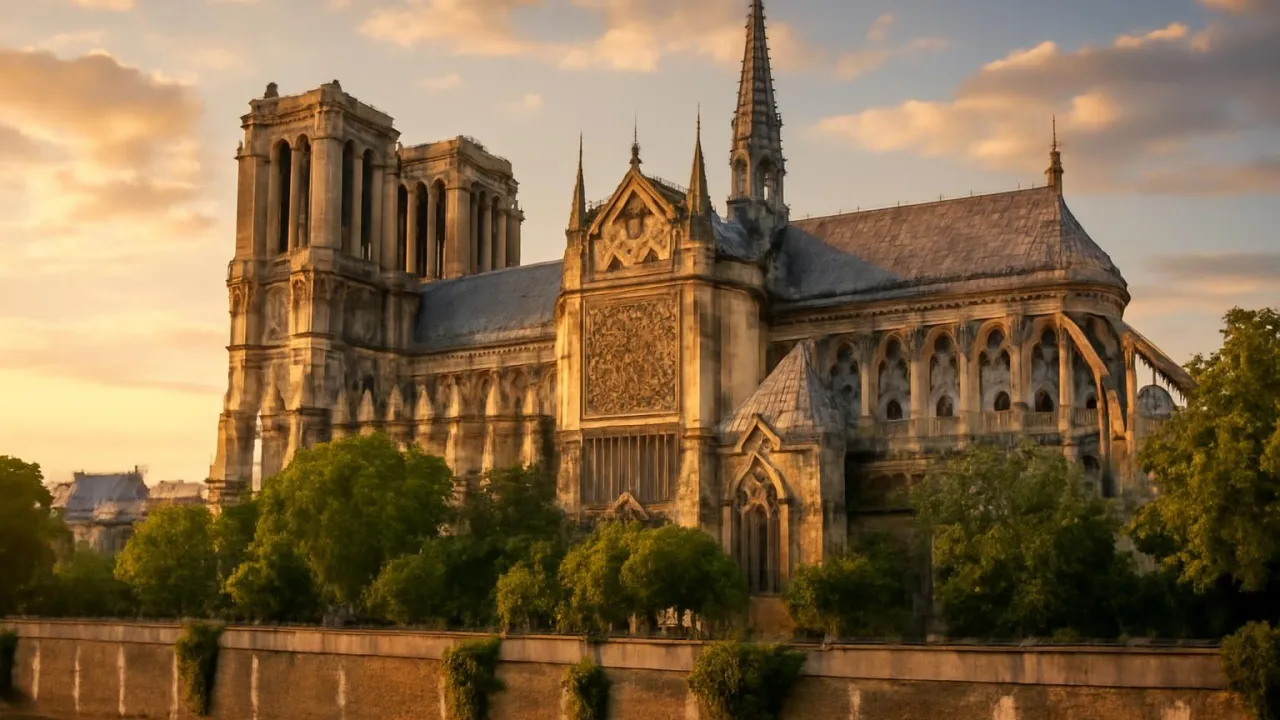
Notre-Dame stands tall on an island in Paris, France. Its stone walls and towers reach high above the city. Many people visit to see its beauty and history. The building looks like a castle with colorful glass.
2
Windows That Tell Stories
The cathedral’s windows show bright reds and blues. Sunlight shines through, making patterns on the floor. Each window has pictures that tell old stories. People look up and see shapes like flowers and stars.
3
Bells Ring and Songs Fill the Air
Huge bells hang in the towers and ring for special days. Inside, voices sing and music all around. The sound fills the big stone rooms with joy. Visitors feel amazed by the echoing songs and bells.
Notre-Dame’s largest bell, Emmanuel, has rung for French kings and famous events for centuries.
✨ Word Sparks (Grade 3 Glossary)
Tap 🔊 to hear
buttress
A support that holds up walls
acoustic
How sound moves in a space
spire
A tall, pointed tower top
🪝
What would it feel like to stand beneath Notre-Dame’s soaring arches?
1
A Marvel in the Heart of Paris
Notre-Dame Cathedral rises above the Seine River on a small island in Paris. Its two massive towers and tall make it visible from far away. Built during the Middle Ages, it took almost 200 years to finish. Visitors from around the world come to admire its beauty and history.
2
Flying Buttresses and Stone Arches
The cathedral’s famous flying support its heavy stone walls. These curved supports help the building stay strong and tall. Inside, pointed arches stretch high above, making the space feel open and bright. This engineering lets sunlight pour through the stained glass windows.
3
Stained Glass and Rose Windows
Notre-Dame’s stained glass windows are made of colored glass pieces held by lead. The rose windows are giant circles filled with flower-like patterns. Sunlight shining through creates a rainbow of colors on the floor. These windows tell stories from history and religion using pictures and symbols.
4
Echoes of Bells and Music
Huge bells hang in the towers and ring with deep, loud vibrations. When choirs sing inside, the sound echoes off the stone walls. The cathedral’s make music sound rich and full. People say the echoes and light make Notre-Dame feel magical.
Notre-Dame’s rose windows each contain over 10,000 pieces of colored glass.
✨ Word Sparks (Grade 4 Glossary)
Tap 🔊 to hear
vault
A curved ceiling made of stone
vibration
A shaking that makes sound
Gothic
A style with tall arches and windows
🪝
Imagine the thunderous echo when Notre-Dame’s bells ring across Paris—how do its walls and windows shape the sound?
1
A Masterpiece of Medieval Engineering
Notre-Dame Cathedral stands on the Île de la Cité, a small island in the Seine River, and is considered a masterpiece of architecture. Construction began in 1163 and continued for nearly two centuries, involving thousands of skilled workers. Its twin towers, tall spire, and flying buttresses became models for cathedrals across Europe. The cathedral’s size and beauty have made it a symbol of Paris for hundreds of years.
2
How Flying Buttresses Work
The famous flying buttresses are arched supports that transfer the roof’s heavy weight away from the walls. This engineering innovation allowed builders to create thinner walls and install enormous stained glass windows. The pointed arches and ribbed inside help distribute the weight evenly, making the cathedral both strong and graceful. These features let sunlight flood the interior, filling it with colorful light.
3
Stained Glass: Stories in Color
Notre-Dame’s stained glass windows, especially the three rose windows, are masterpieces of medieval art. Each window is made of hundreds of colored glass pieces joined by lead strips, forming patterns and pictures. Sunlight passing through these windows creates dazzling colors and moving patterns on the stone floors. The windows tell religious and historical stories, making the cathedral a place of both beauty and learning.
4
Sound and Celebration
The cathedral’s acoustics are shaped by its stone arches and high ceilings, which make music and singing echo beautifully. Notre-Dame’s largest bell, Emmanuel, weighs more than 13 tons and has rung for important events in French history. When choirs sing or bells ring, the fill the cathedral with sound, creating an unforgettable experience. These echoes have inspired visitors and musicians for centuries.
1. How do flying buttresses help Notre-Dame’s design?
2. What makes Notre-Dame’s acoustics special?
🤯 Mind-Blowing Fact • Grade 5
Notre-Dame’s grand organ has over 8,000 pipes and five keyboards, making it one of the largest in the world.
✨ Word Sparks (Grade 5 Glossary)
Tap 🔊 to hear
resonance
When sound vibrates and lasts longer
restoration
Fixing something to make it strong again
heritage
Important history passed down to us
🪝
What secrets of light, sound, and stone does Notre-Dame reveal to those who explore its soaring halls?
1
A Triumph of Gothic Innovation
Notre-Dame Cathedral, rising from the Île de la Cité in central Paris, is a crowning achievement of Gothic architecture and medieval engineering. Construction began in 1163 under Bishop Maurice de Sully and continued for nearly 200 years, involving thousands of craftsmen, masons, and artists. Its twin towers reach 226 feet (69 meters), while the nave stretches 420 feet (128 meters) in length, accommodating over 6,000 people. Notre-Dame’s design set new standards for light, height, and artistry in cathedrals throughout Europe.
2
Engineering Marvels: The Physics of Arches and Buttresses
Notre-Dame’s structural strength relies on pointed arches, ribbed vaults, and the revolutionary use of flying buttresses. These external stone supports transfer the immense weight of the vaulted ceilings and roof away from the delicate walls, channeling force into the ground. This allowed medieval builders to create thinner walls and install vast stained glass windows without risking collapse. The cathedral’s ribbed vaults distribute loads evenly, while the pointed arch shape reduces outward pressure, combining beauty with advanced engineering.
3
Stained Glass Masterpieces: Art and Optics
The cathedral’s three rose windows—each over 30 feet (9 meters) in diameter—are masterpieces of medieval stained glass art and optical science. Created from more than 10,000 pieces of colored glass, these windows filter sunlight into dazzling patterns of red, blue, and gold. The lead framework forms intricate shapes, often depicting biblical stories, saints, and scenes from Parisian history. As sunlight shifts throughout the day, the windows project vibrant colors across the stone interior, creating a dynamic, ever-changing display.
4
Acoustic Wonders: Sound and Resonance
Notre-Dame’s interior is famed for its remarkable acoustics, shaped by soaring stone vaults and vast open spaces. The thick stone walls and high ceilings reflect and diffuse sound waves, producing rich and long echoes. When the grand organ or choir performs, vibrations fill the entire cathedral, amplifying music and voices. The massive bell Emmanuel, weighing over 13 tons, produces deep, powerful tones that can be heard across Paris during special events and celebrations.
5
History, Restoration, and Global Significance
Notre-Dame has witnessed nearly 900 years of French history, from royal coronations to revolutions and world wars. Its architecture influenced countless other cathedrals and remains a symbol of resilience and creativity. After the devastating fire of 2019, teams of engineers, historians, and artisans began a massive , using both ancient techniques and modern technology to preserve its legacy. Today, Notre-Dame stands as a global icon of cultural , inspiring millions with its blend of science, art, and faith.