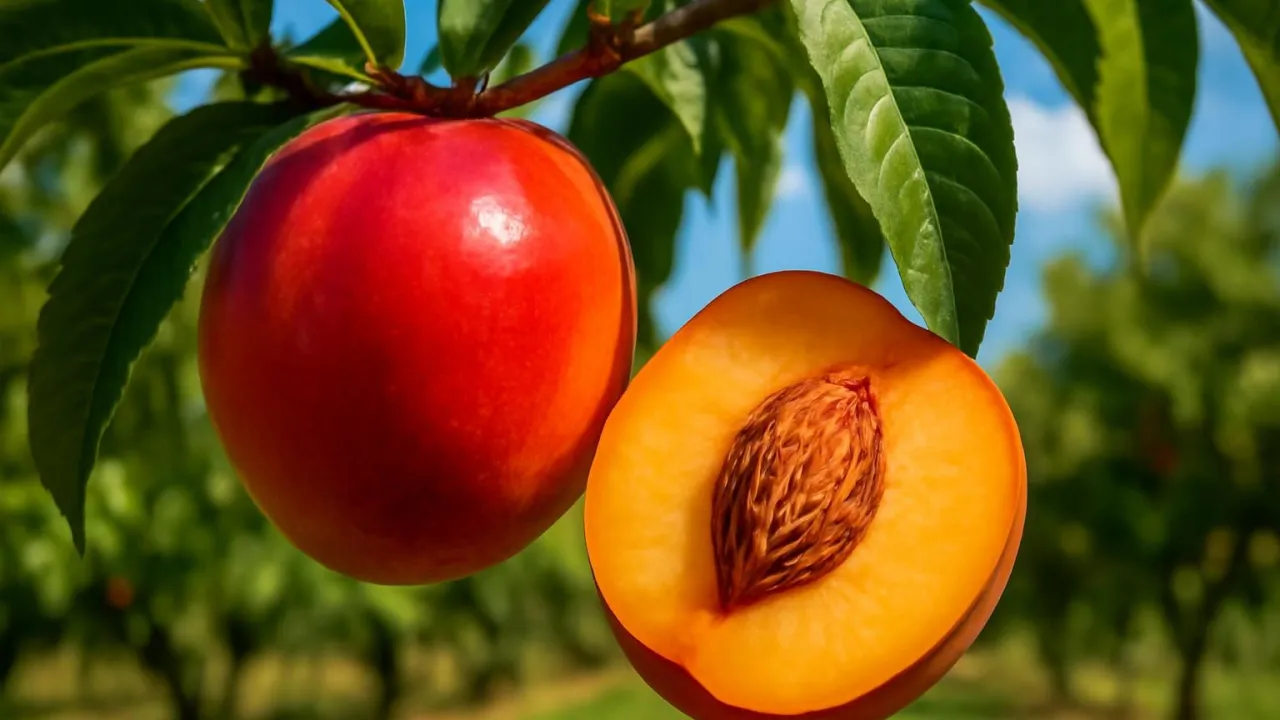
A nectarine is really a type of peach, but with smooth skin!
✨ Word Sparks (Grade 2 Glossary)
Tap 🔊 to hear
vitamin
Something in food that helps you grow
orchard
A place where many fruit trees grow
fuzzy
Soft and hairy, like a peach
🪝
Did you know some fruits are smooth, even if they look like peaches?
1
A Special Skin
Nectarines are round fruits with shiny, smooth skin. They look a lot like peaches, but peaches are and nectarines are not. The skin can be red, orange, or yellow, and it feels cool to touch.
2
How Nectarines Grow
Nectarines grow on trees in warm, sunny places called . The trees need plenty of sunlight and water to make their fruit juicy and sweet. Each nectarine has a large pit inside, which helps the tree make new fruit.
3
Tasty and Healthy
People eat nectarines fresh or slice them for snacks. They are full of and taste very sweet and juicy. Nectarines are a healthy treat that can help keep your body strong.
A single gene change makes nectarines smooth instead of fuzzy like peaches!
✨ Word Sparks (Grade 3 Glossary)
Tap 🔊 to hear
mutation
A change in a plant or animal's genes
drupe
A fruit with a hard pit inside
fiber
Plant part that helps digestion
🪝
Can you spot the difference between a nectarine and a peach just by touch?
1
Smooth Skin, Juicy Bite
Nectarines are famous for their smooth, shiny skin that feels cool in your hand. Unlike peaches, they have no fuzz, which makes them easy to bite into. Their skin can be red, orange, or yellow, often with beautiful streaks. The flesh inside is juicy and sweet, making nectarines a favorite summer treat.
2
How Nectarines Grow
Nectarines grow on small trees in warm, sunny orchards around the world. The trees bloom with pink flowers before the fruit appears. Each nectarine has a large, hard pit in the center, which contains the seed. The pit protects the seed and helps the tree spread new plants.
3
A Family Secret
Nectarines and peaches are actually part of the same species, but a special gene makes nectarines smooth. This is called a genetic , which happens naturally in plants. Sometimes, a peach tree can even grow a nectarine branch! Botanists call nectarines a type of ',' or stone fruit.
4
Nutrient Powerhouse
Nectarines are packed with vitamins A and C, which help your skin and immune system. They are low in calories but high in , making them a healthy snack. Eating nectarines can help your body heal cuts and fight off sickness. Their sweet taste and health benefits make them popular in salads, desserts, and even grilled dishes.
2. Why is the pit important for the nectarine tree?
🤯 Mind-Blowing Fact • Grade 4
A single tree can grow both peaches and nectarines if it has different branches!
✨ Word Sparks (Grade 4 Glossary)
Tap 🔊 to hear
deciduous
A tree that loses its leaves yearly
pollinate
To move pollen so plants make fruit
variety
A special kind or type of something
🪝
Did you know a nectarine and a peach can grow on the same tree?
1
A Smooth Twist on Peaches
Nectarines are nearly identical to peaches, except for their smooth, fuzz-free skin. This difference comes from a natural genetic mutation that removes the fuzz, making nectarines easier to eat for some people. Their skin can range from deep red to golden yellow, often with a shiny surface. Inside, nectarines contain juicy flesh and a single large pit, just like their peach relatives.
2
Life Cycle and Growth
Nectarines grow on trees that thrive in warm, temperate climates with plenty of sunlight. Each spring, the trees produce pink blossoms that are pollinated by bees and other insects. After pollination, the fruit begins to develop, growing larger and changing color as it ripens. The large pit inside each fruit contains the seed, which can grow into a new tree under the right conditions.
3
Ecosystem Role and Human Impact
Nectarine trees are important to orchard ecosystems, providing food for birds, insects, and mammals. Bees depend on nectarine blossoms for nectar and help the trees, ensuring fruit production. Humans cultivate nectarines in orchards for fresh eating, jams, and desserts, but must protect the trees from pests and diseases. Pesticides and overwatering can harm both the trees and surrounding wildlife, so careful farming is important.
4
Where in the World?
Nectarines originally came from China, but now grow in temperate regions around the world, including the United States, Spain, and Australia. They need well-drained soil, full sun, and moderate water to produce the best fruit. Most nectarines are harvested in summer, when they are sweetest and juiciest. Their popularity has led to many new varieties, each with unique colors and flavors.
A nectarine’s smooth skin is caused by just one gene difference from a fuzzy peach!
✨ Word Sparks (Grade 5 Glossary)
Tap 🔊 to hear
anthocyanin
A pigment that gives fruit its red color
germination
When a seed starts to grow into a plant
integrated pest management
Using safe ways to control bugs on crops
🪝
What if you discovered that nectarines are really just peaches in disguise?
1
Botanical Identity: Peach or Not?
Nectarines are botanically classified as a variety of peach, sharing the scientific name Prunus persica var. nucipersica. The key difference between a nectarine and a peach is a single recessive gene that causes the skin of nectarines to be smooth and fuzz-free. This genetic variation is naturally occurring, so sometimes a peach tree can produce a branch that grows nectarines, and vice versa. Both fruits are drupes, meaning they have a fleshy outer layer surrounding a hard pit that contains the seed. Although they look and taste similar, nectarines tend to be slightly smaller and firmer than most peaches.
2
Physiology and Fruit Development
Nectarine trees are deciduous and require a period of winter chill to produce fruit in the following season. In spring, the trees bloom with pink flowers that rely on insect pollination, primarily by bees. After successful pollination, the ovary of the flower develops into the fruit, accumulating sugars and water as it matures. The skin of nectarines contains more , which give them their vibrant red and orange colors. The pit inside protects the seed from pests and environmental stress until conditions are right for .
3
Ecosystem Connections and Agricultural Impact
Nectarine trees play a significant role in orchard ecosystems by providing nectar for pollinators and food for various animals. Birds, squirrels, and insects may eat the fruit or use the trees for shelter. Commercially, nectarines are grown in temperate climates such as California, Spain, Italy, and Australia, where they require well-drained soil and regular irrigation. Overuse of pesticides can harm beneficial insects and contaminate local water sources, so is encouraged for sustainable farming.
4
History and Global Distribution
Nectarines have been cultivated in China for over 2,000 years and later spread along trade routes to Persia, Greece, and Europe. Today, the United States is one of the largest producers, with California harvesting over 60% of the nation’s nectarines. The fruit is typically harvested from late spring through summer, depending on the variety and region. Modern breeding has created yellow, white, freestone, and clingstone nectarines, each with distinct flavors and textures. Their popularity continues to rise due to their sweet taste and nutritional benefits.
5
Nutrition, Conservation, and Fun Comparisons
Nectarines are a rich source of vitamins A and C, potassium, and dietary fiber, with a medium fruit weighing about 5 ounces (140 grams) and containing around 60 calories. Their vitamin C content helps boost the immune system, while fiber aids digestion and heart health. Compared to peaches, nectarines have up to twice the amount of , contributing to their brighter color and antioxidant power. Conservation efforts focus on reducing chemical use and promoting pollinator-friendly practices to protect both fruit yields and biodiversity. Next time you eat a nectarine, remember: it’s a smooth-skinned peach with a fascinating genetic twist!