1. During which month does the United States celebrate Native American Heritage Month?
2. Are Native American nations only part of the distant past, or are they thriving communities today?
🤯 Mind-Blowing Fact • Grade 2
In 1915, Blackfeet rider Red Fox James presented endorsements from twenty-four state governors right at the White House after his 4,000-mile horseback journey!
✨ Word Sparks (Grade 2 Glossary)
Tap 🔊 to hear
governor
The elected leader of a U.S. state
historian
Someone who studies and writes about history
stewardship
Taking careful, responsible care of the land
🪝
Who rode a horse four thousand miles from state to state to ask for a holiday honoring Native Americans?
1
A Four-Thousand-Mile Ride
Clip-clop go a horse's hooves across mountain passes and dusty plains! In 1914, a Blackfeet man named Red Fox James rode his horse four thousand miles to visit twenty-four state and ask for a day honoring Native Americans.
2
From One Day to a Whole Month
Around the same time, Seneca Dr. Arthur C. Parker encouraged groups nationwide to honor First Americans. New York declared the first state American Indian Day in 1916, and in 1990 Congress made all of November Native American Heritage Month.
3
Living Gifts All Around Us
Native peoples first grew foods like corn, potatoes, pumpkins, and blueberries, and today Native scientists, astronauts, veterans, and artists enrich every community.
1. How did Red Fox James travel 4,000 miles to gather support from twenty-four governors?
2. Which crops were first cultivated by Indigenous farmers in the Americas?
🤯 Mind-Blowing Fact • Grade 3
More than twenty-five U.S. state names—including Virginia neighbors Kentucky and Tennessee, plus Massachusetts, Ohio, Dakota, and Utah—come from Native American languages!
✨ Word Sparks (Grade 3 Glossary)
Tap 🔊 to hear
archaeologist
Scientist who studies ancient artifacts and places
resolution
Official decision voted on by lawmakers
adobe
Sun-dried clay bricks used to build homes
🪝
How did two determined Native leaders in the early 1900s pave the way for a monthlong celebration across the United States?
1
Diverse Homelands Across a Continent
From cedar plank houses in the Pacific Northwest to pueblos in the Southwest and woodland villages in Virginia, Indigenous nations shaped North America for thousands of years. Each nation developed distinct governance, architecture, astronomy, farming methods, and languages suited to its homeland.
2
Pioneers of Recognition
Two early leaders led the push for a national observance. Dr. Arthur C. Parker, a Seneca and museum director, persuaded the Boy Scouts of America in 1915 to set aside a day honoring the 'First Americans.' Meanwhile, Red Fox Skiukusha James of the Blackfeet Nation rode 4,000 miles on horseback collecting signatures from twenty-four state governors.
3
Becoming Native American Heritage Month
New York became the first state to proclaim American Indian Day in May 1916. Decades later, on August 3, 1990, President George H. W. Bush signed a joint of Congress designating November as National American Indian Heritage Month.
4
Honoring Virginia and National Tribes Today
Today the United States recognizes more than 574 sovereign tribal nations, including seven federally recognized tribes in Virginia such as the Pamunkey, Chickahominy, Rappahannock, Upper Mattaponi, Nansemond, and Monacan Indian Nation.
1. Who was the Seneca archaeologist who persuaded the Boy Scouts in 1915 to adopt a day honoring First Americans?
2. Which president signed the 1990 joint resolution establishing November as National American Indian Heritage Month?
🤯 Mind-Blowing Fact • Grade 4
In 2022, NASA astronaut Nicole Aunapu Mann of the Round Valley Indian Tribes became the first Native American woman to fly in space, commanding a mission to the International Space Station!
✨ Word Sparks (Grade 4 Glossary)
Tap 🔊 to hear
millennia
Periods lasting thousands and thousands of years
citizenship
Legal membership with full rights in a country
Code Talkers
Indigenous soldiers who sent secret wartime messages
🪝
Why is November chosen for Native American Heritage Month, and how do Virginia's First Peoples connect to this national story?
1
Why November Matters
Walk beside Virginia's tidal rivers in crisp November air, where Algonquian, Siouan, and Iroquoian-speaking nations harvested maize, chestnuts, and oysters for before Jamestown was founded in 1607. Congress selected November for Native American Heritage Month because autumn traditionally marks the conclusion of the harvest season and a time of storytelling, council gatherings, and thanksgiving across many Indigenous cultures.
2
Seventy-Five Years of Advocacy
The journey toward national recognition began before Native Americans were even recognized as U.S. citizens nationwide under the Indian Act of 1924. In 1915, Seneca archaeologist Dr. Arthur C. Parker inspired the Congress of the American Indian Association to call for an official observance, while Blackfeet horseman Red Fox James delivered endorsements from twenty-four governors to Washington, D.C. New York issued the first state proclamation in 1916, and President George H. W. Bush signed Public Law 101-343 in August 1990 establishing November as a monthlong tribute.
3
Virginia's Recognized Tribes
In Virginia, eleven tribes hold state recognition—including the Mattaponi, Cheroenhaka (Nottoway), Nottoway of Virginia, and Patawomeck—and seven also hold federal recognition: the Pamunkey (recognized in 2015) and the Chickahominy, Eastern Chickahominy, Upper Mattaponi, Rappahannock, Nansemond, and Monacan Indian Nation (recognized through the Thomasina E. Jordan Act of 2018).
4
Science, Service, and Innovation
November celebrates enduring Indigenous contributions—from Navajo and Comanche whose unbreakable military codes helped win World War II to NASA astronaut Nicole Aunapu Mann (Wailacki of the Round Valley Indian Tribes), the first Native American woman in space.
1. Which three major Indigenous language groups lived across Virginia's regions for thousands of years?
2. How did Navajo, Comanche, and other Indigenous Code Talkers help the United States during World War II?
🤯 Mind-Blowing Fact • Grade 5
Roughly three-fifths of all food crops grown on farms around the entire globe today—including corn, potatoes, tomatoes, vanilla, and chocolate—were first bred by Indigenous farmers of the Americas!
✨ Word Sparks (Grade 5 Glossary)
Tap 🔊 to hear
agronomist
Expert in soil care and growing crops
equestrian
Relating to riding and traveling on horseback
per-capita
Measured proportionally per person in a group
🪝
How did twentieth-century Indigenous scholars, riders, lawmakers, and tribal citizens build a national month honoring sovereign First Nations?
1
Ten Thousand Years of Ingenuity
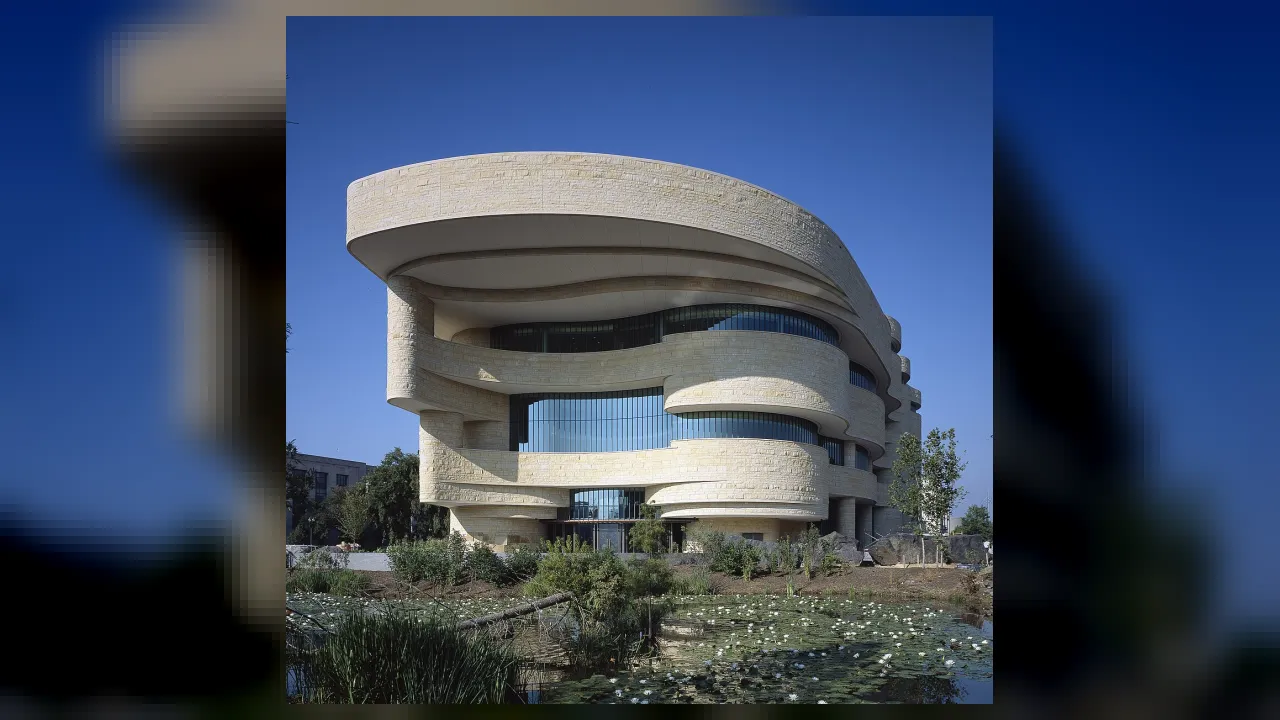
Stand inside the Smithsonian's National Museum of the American Indian on the National Mall in Washington, D.C., where curved golden Kasota limestone walls echo cliffs sculpted by wind and water. Across North America and Alaska, Indigenous civilizations engineered irrigation canals in the Sonoran Desert, mound cities in the Mississippi Valley, ocean-going cedar canoes along the Pacific coast, and confederated democracies in the Eastern Woodlands. Today more than 574 federally recognized American Indian tribes and Alaska Native villages—alongside state-recognized tribes and Native Hawaiian communities—maintain living languages, legal systems, and cultural traditions.
2
Early Advocates and the 1924 Turning Point
Efforts to establish a formal civic observance arose during the Progressive Era, even before Congress passed the Indian Citizenship Act of 1924 granting U.S. citizenship to all Native Americans born within the nation's borders. Dr. Arthur C. Parker, a Seneca anthropologist who directed the Rochester Museum of Arts and Sciences, convinced the Boy Scouts of America to adopt 'First Americans Day' in 1915. That same year, Reverend Sherman Coolidge, an Arapaho minister and president of the Society of American Indians, issued a national proclamation on September 28, 1915, while Blackfeet horseman Red Fox James completed a 4,000-mile journey securing endorsements from twenty-four governors. New York Governor Charles S. Whitman declared the first state holiday on the second Saturday in May 1916.
3
From Harvest Season to Federal Law
Several states switched their observance from spring to autumn to align with traditional Indigenous harvest and storytelling seasons. After President Ronald Reagan proclaimed 'American Indian Week' in November 1986, Congress passed Joint Resolution 577 (Public Law 101-343), which President George H. W. Bush signed on August 3, 1990, designating November 1990 as the first National American Indian Heritage Month. Every president since has issued annual November proclamations celebrating Native American and Alaska Native heritage.
4
Tribal Sovereignty in Virginia and Beyond
Federally recognized tribes hold a unique government-to-government relationship with the United States rooted in treaties, the U.S. Constitution, and federal statutes. In Virginia, where Algonquian, Siouan, and Iroquoian peoples greeted English colonists in 1607, persistent historical documentation led to federal recognition for the Pamunkey Indian Tribe in 2015 and six additional tribes—Chickahominy, Eastern Chickahominy, Upper Mattaponi, Rappahannock, Nansemond, and the Monacan Indian Nation—through the Thomasina E. Jordan Indian Tribes of Virginia Federal Recognition Act of 2018.
5
Enduring Contributions to Science and Civic Life
Approximately sixty percent of the world's current food crop varieties—from maize, potatoes, and tomatoes to cacao and cranberries—originated with Indigenous of the Americas. Combined with Ecological Fire Stewardship, military service at the highest rate of any ethnic group, and leaders such as Osage ballerina Maria Tallchief and astronaut Nicole Aunapu Mann, Indigenous heritage shapes America's past, present, and future.