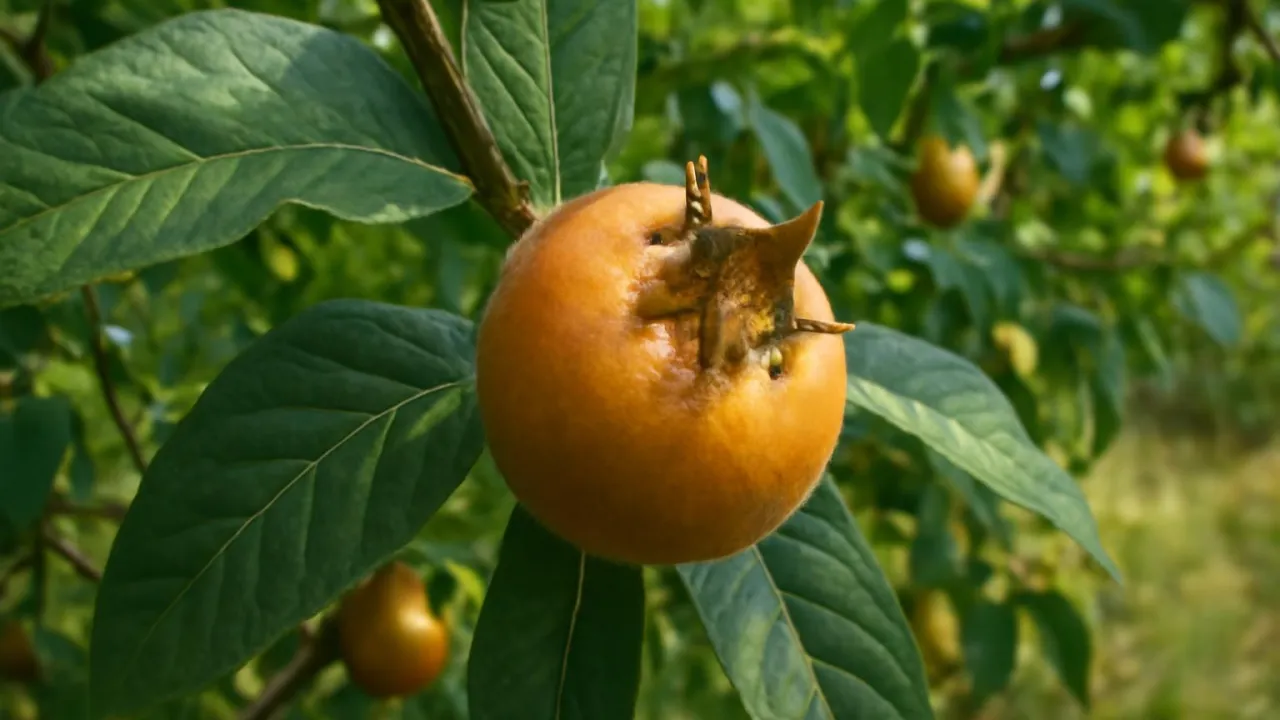
Medlar fruit only tastes good after it becomes soft through bletting!
✨ Word Sparks (Grade 2 Glossary)
Tap 🔊 to hear
bletting
When fruit gets soft and sweet after ripening
autumn
The season when leaves fall from trees
texture
How something feels on the outside
🪝
Have you heard about a fruit that needs to get soft before you can eat it?
1
What Does the Medlar Look Like?
The medlar fruit is round and brown with a rough skin . It grows on a tree that reaches about 15 feet tall. The tree has green leaves that fall in each year.
2
Where Does the Medlar Grow?
Medlar trees grow in Southwest Asia and parts of Southeast Europe. They like places with full sun and moderate water. The trees bloom flowers in spring that later turn into fruit.
3
Why Is the Medlar Special?
The medlar fruit is hard when it first grows, so people wait for it to soften. This softening process is called , which makes the fruit sweet and ready to eat.
Bletting turns hard medlar fruit into a sweet treat that animals and people enjoy!
✨ Word Sparks (Grade 3 Glossary)
Tap 🔊 to hear
deciduous
Trees that lose their leaves every year
predator
An animal that eats other animals or fruit
adaptation
A change that helps plants or animals survive
🪝
Did you know the medlar fruit needs to soften before it can be eaten?
1
Medlar’s Appearance and Growth
The medlar fruit is round and brown with a rough skin texture that protects it. It grows on a small tree about 15 to 20 feet tall. This tree has leaves that change color and fall in autumn. The fruit grows after the tree blooms white flowers in spring.
2
How Medlar Survives in Nature
The medlar tree thrives in temperate climates with full sunlight and moderate water. Its rough skin helps protect the fruit from and weather. Birds often eat the fruit after it softens, helping spread the seeds. This natural process helps the medlar reproduce and survive.
3
What Is Bletting and Why It Matters
Bletting is a special ripening process where the fruit becomes soft and sweet. The hard medlar fruit is not edible at first, but bletting breaks down its tough parts. This helps the fruit become tasty and easier to digest for animals and people. Without bletting, the fruit would be too hard to eat.
4
Medlar’s Place in Human Life
People have eaten medlar fruit for hundreds of years, especially in Europe and Asia. It was once a common garden fruit before modern fruits became popular. Today, medlar is still grown for jams and jellies because of its unique flavor. It shows how plants adapt to both nature and human needs.
1. Why do birds eat medlar fruit after it softens?
2. What does 'deciduous' mean?
🤯 Mind-Blowing Fact • Grade 4
Medlar fruit’s bletting process helps it spread seeds by attracting animals after softening.
✨ Word Sparks (Grade 4 Glossary)
Tap 🔊 to hear
symbiotic
A helpful relationship between two living things
enzyme
A natural chemical that helps change food
orchard
A place where fruit trees grow
🪝
Have you ever heard of a fruit that must soften to become edible and spread its seeds?
1
Medlar’s Unique Ripening Process
The medlar fruit undergoes a rare process called bletting, which causes it to soften and become sweet enough to eat. This process happens after the fruit falls from the tree, allowing natural to break down tough tissues. Without bletting, the fruit remains hard and inedible, which protects the seeds until they are ready to spread.
2
Ecological Role and Seed Dispersal
Once softened, medlar fruit attracts animals such as birds and mammals, which eat the fruit and help disperse the seeds through their droppings. This relationship benefits both the tree and the animals, as the tree spreads its offspring while animals gain a nutritious food source. This interaction plays a key role in the local food web.
3
Geographic Range and Habitat Needs
Medlar trees are native to Southwest Asia and Southeast Europe, thriving in temperate climates with well-drained soils. They prefer full sun exposure and moderate watering, often growing in or wild woodlands. Human cultivation has spread medlar trees beyond their native range, but they remain relatively uncommon compared to other fruit trees.
4
Human Uses and Agricultural Impact
Historically, medlar fruit was a popular food in medieval Europe before more common fruits became widespread. Today, it is still used in jams, jellies, and traditional recipes, showcasing its cultural importance. Modern agriculture has focused less on medlar cultivation, but its unique qualities continue to interest gardeners and conservationists alike.
Medlar fruit’s enzymatic bletting process transforms its hard, bitter flesh into a sweet, edible delicacy.
✨ Word Sparks (Grade 5 Glossary)
Tap 🔊 to hear
pome
A fruit with a core like apples and pears
tannin
A natural chemical that makes fruit taste bitter
enzymatic
Related to natural chemicals that change food
🪝
Did you know the medlar fruit is one of the few fruits requiring bletting to become edible and nutritious?
1
Scientific Classification and Botanical Details
The medlar, scientifically named Mespilus germanica, belongs to the Rosaceae family, related to apples and pears. It is a deciduous tree growing up to 20 feet tall, with simple, ovate leaves and white flowers that bloom in spring. The fruit is a , a type of fruit with a core, and is unique because it remains hard until bletting softens it.
2
Physiological Mechanics of Bletting
Bletting is a biochemical process where enzymes break down complex carbohydrates and in the medlar fruit, reducing bitterness and hardness. This activity begins after the fruit is harvested or falls naturally and continues at cool temperatures around 5 to 10 degrees Celsius. The process transforms the fruit’s texture and flavor, making it palatable and digestible.
3
Conservation and Historical Cultivation
Historically, medlar trees were widely cultivated in Europe from Roman times through the Middle Ages, valued for their unique fruit. Today, medlar cultivation has declined due to modern fruit preferences, but conservation efforts maintain heirloom varieties in botanical gardens. Its cultural significance remains in traditional recipes and folklore.
4
Ecological and Agricultural Importance
Medlar trees contribute to biodiversity by providing food for wildlife during late autumn and early winter. Their fruit supports various bird and mammal species, aiding seed dispersal and forest regeneration. Agriculturally, medlar trees require well-drained soils and full sun, with moderate water, making them suitable for temperate orchards with minimal pest issues.
5
Quantitative Comparisons and Growth Conditions
Medlar trees grow best in temperate zones with annual rainfall between 20 and 40 inches and temperatures ranging from 10 to 25 degrees Celsius. The fruit typically weighs 20 to 40 grams and measures about 2 to 3 centimeters in diameter. Compared to apples, medlar fruit has a higher content before bletting, which decreases significantly after the process.