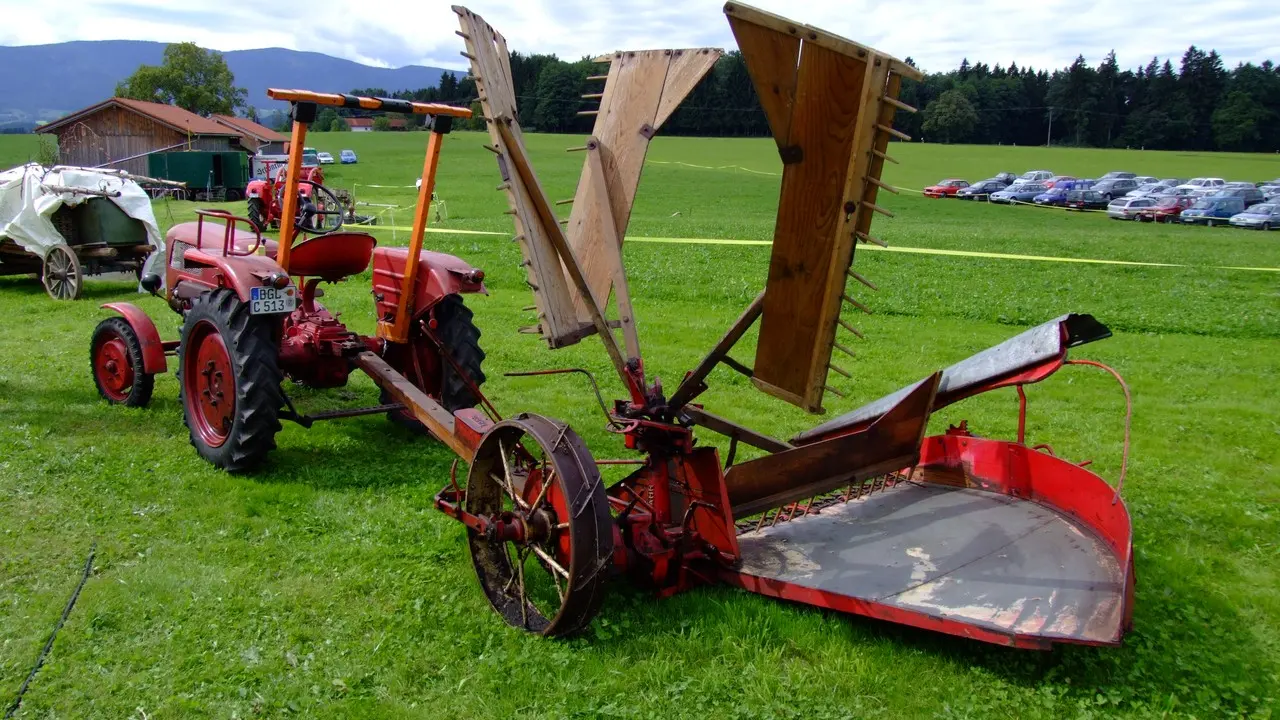
Cyrus McCormick built his first working reaper when he was just 22 years old.
✨ Word Sparks (Grade 2 Glossary)
Tap 🔊 to hear
machine
A tool that does work
inventor
A person who creates something new
field
A big open space for crops
🪝
Can you imagine a machine slicing golden wheat as fast as you run?
1
A Field Full of Motion
The reaper rattles as it moves, and its sharp blades spin quickly. Horses pull the across the , and wheat falls in neat rows. Farmers walk beside it, smiling as they see the work done fast.
2
From Slow to Super Fast
Before the reaper, farmers used hand tools, which took many days. The reaper changed everything by cutting wheat much faster and easier. Now, one could do the work of several people at once.
3
A World of Bread
With more wheat harvested, more bread could be made for families. People had more food, and farmers had more time to rest. The reaper made life better for many people.
The first reapers could harvest as much grain in one day as five people working by hand.
✨ Word Sparks (Grade 3 Glossary)
Tap 🔊 to hear
vibration
A quick shaking movement
platform
A flat surface to hold things
harvest
To gather ripe crops
🪝
What if one clever invention could change how the whole world eats?
1
Wheels, Blades, and a Big Idea
Imagine the sound of metal blades slicing through tall wheat as horses pull a strange new machine. This was the mechanical reaper, invented by Cyrus McCormick in 1831. The reaper used rotating blades and a moving to cut grain quickly. Farmers watched in amazement as it gathered wheat faster than ever before.
2
How Did It Work?
The reaper's sharp blades spun when the wheels turned, using the horses' pulling power. As the machine rolled, the blades vibrated and sliced the stalks of wheat cleanly. Cut wheat fell onto a , where it could be bundled by hand. This clever engineering made harvesting much less tiring for workers.
3
A Harvest Revolution
Before the reaper, people used sickles and scythes, which was slow and exhausting. With the mechanical reaper, one farmer could do the work of many. This meant more wheat could be harvested before rain or wind could ruin the crop.
4
A World Fed by Machines
The invention of the reaper helped feed growing cities and made bread cheaper for everyone. It spread quickly across America and then to other countries. The reaper sparked new inventions and changed farming forever.
By the 1850s, thousands of mechanical reapers were used on farms across the United States.
✨ Word Sparks (Grade 4 Glossary)
Tap 🔊 to hear
rotational energy
Turning motion that powers machines
innovation
A new idea or invention
productive
Able to make more things
🪝
What if one noisy machine could help feed millions of people around the world?
1
A Field Transformed
Imagine a field filled with golden wheat, the air buzzing with the sound of spinning blades and clopping hooves. In 1831, Cyrus McCormick unveiled his mechanical reaper in Virginia, forever changing how farmers harvested their crops. This machine used a series of sharp, rotating blades powered by horses to cut grain efficiently. The reaper quickly became a symbol of and progress in agriculture.
2
Engineering the Harvest
The reaper worked by converting the forward motion of the horses into for the cutting blades. As the machine rolled forward, the blades vibrated and sliced through stalks, dropping cut wheat onto a flat platform. Workers then gathered the wheat into bundles, saving countless hours of hard labor. This clever use of mechanical principles made farming much more .
3
Changing Lives and Landscapes
Before the reaper, harvesting was slow and exhausting, often leaving crops vulnerable to bad weather. The mechanical reaper allowed farmers to harvest more land in less time, reducing crop losses and increasing food supplies. As a result, cities could grow larger because there was more bread and grain to feed people.
4
A Global Impact
The success of the reaper inspired inventors around the world to improve farm machines even more. Its spread across America and Europe led to the rise of modern agriculture. Today, advanced harvesters can trace their roots back to McCormick’s original invention, which sparked a farming revolution.
Modern combine harvesters, descended from the mechanical reaper, can harvest up to 100 acres of grain per day.
✨ Word Sparks (Grade 5 Glossary)
Tap 🔊 to hear
reciprocating
Moving back and forth quickly
mechanical advantage
How machines help us do more work
surplus
Extra amount left after needs are met
🪝
What if a single invention could multiply a farmer’s harvest and transform entire societies?
1
The Dawn of Mechanized Harvesting
Picture a 19th-century wheat field alive with the rhythmic clatter of gears and the steady beat of hooves. In 1831, Cyrus McCormick’s mechanical reaper debuted in rural Virginia, marking a turning point in agricultural history. Prior to this invention, harvesting grain was labor-intensive, relying on hand tools like sickles and scythes that limited how much land one farmer could manage. The reaper’s design combined a series of blades, a rotating reel, and a platform, all powered by horses, to cut and gather wheat efficiently. This leap in productivity allowed farmers to harvest crops before storms could destroy them, fundamentally changing rural economies.
2
Engineering Principles Behind the Reaper
The mechanical reaper’s operation relied on converting the linear motion of horses into rotational and mechanical energy. As horses pulled the machine, gears and linkages transferred power to the cutting blades, causing them to vibrate rapidly and slice through wheat stalks. The rotating reel guided the grain toward the blades while a platform collected the cut stalks for easy bundling. This clever use of and resonance enabled one person to harvest as much grain in a day as five or more workers could by hand.
3
Societal and Economic Impact
The mechanical reaper revolutionized agriculture by dramatically increasing efficiency and reducing the need for manual labor. Farmers could now cultivate and harvest much larger fields, leading to grain production and lower food prices. This surplus supported rapid urban growth, as fewer people were needed on farms and more could work in cities. The reaper’s success also spurred a wave of agricultural innovation, inspiring inventors to develop even more advanced machinery.
4
From Patent to Global Adoption
Cyrus McCormick patented his reaper in 1834, and his family’s factory in Chicago soon became a hub for mass production. By the 1850s, thousands of reapers were in use across the United States, and the technology quickly spread to Europe and beyond. The mechanical reaper’s influence can be seen in today’s sophisticated combine harvesters, which integrate cutting, threshing, and separating into one machine. McCormick’s invention laid the foundation for the modern agricultural industry.
5
A Lasting Legacy in Modern Agriculture
The mechanical reaper’s legacy endures in the way we feed the world today. Its introduction marked the beginning of large-scale, mechanized farming, which made it possible to support rapidly growing populations. By harnessing the principles of mechanical engineering, the reaper not only transformed how food was produced but also shaped migration patterns, economic development, and even the course of history. Every loaf of bread we eat owes something to the clanking, whirring reapers that first rolled through America’s wheat fields.