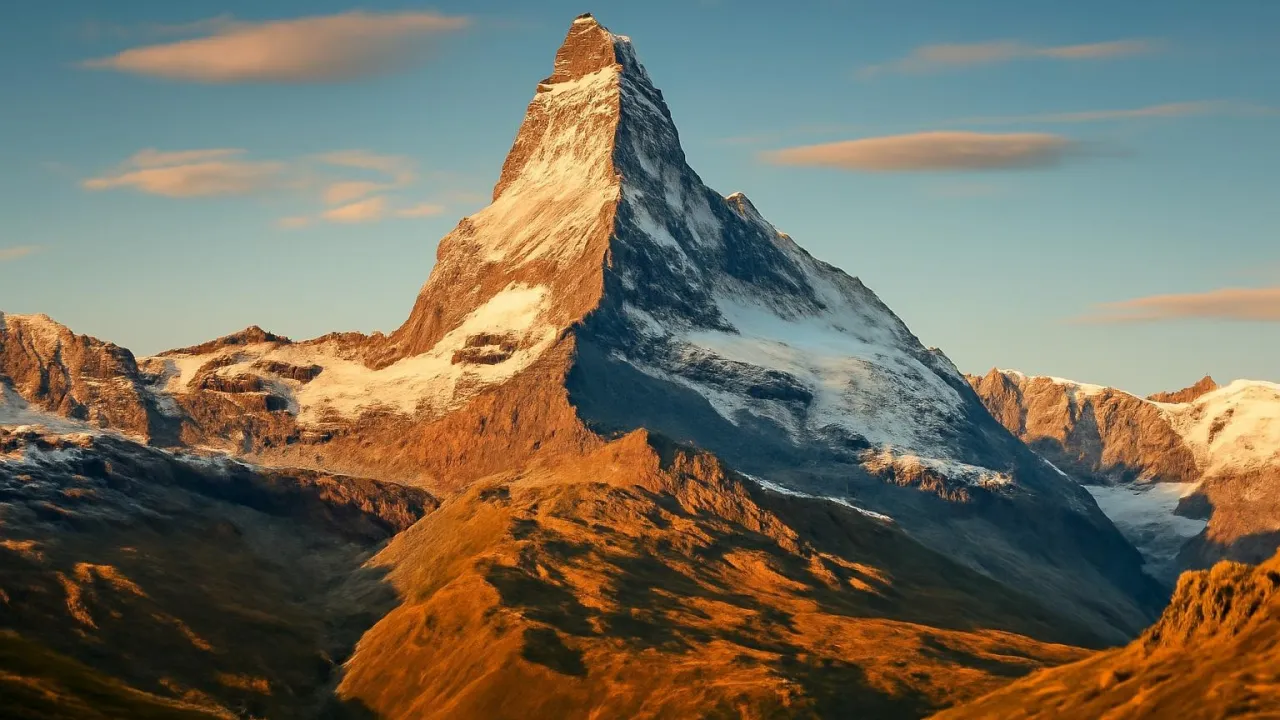
The Matterhorn is so tall, it can be seen from over 60 miles away on a clear day!
✨ Word Sparks (Grade 2 Glossary)
Tap 🔊 to hear
Alps
A big group of European mountains
glacier
A giant slow-moving river of ice
guide
A helper who shows you the way
🪝
Can you imagine standing where the clouds meet a mountain?
1
A Famous Point
The Matterhorn stands tall in the , touching the sky. Its sharp peak is covered in snow, even in summer. People take pictures of its triangle shape. It is one of the most famous mountains in the world.
2
How People Visit
Many visitors ride trains or cable cars for a closer view. Some brave climbers use ropes and helmets to climb the steep rocks. The mountain is very cold and windy, so everyone wears warm gear. help keep visitors safe on their trips.
3
A Mountain Made by Nature
Long ago, and ice shaped the Matterhorn’s rocky sides. The mountain’s steep slopes were carved by moving ice. Today, you can still see snow and ice on its peak. The Matterhorn’s shape makes it easy to spot from far away.
1. What helps climbers stay safe on the Matterhorn?
2. What shaped the Matterhorn’s rocky sides?
🤯 Mind-Blowing Fact • Grade 3
The Matterhorn was one of the last major Alpine peaks to be climbed, with the first ascent in 1865.
✨ Word Sparks (Grade 3 Glossary)
Tap 🔊 to hear
erosion
Wearing away of rock by wind or ice
summit
The very highest point of a mountain
ridge
A long, narrow top of a mountain
🪝
What would you hear if you stood on a snowy mountain ledge?
1
The Iconic Shape
The Matterhorn’s pyramid shape makes it one of the most recognized peaks on Earth. Its four steep faces point in different directions, catching light and shadow. Even from far away, its sharp stands out against the sky. Tourists and photographers love to capture its dramatic profile.
2
Nature’s Sculptor: Glaciers
Glaciers, which are giant rivers of ice, helped carve the Matterhorn’s steep sides. Over thousands of years, these glaciers caused , scraping away rock and shaping the mountain’s unique look. The process left behind jagged and a nearly perfect point. Today, the mountain still wears a crown of snow and ice.
3
Adventure and Challenge
Climbing the Matterhorn is a serious adventure that requires skill and preparation. Climbers use ropes, harnesses, and helmets to stay safe on the rocky . The wind can create a whistling sound as it rushes past the . Only experienced climbers with guides should attempt to reach the top.
4
A Symbol of the Alps
The Matterhorn is a symbol of Switzerland and the Alps, appearing on chocolate wrappers and stamps. It attracts visitors from all over the world who want to see its beauty up close. The nearby town of Zermatt is a popular base for mountain adventures. The Matterhorn’s striking shape reminds people of nature’s power and artistry.
1. What tool do climbers use to stay safe on the Matterhorn?
2. Why is the Matterhorn easy to spot from far away?
🤯 Mind-Blowing Fact • Grade 4
The Matterhorn’s summit marks the border between Switzerland and Italy, with each country claiming a side of the peak.
✨ Word Sparks (Grade 4 Glossary)
Tap 🔊 to hear
tectonic
Relating to Earth’s moving plates
glacial
Made by or from glaciers
symmetrical
Having the same shape on each side
🪝
Imagine the icy wind whistling past as you gaze up at a mountain shaped like a perfect pyramid.
1
A Natural Alpine Wonder
The Matterhorn rises dramatically above the valleys of Switzerland and Italy, its almost pyramid shape making it a natural wonder. This mountain’s four faces catch sunlight at different times of day, creating breathtaking views for those who visit. Its summit stands at 14,692 feet, towering over the surrounding Alps. The Matterhorn is so iconic that it has become a worldwide symbol of mountain adventure.
2
The Science of Its Shape
The Matterhorn’s sharp ridges and steep slopes were formed by powerful geological forces and erosion. Millions of years ago, plates collided, pushing up the rocks that would become the Alps. Over time, glaciers carved the mountain, leaving behind its famous pyramid shape. Today, scientists study the mountain to understand how glaciers and erosion shape our planet.
3
Climbing to the Summit
Climbing the Matterhorn is a challenging journey that requires expert skills and careful planning. Mountaineers use ropes, ice axes, and helmets to protect themselves from falling rocks and sudden weather changes. The wind at the summit can be fierce, and temperatures often drop below freezing. Only experienced climbers, often guided by local experts, attempt to reach the top safely.
4
Cultural and Global Impact
The Matterhorn’s striking appearance has inspired artists, explorers, and travelers from around the world. It appears on Swiss chocolate bars, postage stamps, and countless travel posters. The nearby town of Zermatt thrives on tourism, offering visitors a chance to hike, ski, and learn about mountain safety. The Matterhorn reminds us of nature’s power and the importance of respecting wild places.
1. What natural force helped shape the Matterhorn’s pyramid form?
2. Why do only skilled climbers attempt the Matterhorn?
🤯 Mind-Blowing Fact • Grade 5
The Matterhorn’s summit is made of ancient African continental rock, carried north by tectonic plate movement over millions of years.
✨ Word Sparks (Grade 5 Glossary)
Tap 🔊 to hear
arête
A sharp mountain ridge formed by glaciers
permafrost
Ground that stays frozen all year long
conservation
Protecting nature and its resources
🪝
What secrets might you discover if you traced every icy ridge of the Matterhorn from base to summit?
1
A Geological Masterpiece
The Matterhorn’s nearly perfect pyramidal form rises 14,692 feet (4,478 meters) above sea level, dominating the skyline of the Pennine Alps. Its four distinct faces point toward the cardinal directions, creating dramatic contrasts of light and shadow throughout the day. The mountain’s geological story began over 50 million years ago when the African and Eurasian tectonic plates collided, uplifting ancient seabed rocks. Over time, glacial erosion sculpted the Matterhorn’s sharp ridges and steep slopes, giving it the iconic silhouette recognized worldwide.
2
Glacial Forces and Erosion
During the last Ice Age, powerful glaciers flowed around the mountain, grinding and plucking rock from its flanks. This process, known as glacial plucking and abrasion, left behind jagged and a horn-shaped summit. The Matterhorn is a classic example of a glacial horn, formed where several cirque glaciers eroded a mountain from different sides. Even today, small glaciers and snowfields cling to its upper slopes, continuing to shape the landscape through freeze-thaw cycles and rockfalls.
3
Engineering and Climbing Challenges
Climbing the Matterhorn is a formidable test of mountaineering skill, requiring technical expertise, physical endurance, and careful risk management. Routes such as the Hörnli Ridge demand the use of ropes, carabiners, ice axes, and helmets to navigate exposed rock and ice. Sudden weather changes, high winds, and falling rocks make the ascent hazardous, so climbers often rely on experienced local guides. The first successful ascent in 1865 marked a turning point in Alpine exploration but also highlighted the dangers of high-altitude mountaineering.
4
Cultural Significance and Global Legacy
The Matterhorn’s dramatic profile has inspired generations of artists, writers, and adventurers, becoming a symbol of both Switzerland and the spirit of exploration. Its image appears on everything from Swiss chocolate bars to international postage stamps, and it draws over two million visitors to the region each year. The nearby resort town of Zermatt thrives on eco-friendly tourism, offering educational programs about mountain safety, geology, and environmental . The Matterhorn stands as a reminder of the delicate balance between human ambition and respect for natural forces.
5
Scientific Research and Environmental Change
Scientists study the Matterhorn to understand how climate change affects glacial retreat, rock stability, and Alpine ecosystems. As temperatures rise, within the mountain’s rocks can thaw, increasing the risk of rockfalls and altering habitats for rare Alpine plants and animals. Ongoing research helps inform efforts and guides safe climbing practices in a changing environment. The Matterhorn’s enduring presence challenges us to protect both its natural beauty and the scientific knowledge it offers future generations.