1. Which older ocean rock turns into marble when baked by heat and pressure?
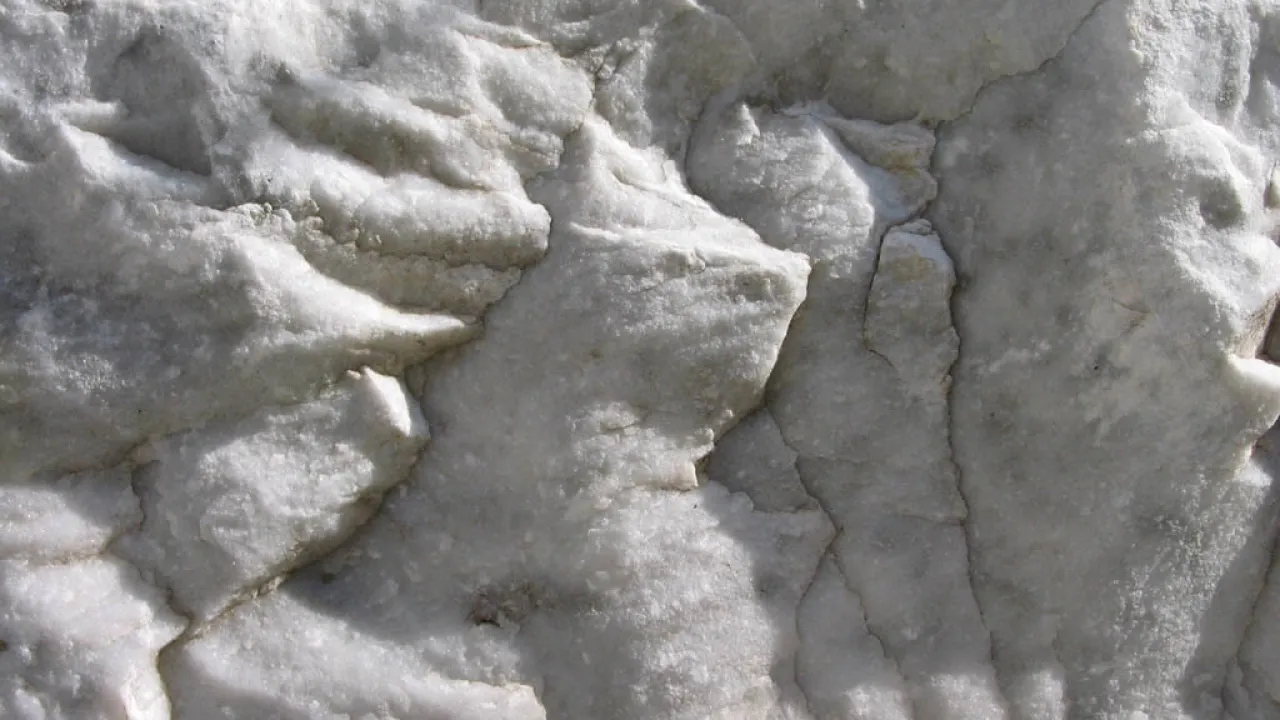
2. What does a freshly broken piece of white marble look like up close?
🤯 Mind-Blowing Fact • Grade 2
India's shimmering white Taj Mahal and Greece's ancient Parthenon temple were both built of luminous metamorphic marble!
✨ Word Sparks (Grade 2 Glossary)
Tap 🔊 to hear
metamorphic
Rock changed by deep heat and strong pressure
sculptor
An artist who carves figures from stone
chisel
A sharp metal tool used to carve stone
🪝
Where did all the seashells go when gray limestone transformed into smooth white marble?
1
Erasing the Shells
Imagine pressing play-dough shapes together in your warm hands until the old lines vanish! Deep inside growing mountains, intense heat and squeezing make tiny calcite bits in limestone regrow into bigger, interlocking crystals—erasing nearly every ancient seashell fossil.
2
Where Rainbow Swirls Come From
Pure limestone turns into snow-white marble. If tiny bits of clay, sand, or iron were mixed into the old sea mud, underground heat cooks those extras into wavy ribbons of pink, gold, gray, or emerald green!
3
Easy to Carve, Shiny When Polished
Because marble is softer than iron yet strong enough not to crumble, have carved statues and monuments from it for thousands of years.
1. Why do you rarely see whole seashells inside marble even though it started as shell-filled limestone?
2. What creates the colorful green, pink, or gray veins swirling through many slabs of marble?
🤯 Mind-Blowing Fact • Grade 3
Finely powdered pure white marble is often mixed into everyday mint toothpaste as a gentle calcium polish for cleaning teeth!
✨ Word Sparks (Grade 3 Glossary)
Tap 🔊 to hear
recrystallize
To grow new interlocking crystals without melting first
non-foliated
Metamorphic texture without flat, parallel splitting layers
translucent
Letting soft light glow partway through a material
🪝
Why does marble look soft and lifelike in statues instead of flat and chalky like paint?
1
Recrystallization Without Melting
Here is the secret rule of metamorphic rocks: the rock changes in the solid state without melting into magma! When tectonic plates collide or hot magma intrudes beside limestone or dolostone, temperatures climb hundreds of degrees. Microscopic lime mud into tightly interlocking calcite or dolomite grains.
2
Why Sculptors Love Marble's Glow
Hold a flashlight against thin white Carrara or Colorado Yule marble, and light travels a fraction of an inch beneath the surface before bouncing back out of the clear calcite crystals! That waxy subsurface glow makes carved marble statues look almost alive. Plus, because marble is —lacking flat splitting layers—it carves smoothly in every direction.
3
Still Fizzes in Acid!
Because calcite marble keeps limestone's exact calcium carbonate chemistry (Mohs hardness 3), a drop of weak acid still makes it fizz—and outdoor acid rain slowly blurs fine statue details.
4
Surprising Everyday Uses
Finely ground bright-white calcium carbonate from pure marble adds smoothness and brightness to paper, paint, and even toothpaste!
1. Why can sculptors carve delicate fingers and curls out of marble without the rock splitting into flat flakes?
2. Why do outdoor marble statues slowly lose sharp facial details in polluted city rain?
🤯 Mind-Blowing Fact • Grade 4
Look closely at the Washington Monument in D.C.—about one-third of the way up, its white marble subtly changes shade because builders switched from one historic Maryland marble quarry to another in the 1870s!
✨ Word Sparks (Grade 4 Glossary)
Tap 🔊 to hear
protolith
Original parent rock before heat and pressure changed it
contact metamorphism
Rock baking right beside a hot magma intrusion
serpentine
Rich green magnesium silicate mineral veining some marbles
🪝
How can geologists tell shiny white marble apart from shiny white quartzite in five seconds?
1
Protolith to Masterpiece
Every metamorphic rock begins as an older parent rock called a . Marble's protolith is carbonate sedimentary rock—either limestone (CaCO3) or dolostone (CaMg(CO3)2). Whether baked alongside an underground magma pluton during or squeezed miles beneath colliding continents during regional metamorphism, calcite grains fuse into a dense, non-porous mosaic with almost zero empty space.
2
Two Quick Tests Against Look-Alike Quartzite
White marble and white quartzite look remarkably alike at first glance: both are sugary, sparkling, non-foliated metamorphic rocks! Two simple field tests separate them instantly. First, try scratching a steel nail or glass plate: marble is soft (Mohs 3) so a steel nail easily scratches it, whereas hard quartzite (Mohs 7) scratches steel and glass! Second, place a drop of dilute acid on each: calcite marble fizzes briskly, while silica quartzite does nothing at all.
3
Piedmont Marbles and National Landmarks
Bands of ancient Precambrian and Paleozoic marble wind through the Appalachian Piedmont from Georgia and Virginia northward through Maryland and Vermont. Quarries near Baltimore supplied white marble for the Washington Monument, while Georgia and Colorado marbles built the Lincoln Memorial!
4
Mineral Palette of Veined Marbles
Carbon rich in organic matter becomes dark gray graphite streaks; iron oxides blush marble rose-pink; and magnesium-rich silica layers cook into lush green marble.
1. If you find a sparkling white, sugary metamorphic rock, which two tests will quickly prove it is marble instead of quartzite?
2. What was marble's original parent rock (protolith) before metamorphism?
🤯 Mind-Blowing Fact • Grade 5
Some of the world's rarest red rubies and glowing green emeralds actually crystallized inside white metamorphic marble beds where trace chromium met aluminum under mountain-building heat!
✨ Word Sparks (Grade 5 Glossary)
Tap 🔊 to hear
granoblastic
Mosaic of equal-sized interlocking metamorphic mineral grains
calc-silicate
Mineral formed when impure limestone bakes with silica
ductile
Able to bend and flow smoothly without snapping
🪝
Why did Michelangelo hike high into Italy's Apuan Alps himself to listen to blocks of Carrara marble ring under a hammer?
1
Granoblastic Microstructure and Optical Translucency
Examine a thin section of statuary marble under polarized light, and you will see an equigranular mosaic: polygonal calcite crystals meeting at crisp 120-degree triple junctions where solid-state grain-boundary migration minimized surface energy at 400 to 700 degrees Celsius. Because porosity drops below half a percent, light refracts across crystal boundaries up to two centimeters deep inside ultra-pure Italian Carrara or Greek Parian marble—producing the lifelike warmth Michelangelo prized for his David and Pietà. Striking a flaw-free block yields a clear bell-like ring, whereas hidden micro-fractures thud dully!
2
Calc-Silicate Reactions in Impure Carbonates
When pure CaCO3 limestone is heated under deep confining pressure, CO2 cannot escape, so calcite simply coarsens without changing chemistry. If quartz sand or clay impurities are present, however, high-temperature decarbonation reactions forge dazzling minerals: quartz plus calcite above ~550 degrees Celsius yields white fibrous wollastonite (CaSiO3 + CO2), while dolomitic layers grow green diopside, forsterite olivine, emerald, or red ruby corundum—as in Myanmar's famous marble-hosted gem tracts!
3
Ductile Flow Inside Mountain Roots
Unlike brittle granite or quartzite, calcite glides readily along internal crystal twin planes above 300 degrees Celsius, allowing buried marble layers to fold like warm taffy and cushion thrust faults deep inside rising mountain belts.
4
Isotopic Fingerprinting of Classical Sculptures
Art historians and geochemists analyze carbon-13 and oxygen-18 stable isotope ratios alongside grain size to pinpoint whether an ancient Roman or Greek statue came from Carrara, Paros, Penteli, or Turkey's Proconnesus quarries.
5
Sulfation Crusts and Stone Conservation
Exposed to sulfur dioxide pollution, exterior calcite converts into soluble gypsum (CaSO4·2H2O), expanding and blistering historic carvings unless protected by clean-air standards and laser micro-cleaning.