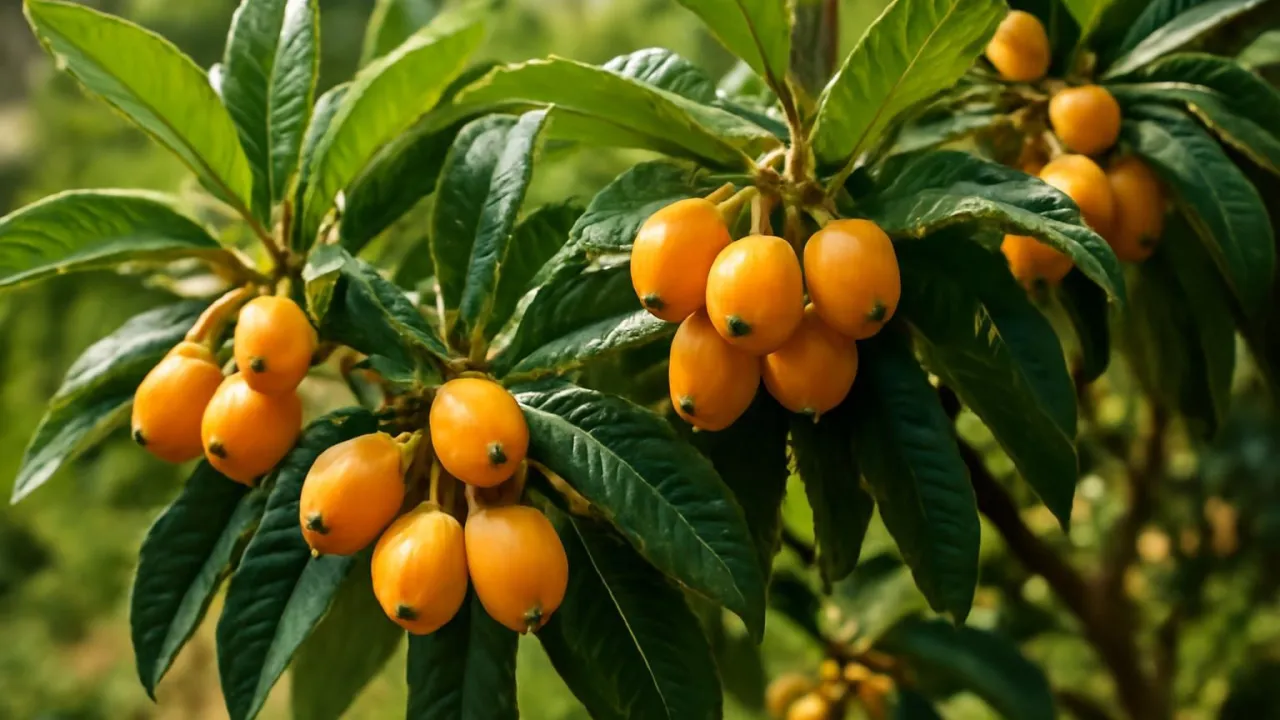
Loquat trees can live for more than fifty years and keep making fruit every spring!
✨ Word Sparks (Grade 2 Glossary)
Tap 🔊 to hear
fuzzy
Soft and hairy like a small animal
tangy
A sharp, sour taste that is fun
climate
The usual weather in a place
🪝
Did you know loquats grow on trees with big fuzzy leaves?
1
Loquat Tree and Leaves
Loquat trees grow up to twenty-five feet tall and have large leaves. The leaves are dark green and feel soft to touch. These trees like warm places with lots of sunlight.
2
Sweet and Tangy Fruit
The loquat fruit is small, round, and yellow when ripe. It tastes sweet and a little , which many people enjoy eating fresh. Birds and animals also eat the fruit as food.
3
Growing in Warm Places
Loquats grow best in warm with full sun and regular watering. They start to produce fruit in early spring. The trees can live for many years, giving fruit each season.
Loquats are one of the earliest fruit trees to bloom and produce fruit in spring!
✨ Word Sparks (Grade 3 Glossary)
Tap 🔊 to hear
pollination
When pollen moves to help flowers make fruit
dispersal
Spreading seeds to grow new plants
adaptation
A special trait that helps survival
🪝
How does the loquat tree’s fuzzy leaves help it survive in warm places?
1
Loquat Tree and Adaptations
Loquat trees grow in warm climates and have fuzzy leaves that help protect them from too much sun. This fuzz acts like a shield, reducing water loss by trapping moisture. These help the tree survive dry conditions.
2
Sweet Fruit and Pollination
Loquats produce sweet, yellow fruits that attract birds and insects for . Pollination helps the tree make more fruits by moving pollen from flower to flower. This is important for the tree’s life cycle.
3
Fruit and Seed Dispersal
Animals eat the loquat fruits and spread the seeds in their droppings. This seed helps new trees grow far from the parent tree. It is a natural way the loquat tree spreads and survives.
4
Ecological Role and Uses
Loquat trees provide food for many animals and shade for smaller plants. People also eat the fruit fresh or use it in jams and desserts. The tree plays an important role in its ecosystem by supporting wildlife.
Loquat trees can produce fruit even when temperatures drop below freezing for short periods!
✨ Word Sparks (Grade 4 Glossary)
Tap 🔊 to hear
pollinator
An animal that helps flowers make fruit
ecosystem
A community of plants and animals living together
erosion
When soil is worn away by wind or water
🪝
What makes the loquat tree important in its ecosystem and to people?
1
Loquat Tree’s Adaptations and Habitat
The loquat tree thrives in warm, subtropical climates because its fuzzy leaves reduce water loss by trapping moisture near the surface. This adaptation allows it to survive dry spells and intense sunlight. It grows best in full sun and well-drained soils found in regions like Southeast Asia and the Mediterranean.
2
Fruit Production and Pollination
Loquats bloom in late winter or early spring, producing fragrant white flowers that attract such as bees and butterflies. Successful pollination leads to the development of sweet, yellow fruits that ripen quickly. This early fruiting provides an important food source for wildlife emerging from winter.
3
Seed Dispersal and Ecosystem Role
Animals like birds and mammals eat loquat fruits and disperse seeds through their droppings, helping the tree colonize new areas. The loquat tree supports local food webs by providing nourishment and shelter to various species. Its presence can also benefit soil health by preventing .
4
Human Uses and Geographic Spread
Humans cultivate loquats for fresh eating, jams, and desserts worldwide, especially in warm regions. The tree has spread from its native Asia to many subtropical areas, including California and the Mediterranean. Its economic and cultural importance continues to grow as people appreciate its unique flavor and early harvest.
Loquat trees can bloom and produce fruit even when temperatures briefly fall below freezing, showing remarkable cold tolerance!
✨ Word Sparks (Grade 5 Glossary)
Tap 🔊 to hear
endozoochory
Seeds spread by animals eating fruit
transpiration
Water loss from leaves into the air
pome
A fruit with seeds inside a fleshy part
🪝
How does the loquat tree’s biology and history shape its role in ecosystems and human culture?
1
Taxonomy and Botanical Classification
The loquat tree, scientifically named Eriobotrya japonica, belongs to the Rosaceae family, which includes roses and apples. It is a subtropical evergreen tree native to southeastern China and Japan. The loquat is classified as a fruit, related to apples and pears, with seeds enclosed in a fleshy fruit.
2
Physiological Adaptations and Growth
Loquat leaves are large, leathery, and covered with fine hairs that reduce by trapping moisture. The tree’s early flowering in late winter allows it to avoid competition for pollinators. Its root system efficiently absorbs water in well-drained soils, supporting steady growth up to 25 feet tall.
3
Ecological Importance and Seed Dispersal
Loquats provide early-season fruit that supports birds and mammals when other food is scarce. Seed dispersal is primarily through , where animals eat fruits and deposit seeds elsewhere. This mutualistic relationship helps maintain biodiversity and forest regeneration in subtropical ecosystems.
4
Conservation and Agricultural History
Cultivation of loquats dates back over a thousand years in East Asia, spreading globally due to their desirable fruit and ornamental value. While not endangered, loquats face threats from habitat loss and pests in some regions. Sustainable farming practices help conserve genetic diversity and maintain healthy populations.
5
Quantitative Comparisons and Uses
Loquat fruits weigh about 30 to 50 grams each and contain 3 to 5 large seeds. Trees can live over 50 years and produce fruit within 2 to 3 years after planting. The fruit’s sugar content ranges from 9 to 12 percent, making it sweeter than many common fruits like apples or peaches. Additionally, loquats can tolerate brief freezing temperatures, allowing them to grow in diverse climates.