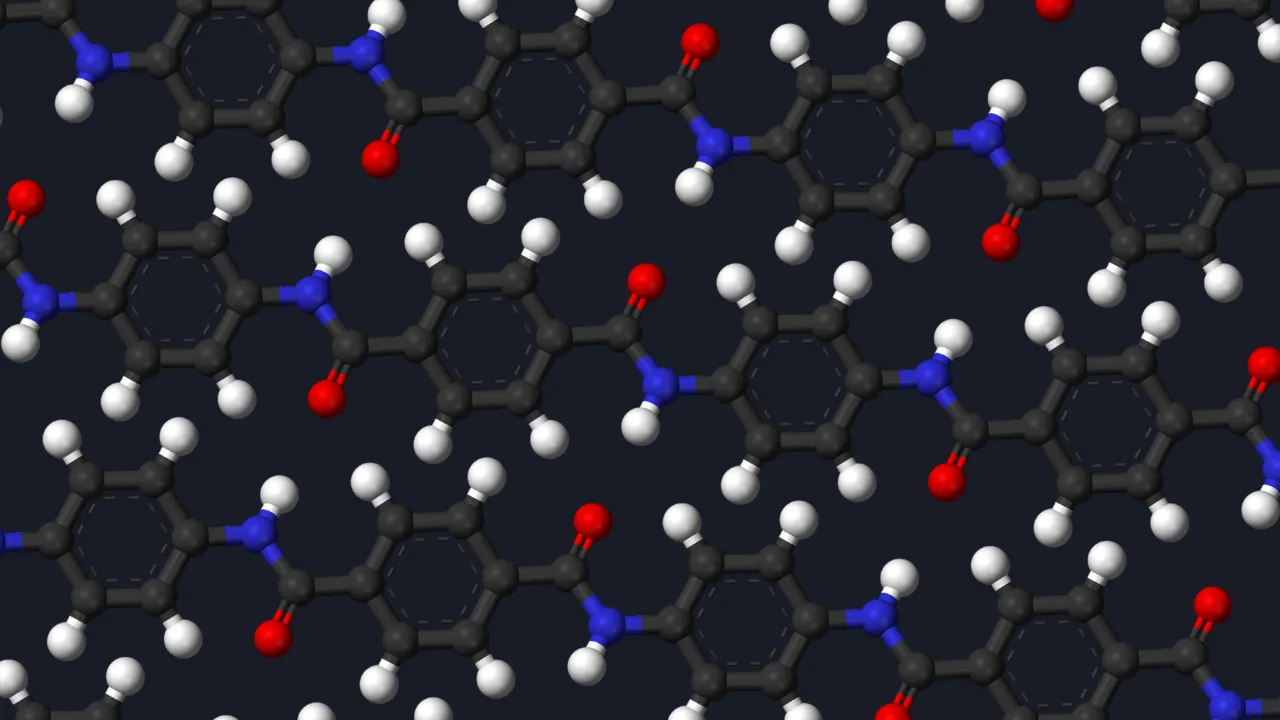
Kevlar was invented by a woman scientist named Stephanie Kwolek in 1971!
✨ Word Sparks (Grade 2 Glossary)
Tap 🔊 to hear
fabric
Material used to make clothes
weave
To twist threads together
astronaut
A person who travels to space
🪝
Have you ever touched something soft but super strong?
1
The Magic of Kevlar
Kevlar looks like cloth, but it is much tougher. People tiny plastic fibers together to make it strong. This special can stop fast things from hurting people.
2
How People Use Kevlar
Police officers wear Kevlar vests to protect themselves from danger. Some athletes and workers also use Kevlar for safety. Even have Kevlar in their space suits!
3
What Makes Kevlar Special?
Kevlar is five times stronger than steel of the same weight. It is light, so people can move easily while wearing it. That is why so many people trust Kevlar to keep them safe.
Kevlar fibers are so strong that a single strand can lift a grown person!
✨ Word Sparks (Grade 3 Glossary)
Tap 🔊 to hear
polymer
A long chain of repeating molecules
impact
A strong hit or force
vibrate
To shake back and forth quickly
🪝
Imagine if a thin jacket could stop a speeding baseball—how does it work?
1
A Surprising Super-Fabric
Kevlar may look like yellow yarn, but it is incredibly strong and light. The secret is in its fibers, which are made from a special plastic called a . These fibers are woven tightly to make a fabric that can stop high-speed objects. This makes Kevlar body armor a life-saving invention for many people.
2
The Science of Protection
Kevlar works by spreading the force of an over a wide area. When something hits the armor, the fibers and absorb energy instead of breaking. This property is called 'impact resistance,' and it helps keep the person wearing it safe. The woven layers make the vest flexible but very tough.
3
Inventing Kevlar
Chemist Stephanie Kwolek invented Kevlar in 1971 while searching for strong tire materials. She discovered that her new fiber was five times stronger than steel by weight. Soon, people realized it could be used to make lightweight, protective vests. Today, her invention is used all around the world.
4
Kevlar in Action
Police, firefighters, and even astronauts use Kevlar to shield themselves from harm. It is also used in sports gear, racing suits, and even canoes. Kevlar's unique combination of strength and lightness has saved thousands of lives. Its invention changed the way people think about safety.
Kevlar can withstand temperatures up to 800°F (427°C) without melting or breaking down.
✨ Word Sparks (Grade 4 Glossary)
Tap 🔊 to hear
synthetic
Made by humans, not found in nature
molecule
A tiny building block of matter
penetrate
To go through something
🪝
What if a fabric could stop a speeding bullet—what secrets does it hold?
1
Kevlar: The Science Behind the Shield
Kevlar is a fiber that looks like ordinary thread but is incredibly strong and lightweight. Its strength comes from its molecular structure, where long chains of called polymers are tightly packed and aligned. This alignment allows Kevlar to resist stretching and absorb massive amounts of energy. When woven into fabric, it forms the core of modern body armor.
2
How Kevlar Stops Danger
When a fast-moving object, like a bullet, strikes Kevlar, the fibers catch and spread the impact across a wide area. The energy is absorbed as the fibers vibrate and stretch, preventing the object from penetrating. Multiple layers of woven Kevlar increase the vest's stopping power, while still allowing the wearer to move freely and comfortably.
3
The Inventor and Her Breakthrough
Kevlar was invented in 1971 by chemist Stephanie Kwolek, who was searching for strong, lightweight materials for car tires. She discovered that her new polymer was five times stronger than steel by weight and resistant to heat and chemicals. Her invention quickly became vital for police, military, and emergency workers worldwide. Kwolek's work earned her many awards and changed the field of material science.
4
Kevlar's Impact on the World
Kevlar body armor has saved thousands of lives by protecting people from bullets, shrapnel, and other dangers. Its uses go beyond safety vests—Kevlar is found in helmets, gloves, sports equipment, and even spacecraft. This remarkable invention continues to inspire new ideas for safety and engineering around the globe.
2. What did Stephanie Kwolek originally want to make with Kevlar?
🤯 Mind-Blowing Fact • Grade 5
A Kevlar fiber with the diameter of a pencil could lift a fully loaded school bus without breaking!
✨ Word Sparks (Grade 5 Glossary)
Tap 🔊 to hear
aramid
A strong, heat-resistant synthetic fiber
tensile strength
How much pulling force something can take
kinetic energy
The energy something has when moving
🪝
What if a single thread could stop a bullet—how does Kevlar make the impossible possible?
1
The Chemistry of Kevlar’s Strength
Kevlar is an synthetic polymer, meaning its molecules form long, rigid chains that align parallel to each other. This molecular orientation, known as crystallinity, gives Kevlar its remarkable and resistance to stretching. The hydrogen bonds between the polymer chains further reinforce the fiber, making it both lightweight and five times stronger than steel by weight. These unique chemical properties allow Kevlar to absorb and dissipate enormous amounts of .
2
Engineering Body Armor: Layers and Weaves
Kevlar fibers are spun into threads and then woven into dense, multi-layered fabrics for body armor. The armor’s effectiveness depends on the tightness of the weave, the number of layers, and how the layers are stacked. When a projectile strikes, the energy is distributed across the fibers, which flex and vibrate to absorb the impact. This process, called energy dispersion, prevents penetration and reduces blunt force trauma to the wearer.
3
Stephanie Kwolek’s Revolutionary Discovery
In 1971, chemist Stephanie Kwolek discovered Kevlar while researching lightweight materials for stronger tires at DuPont. She noticed her new polymer solution spun into fibers that were unusually stiff and strong. After rigorous testing and patenting, Kevlar was soon recognized as a revolutionary material for personal protection, leading to the first commercial body armor vests in the mid-1970s. Kwolek’s breakthrough has since earned her international recognition and transformed the safety industry.
4
Kevlar’s Expanding Global Impact
Kevlar body armor has saved countless lives among police, military personnel, and emergency responders by providing reliable protection against bullets, shrapnel, and stabbing threats. Its applications extend to aerospace, where it lines spacecraft and satellites, as well as in sports, construction, and even fiber-optic cables. The ongoing evolution of Kevlar technology continues to inspire new innovations in material science and public safety worldwide.
5
Quantitative Specs and Future Innovations
A typical Kevlar vest can stop bullets traveling up to 1,400 feet per second, while weighing less than 5 pounds. Kevlar fibers can withstand temperatures up to 800°F (427°C) and resist corrosion from chemicals and moisture. Scientists are now developing next-generation fibers and nanocomposites to further improve protection, flexibility, and comfort. Kevlar’s legacy demonstrates how chemistry and engineering can work together to solve real-world problems and save lives.