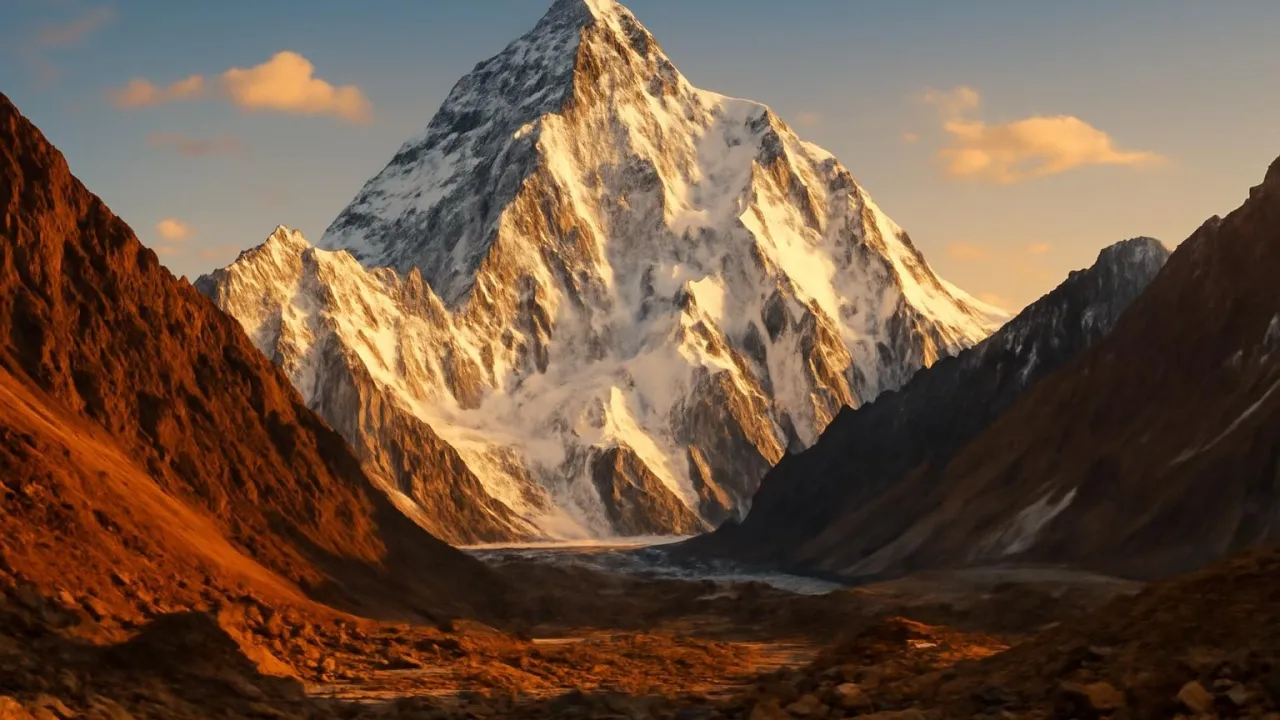
K2 is so high, jet planes sometimes fly by its peak!
✨ Word Sparks (Grade 2 Glossary)
Tap 🔊 to hear
summit
The highest point of a mountain
altitude
How high something is above the ground
team
A group working together
🪝
What would it feel like to stand on a mountain top above the clouds?
1
K2 Reaches High
K2 is one of the tallest mountains on Earth, reaching above the clouds. Its sharp peak is covered in snow all year. People call it the “Savage Mountain” because it is so hard to climb.
2
Weather on K2
Strong winds blow across K2, and snowstorms can happen quickly. The air is thin, so climbers must breathe carefully. They use ropes and special boots to stay safe.
3
Climbing Adventure
Climbers from around the world try to reach K2’s top. They train for years and work together as a . Only a few people ever reach the very top.
K2 is so steep that snow often slides right off its sides!
✨ Word Sparks (Grade 3 Glossary)
Tap 🔊 to hear
avalanche
A huge, fast slide of snow
crampon
Spikes for climbing on ice
erosion
Wearing away by wind or water
🪝
What if you could hear the wind roaring across one of the world’s tallest peaks?
1
The Mighty K2
K2 rises sharply from the Karakoram Range, towering above all but Mount Everest. Its peak is shaped like a giant pyramid, covered in thick snow and ice. The mountain’s steep sides make it look wild and powerful. Explorers call it the “Savage Mountain” because it is so dangerous to climb.
2
Extreme Weather
On K2, fierce winds howl and snow falls even in summer. The air pressure is low, making it hard to breathe at high altitude. Sudden storms can cause , which are huge slides of snow and ice. These natural dangers make climbing K2 a risky adventure.
3
Climbers and Challenges
Climbers use special gear like and ropes to grip the icy slopes. They must carefully plan their route to avoid falling rocks and crevasses. Only a few teams reach the summit each year, showing great teamwork and courage. K2’s remote location means rescue is very difficult if something goes wrong.
4
Nature’s Power
K2 formed millions of years ago as tectonic plates pushed upward. from wind and snow shapes its rugged sides every year. Glaciers slowly carve the mountain, carrying ice and rock down its slopes. K2 stands as a monument to Earth’s powerful forces.
K2’s summit is so high, the air has only one-third as much oxygen as at sea level!
✨ Word Sparks (Grade 4 Glossary)
Tap 🔊 to hear
acclimatization
Getting used to thin mountain air
crevasse
A deep crack in ice or snow
summit
The very highest point of a mountain
🪝
Can you imagine battling icy winds on a mountain almost as tall as Everest?
1
K2: The Savage Summit
K2 stands as the second-highest mountain on Earth, rising dramatically from the Karakoram Range. Its pyramid-shaped peak is covered in deep snow and sharp ice ridges, making it look fierce and majestic. The mountain’s nickname, the “Savage Mountain,” comes from its extremely challenging and dangerous climbing conditions. Unlike Everest, K2’s steep slopes and unpredictable weather make it far more difficult to conquer.
2
Unforgiving Weather and Altitude
K2’s is battered by hurricane-force winds and blizzards even in summer. The air is so thin at 28,251 feet that climbers risk altitude sickness, which can cause headaches and confusion. Sudden storms can trigger deadly avalanches or hide dangerous beneath fresh snow. These hazards demand that climbers use advanced equipment and careful planning to stay safe.
3
Engineering a Climb
Climbers rely on technical gear like ice axes, crampons, and oxygen tanks to survive the ascent. They set up camps at different elevations to slowly adjust to the thin air, a process called . Every step requires teamwork and precise decision-making, since rescue options are extremely limited on K2’s remote slopes. Only about one in four climbers who attempt K2 actually reach the .
4
Nature’s Monument
K2 formed over millions of years as tectonic plates collided, pushing rocks skyward. The mountain’s jagged ridges are constantly shaped by erosion from wind, snow, and glaciers. Its glaciers feed rivers that bring water to people living far below in the valleys. K2 remains a symbol of Earth’s raw power and the spirit of human exploration.
2. Why do climbers set up camps at different heights?
🤯 Mind-Blowing Fact • Grade 5
Only about 400 people have ever reached K2’s summit—fewer than have been to space!
✨ Word Sparks (Grade 5 Glossary)
Tap 🔊 to hear
serac
A tall, dangerous block of glacier ice
fatality rate
How often people die doing something risky
tectonic plate
Huge pieces of Earth’s outer layer that move
🪝
What if you faced hurricane winds and thin air while standing atop the world’s wildest mountain?
1
K2: The Fearsome Giant
K2, also known as Mount Godwin-Austen, dominates the Karakoram Range as the world’s second-highest peak, reaching an astonishing 28,251 feet (8,611 meters) above sea level. Unlike Everest’s more gradual slopes, K2’s pyramid shape features sheer rock faces and knife-edge ridges that rise abruptly from the glaciers below. Its remote location, straddling the border between Pakistan and China, adds to its legendary reputation among mountaineers. K2’s summit is so rarely reached that it is often called the ultimate test of climbing skill and endurance.
2
Deadly Weather and Altitude Challenges
The summit of K2 is battered by hurricane-force winds that can exceed 100 miles per hour, and temperatures frequently plunge below -40°F (-40°C). The atmospheric pressure at the top is about one-third that of sea level, which means each breath contains far less oxygen—making altitude sickness a constant threat. Sudden storms can create whiteout conditions and trigger avalanches, while hidden crevasses and add further danger. Because of these extreme hazards, K2 has a much higher among climbers than Everest.
3
Engineering Survival: Climbing Tactics
Climbing K2 requires advanced engineering solutions and careful planning. Teams use fixed ropes anchored into the ice and rock to safely ascend steep sections, and climbers wear crampons and harnesses for traction and safety. Acclimatization is essential, so expeditions establish multiple camps at increasing altitudes, allowing climbers’ bodies to gradually adapt to the thin air. Oxygen tanks are sometimes used above 8,000 meters, but many climbers attempt the summit without supplemental oxygen, relying on physical conditioning and teamwork.
4
Geological Origins and Erosion
K2 was formed over 45 million years ago as the Indian collided with the Eurasian plate, thrusting the Karakoram Range skyward. The mountain’s dramatic relief is continually shaped by glacial erosion, which carves deep valleys and sharp ridges. Glaciers flowing from K2 feed major rivers like the Indus, providing vital water for millions of people in South Asia. The ongoing processes of weathering and erosion ensure that K2’s appearance is always changing, sculpted by the forces of nature.
5
Global Significance and Human Spirit
K2 has become a symbol of both nature’s power and human determination. Its challenging conditions attract elite climbers from around the world, many of whom spend years preparing for a single attempt. The mountain’s harsh beauty and extreme risks have inspired countless stories of courage, teamwork, and tragedy. K2’s glaciers and snowfields are also crucial for regional water supplies, linking this remote peak to the lives of people far beyond its slopes. As climate change affects snowfall and glacier melt, K2’s future will continue to shape both the landscape and the people who depend on it.