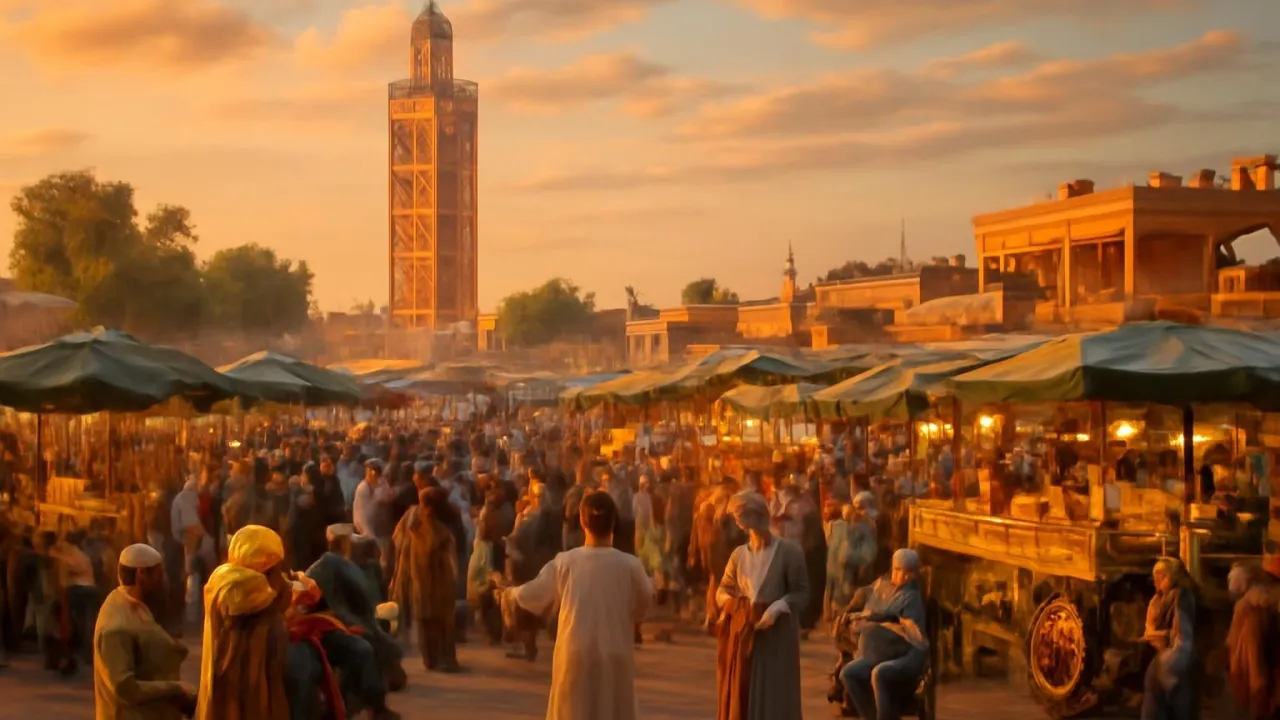
Jemaa el-Fnaa (Marrakesh)
The Lively Heartbeat of Moroccoโs Red City
Jemaa el-Fnaa has storytellers who tell tales every night!
Can you hear drums and music in a busy square?
1 Sounds and Smells
Drums play. fill the air. People laugh and clap. The is alive.
2 Fun to See
Monkeys jump. spin. Food cooks on hot grills. Bright lights shine at night.
3 A Place for All
Families walk together. Friends share treats. Everyone comes to listen and play.
1. What might you hear in Jemaa el-Fnaa?
2. Who comes to Jemaa el-Fnaa?
The square is so famous, it is protected by UNESCO for its culture!
What if you could taste sweet oranges and hear storytellers at once?
1 A Busy, Happy Place
Jemaa el-Fnaa is full of people and sounds. play drums and flutes, while food cooks on grills. The air smells like oranges and spices, making everyone hungry.
2 Stories and Shows
Every evening, gather crowds with old tales. Dancers twirl and acrobats leap, making the square exciting. People clap and cheer for their favorite acts.
3 A Special Square
Families, friends, and visitors all come together here. They share snacks, listen to music, and watch shows. Jemaa el-Fnaa is a place for fun and memories.
1. What makes the air smell sweet in Jemaa el-Fnaa?
2. Why do people clap in the square?
Snake charmers in Jemaa el-Fnaa use special flutes called 'ghaita' to create music that snakes follow!
Imagine hearing a snake charmerโs flute and smelling grilled kebabs at sunset!
1 A Living Stage
Jemaa el-Fnaa buzzes with energy from morning until late at night. Musicians play drums and flutes, filling the square with lively rhythms. The sounds vibrate through the air, drawing crowds to listen. Every corner has something new to see or hear.
2 Sights, Sounds, and Smells
Vendors squeeze fresh orange juice and cook spicy kebabs over hot coals. The air is rich with the aroma of spices and grilled food. Storytellers use dramatic voices to share ancient tales with curious listeners. Snake charmers play flutes that make their snakes sway and dance.
3 A Place of Tradition
Jemaa el-Fnaa has been the heart of Marrakesh for nearly 1,000 years. The square is a to Moroccoโs culture and history. Performers use tricks to project their voices across the open space. The squareโs design helps sounds travel far, so everyone can hear.
4 A Meeting Spot for All
Families, friends, and travelers from around the world gather here. People share food, stories, and music, creating a joyful atmosphere. The square is protected as a UNESCO World Heritage site for its traditions. Jemaa el-Fnaa is a place where memories are made every day.
1. How do performers make their voices heard in the square?
2. What is a common food smell in Jemaa el-Fnaa?
Jemaa el-Fnaa was named a UNESCO Intangible Cultural Heritage site to protect its living traditions, not just its buildings!
What if you could step into a square where music, stories, and sizzling food fill the air every evening?
1 A Square Alive with History
Jemaa el-Fnaa, the central square of Marrakesh, has been bustling with life for nearly a thousand years. Its origins trace back to the 11th century, when it became a crossroads for traders, travelers, and entertainers. The squareโs unique layout, open and spacious, allows thousands of people to gather comfortably. Over centuries, it has evolved into a living monument of Moroccoโs rich traditions.
2 A Symphony of Senses
As the sun sets, the square transforms into a vibrant stage of sights, sounds, and smells. Musicians create rhythmic beats using drums and stringed instruments, while snake charmers play hypnotic melodies on reed flutes. The air is thick with the aroma of cumin, saffron, and grilled meats, drawing visitors toward food stalls. Dancers and acrobats perform, and storytellers use and dramatic gestures to keep their audiences spellbound.
3 Engineering Sound in the Open
The open design of Jemaa el-Fnaa helps sound travel across the vast space. Performers use the natural of the square, projecting their voices and music without microphones. The crowdโs energy and the squareโs stone surfaces help amplify vibrations, making even soft sounds carry far. This clever use of acoustic principles allows everyone, near or far, to enjoy the performances.
4 A Cultural Treasure
Jemaa el-Fnaa is recognized by UNESCO as an Intangible Cultural site, protecting its unique traditions. The square brings together people of all ages, backgrounds, and cultures, creating a sense of unity and celebration. It serves as a living museum where ancient arts are performed daily. Marrakeshโs famous square continues to inspire visitors and locals alike, keeping Moroccoโs heritage alive for future generations.
1. Why do performers in Jemaa el-Fnaa not need microphones?
2. What makes Jemaa el-Fnaa a UNESCO treasure?
Jemaa el-Fnaaโs nightly festival attracts up to 100,000 visitors during peak celebrations, making it one of the worldโs busiest cultural squares!
What if you could stand in a square where the echoes of ancient stories mingle with the rhythms of modern life?
1 A Historic Confluence of Cultures
Jemaa el-Fnaa, the iconic heart of Marrakesh, has served as a vibrant gathering place since the 11th century. Its location at the entrance to the old medina made it a natural crossroads for traders, storytellers, musicians, and travelers from across Africa and Europe. Over centuries, the square has witnessed dynasties rise and fall, yet its role as a communal hub has remained constant. Today, Jemaa el-Fnaa is not only a marketplace but also a living testament to Moroccoโs multicultural heritage. This enduring square reflects the cityโs resilience and adaptability through changing times.
2 Engineering an Open-Air Soundscape
The squareโs expansive, stone-paved surface and open-air design create remarkable acoustic properties. Sound waves generated by drums, flutes, and voices travel efficiently across the plaza, amplified by the hard surfaces and absence of obstructing walls. Performers strategically position themselves to maximize , allowing their music and stories to reach even distant listeners. This natural amplification reduces the need for electronic equipment, preserving the authenticity of performances. The interplay of environmental acoustics and human ingenuity makes Jemaa el-Fnaa a unique open-air theater.
3 A Sensory Festival Every Night
As dusk falls, the square transforms into a dazzling festival of lights, sounds, and aromas. Vendors set up hundreds of stalls offering traditional Moroccan dishes such as tagine, harira, and grilled kebabs, while the scent of spices like cumin, coriander, and cinnamon fills the air. Musicians play traditional instruments like the oud and bendir, and snake charmers perform with the haunting ghaita flute. The overlapping melodies, lively drumbeats, and animated storytelling create a rich tapestry of sensory experiences. Visitors are drawn into the squareโs dynamic atmosphere, where every sense is engaged.
4 UNESCO Recognition and Living Heritage
In 2001, UNESCO designated Jemaa el-Fnaa as a Masterpiece of the Oral and Heritage of Humanity. This recognition protects not just the physical space, but also the living traditions, performances, and communal gatherings that define the square. Local associations work to ensure that ancient arts such as oral storytelling, Gnawa music, and acrobatic performances continue to thrive. The squareโs cultural significance extends beyond Morocco, serving as a global example of how public spaces can preserve and celebrate heritage. Jemaa el-Fnaa remains a dynamic stage where history and modernity coexist.
5 A Lasting Impact on Marrakesh and Beyond
Jemaa el-Fnaaโs influence reaches far beyond its 22,000 square meters in central Marrakesh. The square shapes the cityโs identity, attracting millions of visitors annually and supporting countless artisans, musicians, and food vendors. Its nightly transformation into a vibrant cultural festival fosters community, creativity, and economic vitality. The preservation of its traditions inspires similar efforts worldwide, highlighting the importance of safeguarding living cultural practices. Jemaa el-Fnaa stands as a powerful reminder that public spaces can unite people, celebrate diversity, and keep history alive for generations to come.
1. How do the squareโs acoustics help performers in Jemaa el-Fnaa?
2. Why is Jemaa el-Fnaa protected as a UNESCO Intangible Heritage site?