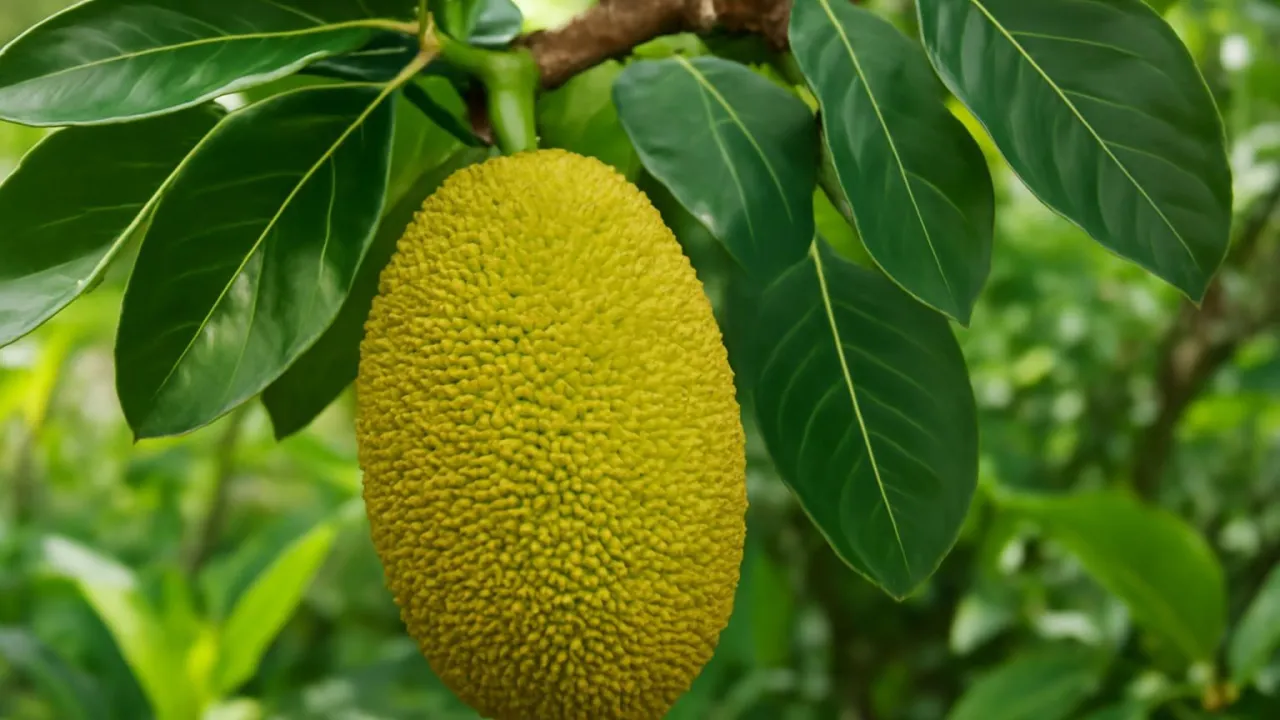
Jackfruit is the biggest fruit that grows on trees anywhere in the world!
✨ Word Sparks (Grade 2 Glossary)
Tap 🔊 to hear
tropical
A warm place near the equator.
ripe
Ready to eat and tastes good.
savory
Food that is not sweet but tasty.
🪝
Have you ever seen a fruit as big as a small dog?
1
Huge and Spiky Fruit
Jackfruit grows on tall trees in warm places and has spiky green skin. This fruit can become very heavy and very long. People notice its big size easily and like to pick it.
2
Sweet Taste and Uses
When , jackfruit tastes sweet and juicy, and many people eat it fresh or in desserts. Unripe jackfruit is cooked like a vegetable in dishes. It is popular in many countries for different meals.
3
Where Jackfruit Grows
Jackfruit trees need warm, sunny weather and plenty of water to grow well. They grow tall and live many years in forests. People also grow jackfruit in other warm places around the world.
Jackfruit’s spiky skin acts like armor to protect its sweet inside from animals.
✨ Word Sparks (Grade 3 Glossary)
Tap 🔊 to hear
predator
An animal that hunts other animals for food.
adaptation
A change that helps a plant or animal survive.
ecosystem
A community of plants and animals living together.
🪝
Did you know jackfruit is the largest fruit that grows on trees?
1
Jackfruit’s Giant Size and Shape
Jackfruit can weigh up to fifty-five pounds and grow over three feet long. Its thick, spiky skin protects the fruit inside from and damage. The giant fruit hangs directly from the tree trunk and branches. This unusual growth helps support its heavy weight.
2
Sweet Flavor and Uses
When ripe, jackfruit has a sweet, tropical flavor that many people enjoy fresh. The fruit’s flesh contains many seeds surrounded by soft pods. Unripe jackfruit is often cooked as a vegetable in savory dishes. This allows jackfruit to be used in many different recipes.
3
Where Jackfruit Grows
Jackfruit trees thrive in tropical climates with warm temperatures and lots of rain. These trees need sunlight and water to grow strong and healthy. Jackfruit is native to South and Southeast Asia but is now grown in other tropical regions. Its ability to grow in many habitats shows its skills.
4
How Jackfruit Helps Its Ecosystem
The large fruit provides food for many animals like monkeys and birds, which help spread seeds. Jackfruit trees also add shade and oxygen to their environment. Humans use jackfruit wood for furniture and the fruit for nutrition. This shows jackfruit’s important role in its .
1. Why does jackfruit grow on the tree trunk and branches?
2. How do animals help jackfruit trees?
🤯 Mind-Blowing Fact • Grade 4
Jackfruit’s enormous size and tough skin help it survive and spread seeds in tropical forests.
✨ Word Sparks (Grade 4 Glossary)
Tap 🔊 to hear
barrier
Something that blocks or protects.
disperse
To spread seeds far and wide.
cultivation
Growing plants for food or use.
🪝
How does jackfruit’s unique size and shape help it survive in tropical forests?
1
Jackfruit’s Size and Protective Skin
Jackfruit is the largest tree-borne fruit, sometimes weighing over fifty pounds and measuring nearly three feet long. Its thick, spiky skin acts as a protective against predators and physical damage caused by falling or animals. This tough exterior allows the fruit to mature safely in tropical forests where many animals live. The fruit’s weight and size require it to grow directly from the tree trunk or large branches, which provides strong support.
2
Growth Habitat and Climate Needs
Jackfruit trees thrive in warm, humid tropical climates with abundant rainfall and sunlight, primarily found in South and Southeast Asia. These environmental conditions provide the moisture and warmth necessary for the trees to grow tall and produce large fruits. The trees contribute to forest ecosystems by providing shade and habitat for various animals. Human has expanded jackfruit growth to other tropical regions, demonstrating its adaptability to similar climates.
3
Ecological Role and Human Uses
Jackfruit plays an important role in its ecosystem by providing food for a variety of animals such as monkeys, birds, and insects, which in turn help its seeds and maintain forest diversity. Humans use jackfruit not only as a nutritious food source but also for its wood, which is valued for furniture making. The fruit’s versatility in culinary uses, from sweet ripe pods to savory unripe flesh, highlights its cultural and economic importance in tropical agriculture.
4
Cause and Effect of Jackfruit’s Features
The jackfruit’s large size and tough skin cause it to grow on sturdy parts of the tree, preventing damage from falling. Because it provides food for many animals, the fruit helps spread seeds widely, ensuring new trees grow in different areas. Human farming of jackfruit affects local ecosystems by increasing fruit availability and supporting livelihoods. These cause-and-effect relationships show how jackfruit’s biology influences both nature and people.
1. Why does jackfruit grow on the tree trunk or large branches?
2. How do jackfruit trees help their ecosystem?
🤯 Mind-Blowing Fact • Grade 5
Jackfruit can weigh as much as a small child, making it the largest fruit that grows on a tree.
✨ Word Sparks (Grade 5 Glossary)
Tap 🔊 to hear
compound fruit
A fruit made from many flowers joined together.
vascular system
Plant tubes that carry water and nutrients.
genetic diversity
Different kinds of genes in plants or animals.
🪝
What makes jackfruit the largest tree-borne fruit, and how does it impact its environment?
1
Taxonomy and Scientific Classification
Jackfruit belongs to the Moraceae family and is scientifically named Artocarpus heterophyllus. It is closely related to breadfruit and figs, sharing similar botanical traits. This tropical species is native to South and Southeast Asia but has been introduced worldwide in suitable climates. Its classification helps scientists understand its evolutionary relationships and ecological roles.
2
Physiological Mechanics and Growth
Jackfruit grows as a , developing from multiple flowers that fuse together on the tree trunk or large branches. Its thick, spiky rind protects the soft, sweet flesh and numerous seeds inside from herbivores and physical damage. The tree’s efficiently transports water and nutrients to support the fruit’s rapid growth and large size. This physiological design allows jackfruit to reach weights up to twenty-five kilograms.
3
Conservation and Botanical History
Historically, jackfruit has been cultivated for thousands of years due to its nutritional value and versatility. It is considered a sustainable food source in tropical regions, helping reduce food insecurity. Conservation efforts focus on preserving and promoting sustainable farming practices. Botanical studies reveal how jackfruit’s adaptability allows it to thrive under various environmental stresses.
4
Ecological and Agricultural Impact
Jackfruit plays a vital role in tropical ecosystems by providing food for wildlife such as monkeys, birds, and insects, which aid in seed dispersal. Agriculturally, it supports local economies by supplying fruit, seeds, and timber. Its cultivation influences land use patterns and biodiversity in tropical farming landscapes. The fruit’s dual use as a sweet and savory ingredient enhances its cultural significance.
5
Quantitative Comparisons and Records
Jackfruit is the largest tree-borne fruit globally, reaching weights up to fifty-five pounds and lengths of nearly three feet. In comparison, most fruits weigh only a few ounces and grow on smaller branches. The tree itself can grow up to eighty feet tall, thriving in temperatures ranging from seventy-five to ninety-five degrees Fahrenheit. These impressive measurements highlight jackfruit’s unique place in the plant kingdom.