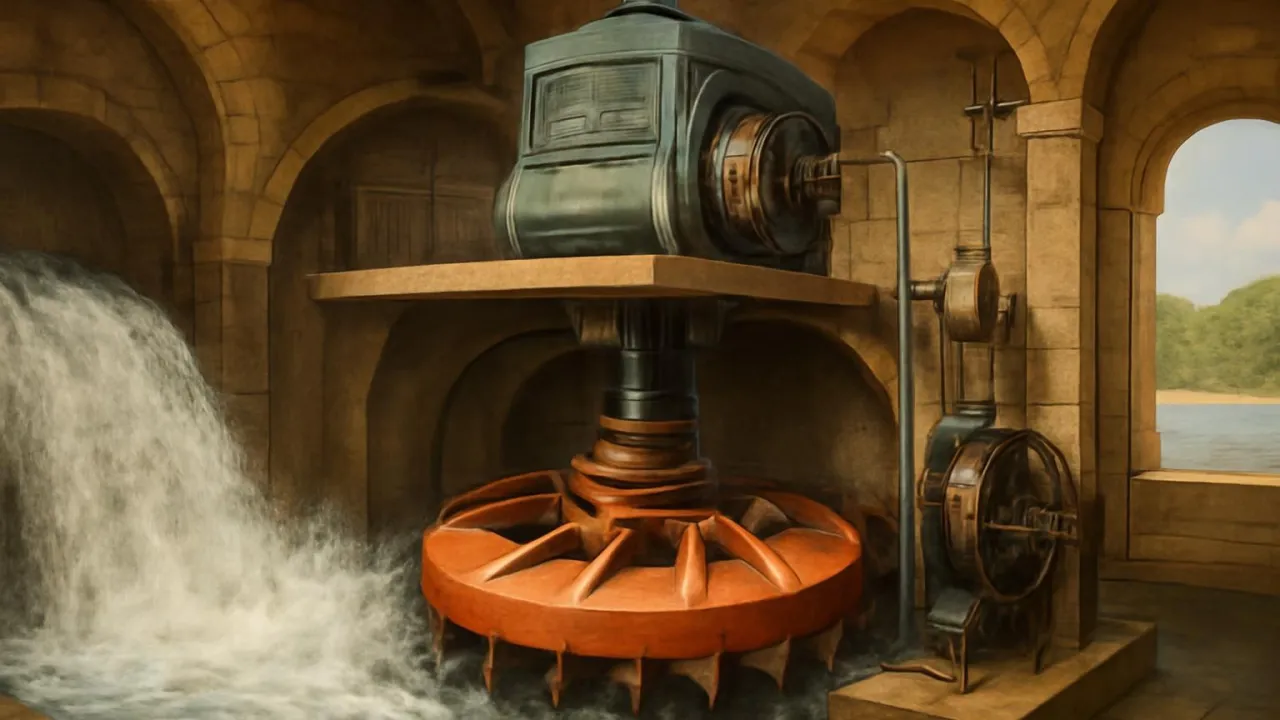
The biggest hydroelectric dam can power millions of homes at once!
✨ Word Sparks (Grade 2 Glossary)
Tap 🔊 to hear
generator
A machine that makes electricity
pollution
Dirty stuff in the air or water
energy
What makes things move or work
🪝
Can water really help power your whole town?
1
The Power of Moving Water
When water falls, it pushes on big blades and spins them fast. The spinning blades turn a machine called a turbine, which helps make electricity. Hydroelectric power is clean and uses water from rivers.
2
How Dams Help
People build strong dams to hold lots of water in a lake. When they let water out, it rushes through tunnels and spins the turbine. This spinning makes that travels to homes and schools.
3
Why It Matters
Hydroelectric do not make smoke or like some other power plants. They help keep the air clean and give us power every day. Many cities use this for lights and machines.
The Three Gorges Dam in China is the world’s largest hydroelectric power station!
✨ Word Sparks (Grade 3 Glossary)
Tap 🔊 to hear
turbine
Spinning blades turned by water
generator
Machine that makes electricity
renewable
Something that never runs out
🪝
Have you ever heard the roar of a dam and wondered if that sound could power a city?
1
Water’s Mighty Push
When water falls from a dam, it rushes through special tunnels called penstocks. The fast-moving water hits huge blades on a , making it spin quickly. This spinning action is called rotation, and it is the first step in making electricity. The energy from the moving water is changed into mechanical energy by the turbine.
2
The Generator’s Secret
The spinning is connected to a , which is a special machine. Inside the generator, magnets and coils of wire work together to create electricity. This process uses the science of electromagnetic induction. The electricity then travels through wires to homes, schools, and businesses.
3
Clean Energy for All
Hydroelectric do not burn fuel or make smoke, so they keep the air clean. They use energy, which means the water never runs out as long as it rains. Many countries use hydroelectric power to supply a large part of their electricity. This helps people everywhere have light, heat, and power for their lives.
4
From Rivers to Cities
Dams are often built on big rivers where water flows strongly all year. The largest hydroelectric plants can power millions of homes with just one dam. Hydroelectric power was first used in the 1800s and has grown very important. Today, it is a key part of how we get clean, reliable energy.
Hydroelectric generators can convert over 90% of water’s energy into electricity—much more efficient than most power plants!
✨ Word Sparks (Grade 4 Glossary)
Tap 🔊 to hear
kinetic energy
Energy from things that move
electromagnetic induction
Making electricity by moving magnets
reservoir
A big lake behind a dam
🪝
Imagine standing near a giant dam, feeling the ground vibrate as water thunders through—how does that roaring river become the electricity that powers your school?
1
Harnessing Water’s Force
Hydroelectric generators use the of falling or flowing water to produce electricity. When engineers build a dam, they create a that stores a huge amount of water at a high elevation. By releasing water through large pipes called penstocks, they direct its powerful flow onto turbine blades, causing them to spin rapidly. This spinning action transforms the water’s kinetic energy into mechanical energy.
2
The Generator’s Marvel
Attached to the turbine is a generator, which contains magnets and coils of copper wire. As the turbine spins, it turns the generator’s rotor, making the magnets move past the coils. This movement produces an electric current through , a key principle discovered by Michael Faraday in the 1800s. The electricity generated is then sent through transformers and power lines to homes, schools, and businesses.
3
Clean Energy, Big Impact
Hydroelectric power is considered renewable and clean because it does not burn fossil fuels or create air pollution. Dams can generate enough electricity to power entire cities, making them essential for many countries. However, building large dams can change river habitats and affect wildlife, so engineers must carefully plan each project. Hydroelectricity helps reduce our reliance on polluting energy sources and supports a more sustainable future.
4
A Spark from the Past
The first hydroelectric power plants were built in the late 1800s, with the world’s oldest still operating in Wisconsin, USA. Over time, technology improved, making hydroelectric generators more efficient and powerful. Today, the world’s largest dam, the Three Gorges Dam in China, can produce over 22,000 megawatts of electricity. Hydroelectric power remains one of the most important sources of renewable energy on Earth.
1. What main principle allows a generator to create electricity?
2. Why must engineers plan dams carefully?
🤯 Mind-Blowing Fact • Grade 5
The Three Gorges Dam can generate over 22,500 megawatts—enough to power more than 20 million homes at once!
✨ Word Sparks (Grade 5 Glossary)
Tap 🔊 to hear
potential energy
Stored energy ready to move
stat or
Stationary part of a generator
megawatt
A million watts of electric power
🪝
What if you could capture the thunderous force of a waterfall and transform it into enough electricity to power an entire city—how would you engineer that?
1
Engineering the Power of Water
Hydroelectric generators are marvels of renewable energy engineering, designed to capture the immense kinetic and of moving water. Engineers construct massive dams to create reservoirs, elevating water and storing gravitational potential energy. When released, water flows down through penstocks, converting its potential energy into kinetic energy as it accelerates toward the turbines. The design and angle of the turbine blades maximize the force of the water, ensuring efficient energy transfer to the mechanical system.
2
The Science of Electricity Generation
Once the turbine is spinning, it drives a generator composed of a rotor with powerful magnets and a stationary stator lined with copper wire coils. As the rotor turns, its magnetic field moves past the coils, inducing an electric current through the process of electromagnetic induction. This principle, discovered by Michael Faraday in 1831, is fundamental to all modern power generation. The electricity is then stepped up by transformers and transmitted over high-voltage power lines to cities, towns, and industries.
3
Efficiency and Environmental Impact
Hydroelectric generators are among the most efficient energy converters, with some plants achieving over 90% efficiency in transforming water’s energy into electricity. Unlike fossil-fuel plants, hydroelectric stations produce no direct air pollution or greenhouse gases, making them critical for sustainable energy systems. However, large-scale dams can disrupt river ecosystems, change sediment flow, and impact fish migration, so engineers must balance energy needs with environmental protection.
4
Historical Evolution and Global Reach
The first commercial hydroelectric power plant began operating in Appleton, Wisconsin, in 1882, marking the dawn of practical electricity generation from water. Over the decades, advances in turbine design, materials, and grid integration have enabled the construction of massive projects like the Hoover Dam in the United States and the Three Gorges Dam in China. Today, hydroelectric power supplies about 16% of the world’s electricity, supporting millions of homes and industries worldwide.
5
The Future of Water-Powered Energy
Modern hydroelectric engineering explores new ways to minimize environmental impacts, such as fish-friendly turbines and run-of-the-river systems that avoid large reservoirs. As the demand for clean energy grows, hydroelectric generators will continue to play a vital role in reducing carbon emissions and combating climate change. With ongoing innovation, the power of moving water will remain a cornerstone of global energy solutions for generations to come.