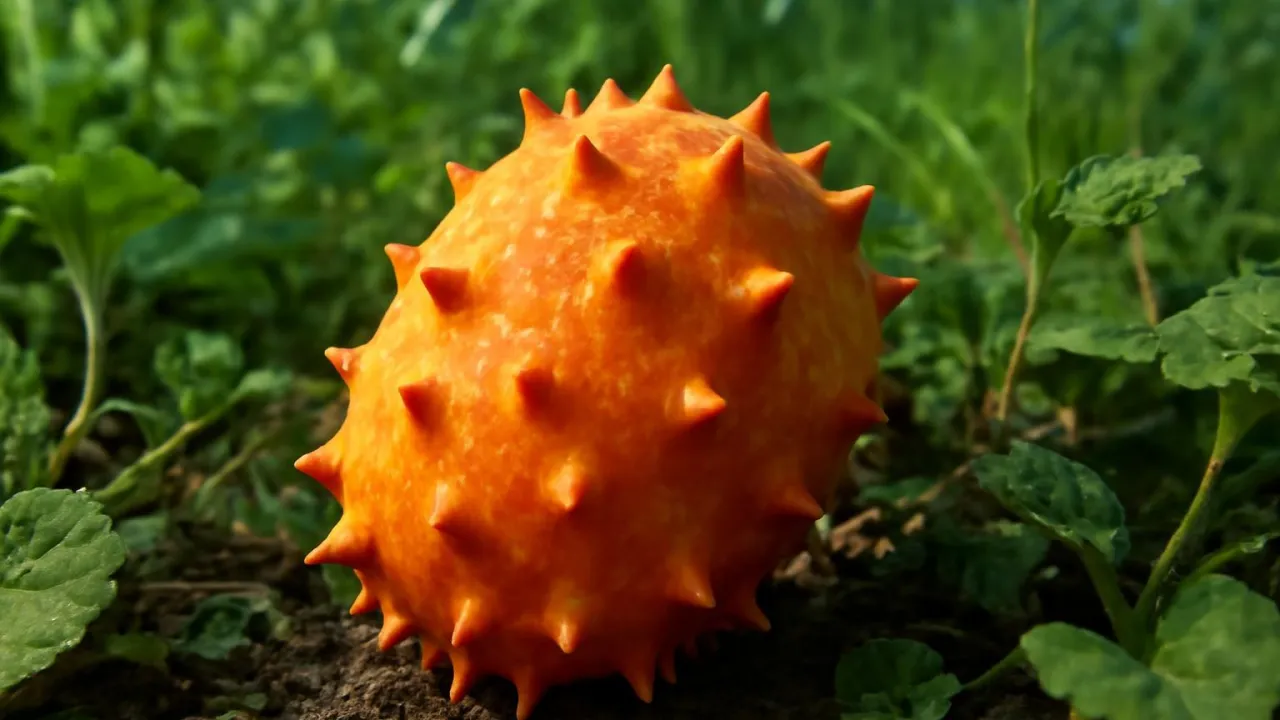
The horned melon’s spikes protect it like tiny orange armor!
✨ Word Sparks (Grade 2 Glossary)
Tap 🔊 to hear
vine
A plant stem that grows along the ground
nutrients
Food parts plants need to grow strong
protect
To keep safe from harm or danger
🪝
Did you know a fruit can wear a spiky orange coat?
1
Spiky Orange Skin
The horned melon has bright orange skin with many sharp spikes. It grows on a in warm places. The spikes help it from animals. People find its look very strange and fun.
2
Green Jelly Inside
Inside, the fruit is bright green and jelly-like with many small seeds. The seeds are soft and slippery, making it easy to eat. The jelly holds water and for the seeds. This helps the seeds grow into new plants.
3
Sweet and Sour Taste
The horned melon tastes both sweet and sour, like a mix of cucumber and kiwi. People eat it fresh or add it to drinks and salads. It grows best in warm climates with plenty of sun. Farmers water it regularly to help it grow.
1. What helps protect the horned melon from animals?
2. Where does the horned melon grow best?
🤯 Mind-Blowing Fact • Grade 3
The horned melon’s spikes help it hide among thorny plants to avoid predators!
✨ Word Sparks (Grade 3 Glossary)
Tap 🔊 to hear
predator
An animal that hunts other animals for food
dispersal
When seeds spread far to grow new plants
photosynthesis
How plants use sunlight to make food
🪝
What makes the horned melon’s spiky skin a clever survival tool?
1
Spiky Skin and Camouflage
The horned melon’s spiky skin helps protect it from hungry . Its bright orange color stands out, but the spikes make it hard to eat. This adaptation helps the fruit survive in its warm African habitat. The spikes also act like camouflage among thorny plants.
2
Jelly Inside for Seeds
Inside, the horned melon has green jelly that holds many seeds safely. The jelly provides nutrients and moisture to help seeds grow. When animals eat the fruit, they spread the seeds far away. This process is called seed , which helps the plant reproduce.
3
Growing on Vines
Horned melons grow on long vines that climb or spread on the ground. The vines need sunlight and water to grow healthy fruit. This climbing helps the fruit get more light and air. The plant’s leaves also help with to make food.
4
Tasty Sweet and Sour Flavor
The fruit tastes sweet and sour, similar to a cucumber mixed with kiwi. This flavor attracts animals that help spread seeds. Humans enjoy eating it fresh or adding it to drinks. Its unique taste and texture make it popular in many warm regions.
Horned melons help spread seeds through animals, supporting healthy ecosystems!
✨ Word Sparks (Grade 4 Glossary)
Tap 🔊 to hear
symbiosis
When two living things help each other
herbivore
An animal that eats only plants
irrigation
Giving water to plants on farms
🪝
How does the horned melon’s spiky skin affect its role in nature’s food web?
1
Spikes Protect and Hide
The horned melon’s sharp spikes serve as a physical defense that discourages many predators from eating it. These spikes also help the fruit blend into thorny bushes, providing camouflage that reduces the risk of being spotted. Because of these features, the fruit often survives longer to mature fully. This survival strategy helps maintain its population in warm African ecosystems.
2
Seed Dispersal and Ecosystem Role
When animals do eat the horned melon, they help spread its seeds through their droppings, aiding seed dispersal. This process supports plant reproduction and helps maintain biodiversity. The fruit’s sweet and sour flavor attracts various animals, creating a mutual relationship called . Humans also cultivate horned melons, impacting local agriculture and food markets.
3
Growing Conditions and Distribution
Horned melons thrive in warm climates with well-drained soil and full sun exposure. They are native to Africa but now grow in parts of New Zealand, California, and Australia. Their vines require moderate water, and too much moisture can harm the fruit. Farmers carefully manage to optimize growth and fruit quality.
4
Unique Physical Features
The horned melon’s bright orange skin with horn-like spikes is a unique adaptation that deters . Inside, the vivid green jelly contains seeds surrounded by nutrients and water, essential for seed development. This combination of traits shows how the fruit has evolved to survive and reproduce in its environment. Its unusual appearance also makes it popular among exotic fruit lovers.
Horned melons’ spiky armor and jelly seeds help them survive and spread worldwide!
✨ Word Sparks (Grade 5 Glossary)
Tap 🔊 to hear
endozoochory
Seeds spread by animals eating fruit
mucilaginous
Jelly-like substance that holds water and nutrients
taxonomic
How scientists group living things
🪝
What fascinating adaptations allow the horned melon to thrive across continents?
1
Scientific Classification and Origins
The horned melon, scientifically named Cucumis metuliferus, belongs to the Cucurbitaceae family, which includes cucumbers and melons. It is native to sub-Saharan Africa, where it grows in warm, arid climates. This species was first classified in the 18th century and has since been introduced to various regions worldwide. Its placement highlights its close relation to other vine-growing fruits.
2
Physiological Adaptations and Mechanics
The fruit’s distinctive orange skin is covered with horn-like spines that serve as a mechanical defense against herbivores. Internally, the bright green jelly contains numerous seeds embedded in a hydrating matrix, which retains moisture and nutrients essential for seed germination. The plant’s vine structure allows it to climb or sprawl, optimizing sunlight exposure for photosynthesis. These adaptations maximize survival in diverse environments.
3
Ecological Role and Conservation
Horned melons play a vital role in their ecosystems by providing food for various animals, which in turn disperse seeds through . This mutualistic relationship supports plant propagation and biodiversity. While not currently endangered, habitat loss and agricultural changes could impact wild populations. Conservation efforts focus on sustainable farming and protecting native habitats to preserve genetic diversity.
4
Botanical History and Human Use
Historically, horned melons have been cultivated for centuries by indigenous African communities for food and medicinal uses. Their unique appearance and flavor have gained popularity in global markets. Today, they are grown commercially in New Zealand, California, and Australia. The fruit’s nutritional content includes vitamin C, antioxidants, and electrolytes, making it a healthy exotic choice.
5
Quantitative Comparisons and Growth Data
Horned melons typically measure 3 to 5 inches (7.5 to 13 centimeters) in length and weigh between 8 to 12 ounces (225 to 340 grams). They thrive in temperatures ranging from 65 to 85 degrees Fahrenheit (18 to 29 degrees Celsius). The vine can grow up to 10 feet (3 meters) long during a growing season. Their seeds can remain viable for several years under proper conditions, ensuring continued propagation.