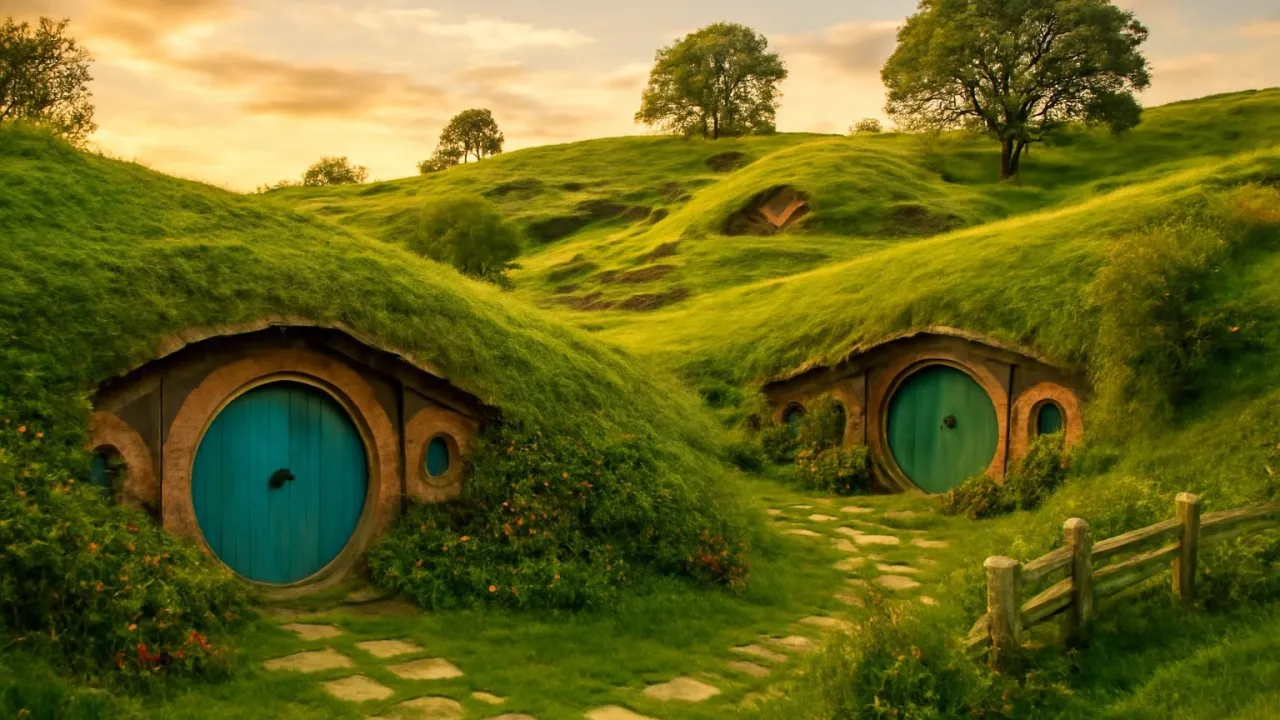
Hobbiton Movie Set Hills
Step Into a Real-Life Storybook Village
Some doors are just the right size for children to walk through!
What if you could walk into a storybook hill?
1 Green Hills and Round Doors
The are bright and green. Little round peek from the grass. It looks like a fairy tale land.
2 Homes in the Hills
Tiny houses hide in the . People can visit and walk around. The are small and round.
3 A Place for Stories
This place was made for a . Many people come to see it. It feels like a story come true.
1. What color are the hills at Hobbiton?
2. What shape are the doors in the hills?
Hobbiton has 44 different hobbit holes, each with a unique door and garden!
Can you imagine living inside a hill with a round green door?
1 A Magical Village
Hobbiton looks like it came from a storybook, with green hills and tiny houses. The homes have round doors and , making them look cozy and fun. People love to visit and walk along the winding paths.
2 A Movie Set Come Alive
This special place was built for a famous movie. Workers made the houses look real, even putting tiny mailboxes and outside. Now, visitors can explore and pretend to be part of the story.
3 Exploring Hobbiton
You can peek inside some of the little homes and see the details. There are colorful flowers and even a small bridge over a pond. Every part was made to feel magical and real.
1. How many hobbit holes are in Hobbiton?
2. What can you find outside the hobbit homes?
Some doors are built extra small to make adults look like tiny hobbits in photos!
What would it feel like to push open a round, wooden door built into a grassy hill?
1 A Village Built for Stories
Hobbiton was designed to look like a real village from a book. The hills are covered in bright green grass and dotted with round, colorful doors. Paths wind between tiny gardens and stone fences, making the set feel alive. Visitors can walk where movie characters once stood.
2 How Was Hobbiton Made?
Builders used wood, , and real plants to create each hobbit hole. They shaped the hills to blend perfectly with the natural . Every door and window was carefully measured to match the storyâs details. The set was left standing after filming, so people could explore it.
3 Special Features of the Set
Hobbiton has 44 unique hobbit holes, each with its own garden and mailbox. The Green Dragon Inn and a stone bridge add to the villageâs charm. Even the fences and paths were made to look old and worn. The entire set covers about 12 acres of rolling farmland.
4 A Place for Imagination
Hobbiton inspires visitors to imagine life in a storybook world. Many people come to take photos and learn about movie-making. Guides explain how the set was built and kept looking real. The magic of Hobbiton comes from its careful design and connection to the land.
1. Why did builders make some doors extra small?
2. What is one way Hobbiton feels real?
The Party Tree at Hobbiton is a real 70-year-old pine tree that became a movie icon.
Imagine the soft sound of wind brushing over green hillsâcould you live in a house hidden beneath the grass?
1 A Movie Set That Became a Landmark
Hobbiton was carefully constructed in 1999 on a sheep farm in Matamata, New Zealand, for a famous fantasy film series. Designers chose the Waikato region because its rolling hills matched the storyâs descriptions. After filming, the set was rebuilt in 2011 using durable materials so it could last for years as a tourist attraction. Today, Hobbiton is recognized worldwide as a unique blend of movie magic and real landscape.
2 Blending Engineering with Nature
Engineers and artists worked together to make the hobbit holes look like they truly belonged in the hills. They used earth and grass to cover the roofs, creating a transition between the set and the natural environment. Each door was custom-built in different sizes to create the of small, hobbit-sized homes. Real gardens and stone paths were planted and arranged to look as if they had grown there for decades.
3 Special Features and Hidden Details
The movie set includes 44 unique hobbit holes, the Green Dragon Inn, a stone bridge, and a central party tree. Every mailbox, fence, and window was handcrafted to match the storyâs world. Some doors are only three feet tall, making adults appear smaller in photos, while others are large enough for groups to enter. The set covers 12 acres, blending film design with the natural beauty of New Zealandâs countryside.
4 Hobbitonâs Lasting Impact
Hobbiton attracts visitors from around the globe, boosting tourism and sharing New Zealandâs culture and landscape. Guides share behind-the-scenes stories and explain how the set was built and maintained. The site demonstrates how creative engineering and storytelling can turn a simple farm into a world-famous . Hobbiton continues to inspire fans, artists, and dreamers of all ages.
1. Why did designers use real grass and earth on the roofs?
2. What is the Party Tree?
Hobbitonâs roofs are engineered with living grass and waterproof layers, making them both beautiful and practical for New Zealandâs rainy weather.
What engineering secrets help Hobbitonâs whimsical hills and doors look so real that visitors feel transported into a storybook world?
1 From Sheep Pasture to Cinematic Landmark
In 1999, filmmakers transformed a 1,250-acre sheep farm in Matamata, New Zealand, into the enchanting Hobbiton Movie Set, selecting the Waikato region for its lush, rolling hills that mirrored the fictional Shire. The set was originally constructed using temporary materials for filming, but due to its popularity, it was rebuilt in 2011 with permanent, weather-resistant materials to withstand New Zealandâs climate and tourist traffic. Today, Hobbiton stands as a globally recognized cultural landmark, drawing hundreds of thousands of visitors annually.
2 Architectural Ingenuity and Landscape Integration
The design team used a combination of traditional carpentry, modern engineering, and environmental landscaping to create 44 unique hobbit holes, each with its own architectural quirks and garden. Roofs were layered with waterproof membranes, real soil, and living grass to ensure proper and seamless blending with the natural terrain. Doors were built in multiple scalesâsome as small as three feet tallâto create illusions, making adults appear hobbit-sized in photographs. Every detail, from crooked chimneys to hand-painted mailboxes, was crafted to evoke an authentic, lived-in feel.
3 Engineering the Illusion of Age and Magic
To create the illusion that Hobbiton had existed for centuries, builders used weathering techniques such as distressing wood, planting mature gardens, and allowing moss to grow naturally on stonework. Artificial aging was applied to fences and doors, while real climbing plants were trained over trellises and rooftops. The Green Dragon Inn and the iconic stone bridge were constructed using local timber and stone, designed to meet modern safety codes without compromising the fantasy aesthetic. Every element was engineered for durability, safety, and immersive storytelling.
4 Hobbitonâs Cultural and Economic Impact
Hobbiton has become a significant driver of tourism for New Zealand, contributing millions of dollars to the local economy and creating jobs in hospitality, guiding, and set maintenance. The site has hosted international events, educational tours, and even weddings, demonstrating its broad cultural appeal. Guides share insights into film production, set design, and horticulture, offering visitors a deeper understanding of how art and engineering intersect. Hobbitonâs preservation also highlights the importance of tourism and landscape stewardship.
5 Legacy of Imagination and Engineering
The Hobbiton Movie Set exemplifies how creative vision, architectural expertise, and environmental awareness can turn a simple pasture into a world-famous landmark. Its success has influenced the design of other immersive attractions worldwide, emphasizing the value of storytelling in architecture. The setâs careful integration with the landscape preserves the natural beauty of the Waikato region while celebrating cinematic history. Hobbiton continues to inspire visitors to imagine, create, and appreciate the blend of nature and human ingenuity.
1. How do Hobbitonâs roofs stay green and weatherproof all year?
2. Why did designers use different door sizes and forced perspective?