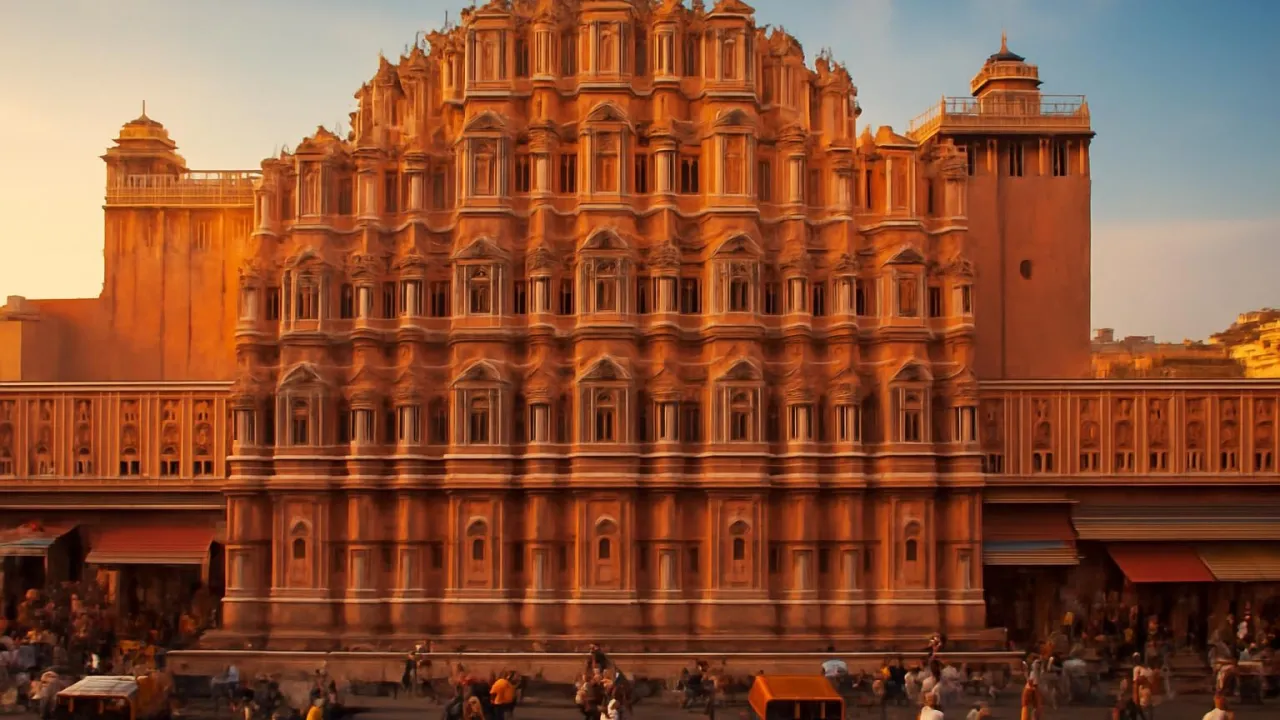
Hawa Mahal’s 953 windows are shaped to look like a giant crown!
✨ Word Sparks (Grade 2 Glossary)
Tap 🔊 to hear
sandstone
A soft rock used to build
jharokha
A special window in Indian palaces
parade
A group of people marching and celebrating
🪝
What if a palace could catch the wind for you?
1
A Palace Full of Windows
Hawa Mahal stands tall in Jaipur and shines bright pink in the sun. Its walls are covered with 953 tiny windows, called , that look like a honeycomb. The palace was built for royal women to watch without being seen. People love to visit and see its beautiful shapes.
2
Windy Wonders
The palace’s windows are not just for looking out—they let cool breezes blow inside. Even on hot days, the air moves through the palace and keeps it comfortable. This clever design helps everyone stay cool naturally. It feels like the palace is breathing with the wind.
3
A Jaipur Treasure
Hawa Mahal is made from pink , which glows in the sunlight. It is one of the most famous places in Jaipur. Visitors come from all over the world to see its amazing windows and feel the cool wind. The palace is a true wonder of India.
The palace’s honeycomb windows use the Venturi effect to cool rooms naturally!
✨ Word Sparks (Grade 3 Glossary)
Tap 🔊 to hear
façade
The front face of a building
lattice
A crisscross pattern like a net
Venturi effect
Air speeds up in narrow spaces
🪝
Imagine standing in a palace where every breeze finds its way to you!
1
A Palace of Pink and Wind
In the bustling city of Jaipur, Hawa Mahal rises with its five stories of rosy sandstone. Its is famous for 953 small windows, called jharokhas, arranged in a honeycomb pattern. These windows let sunlight and air dance across the palace walls. The palace looks like a giant crown sparkling in the morning sun.
2
How Air Moves Through the Palace
The jharokhas are not just pretty—they are an engineering marvel. Their design lets air vibrate and swirl, creating a cool breeze inside. Even in the hot Rajasthan summer, the palace stays comfortable because of its smart ventilation. This natural air conditioning is called the .
3
A Window to History
Hawa Mahal was built in 1799 by Maharaja Sawai Pratap Singh. Royal women used the palace to observe street festivals and processions without being seen. The palace’s shape and windows protected their privacy while letting them enjoy city life. Today, visitors climb its narrow ramps to peek out at Jaipur’s busy streets.
4
A Symbol of Jaipur
The palace is a treasured monument and a symbol of Jaipur’s rich culture. Its pink color comes from local sandstone, which glows at sunrise and sunset. People from around the world visit to see its unique architecture and feel the gentle breezes. Hawa Mahal is truly a palace built for the wind.
The palace’s 953 windows create a shimmering effect, making the building sparkle in sunlight!
✨ Word Sparks (Grade 4 Glossary)
Tap 🔊 to hear
pyramidal
Shaped like a pyramid or triangle
purda
A custom where women stay unseen
passive cooling
Cooling a building without machines
🪝
What secrets of wind and light did ancient architects hide in the palace’s pink walls?
1
The Marvel of Jaipur’s Skyline
Hawa Mahal, with its five-story façade, stands as one of Jaipur’s most iconic monuments, instantly recognizable by its glowing pink sandstone. Its 953 jharokha windows are arranged in a honeycomb lattice, creating a shimmering effect as sunlight passes through. The palace’s unique shape, resembling Lord Krishna’s crown, was designed to enchant both locals and visitors. Early morning and late afternoon, the façade glows with vibrant colors, making it a photographer’s dream.
2
Ingenious Engineering for Air and Privacy
The palace’s lattice windows are a masterpiece of Rajput engineering, using the principles of natural ventilation. As wind passes through the narrow jharokhas, it accelerates, cooling the palace’s interior using the Venturi effect. This design not only kept the royal women comfortable during Rajasthan’s scorching summers but also ensured their privacy while observing city celebrations. The airflow also reduced dust and kept the spaces fresh all day long.
3
A Palace Built for Royal Women
Constructed in 1799 by Maharaja Sawai Pratap Singh, Hawa Mahal was built as an extension of the City Palace. It allowed women of the royal household, who followed the custom of purdah, to watch street processions and festivals without being seen by the public. The palace’s narrow ramps, instead of stairs, made it easy for the women to move between floors. Today, visitors can climb these ramps and imagine life in the royal era.
4
A Lasting Symbol of Jaipur
Hawa Mahal is not just an architectural wonder but a symbol of Jaipur’s artistic and cultural heritage. Its pink sandstone, a signature of Jaipur’s buildings, represents hospitality and vibrancy. The palace attracts tourists, architects, and historians from around the world, inspiring modern designs that use and privacy features. Hawa Mahal continues to remind us how ancient builders used science and art together.
1. How do the jharokha windows help cool the palace?
2. Why did the palace use ramps instead of stairs?
🤯 Mind-Blowing Fact • Grade 5
Hawa Mahal’s 953 jharokha windows not only cooled the palace but also created a golden, sparkling façade visible from afar.
✨ Word Sparks (Grade 5 Glossary)
Tap 🔊 to hear
jharokha
A decorative stone window found in Indian palaces
Venturi effect
When air speeds up as it moves through a narrow space
conservation
Protecting and saving old buildings or nature
🪝
If you could design a palace to harness wind and light, what secrets would you borrow from Hawa Mahal?
1
A Masterpiece of Rajput Architecture
Hawa Mahal, or the Palace of Winds, dominates Jaipur’s skyline with its five-tiered, pyramidal façade constructed from distinctive pink and red sandstone. Built in 1799 by Maharaja Sawai Pratap Singh, the palace was inspired by the crown of Lord Krishna and designed by architect Lal Chand Ustad. Its façade features 953 intricately carved windows, arranged in a honeycomb lattice that maximizes both aesthetic beauty and functional airflow. The palace’s unique silhouette, rising 50 feet (15 meters) above the bustling streets, remains a symbol of Jaipur’s royal heritage.
2
Engineering Marvel: Harnessing the Venturi Effect
The palace’s most remarkable feature is its passive cooling system, achieved through the precise placement and size of its . As hot air from Rajasthan’s arid climate enters the narrow lattice windows, it accelerates due to the , creating a refreshing breeze throughout the interior chambers. This natural ventilation system maintains a comfortable temperature inside, even when exterior temperatures soar above 104°F (40°C). The lattice also diffuses sunlight, reducing glare and heat while illuminating the palace in a soft, golden glow.
3
Cultural and Social Significance
Hawa Mahal was constructed to allow royal women, who observed the strict purdah system, to participate in public life without being seen by outsiders. The palace’s windows provided discreet vantage points for observing street festivals, processions, and daily city life. Its design reflects a blend of Hindu Rajput and Islamic Mughal architectural elements, including floral motifs, arches, and domed canopies. The structure’s ramps, rather than stairs, enabled easy movement between floors, especially for women in heavy traditional attire.
4
Preservation and Global Influence
Today, Hawa Mahal is recognized as a UNESCO World Heritage site and a prime example of sustainable architecture. Its passive cooling and privacy solutions have inspired modern architects seeking energy-efficient building designs. Ongoing efforts focus on preserving its delicate sandstone latticework and restoring faded pigments to their original vibrancy. The palace continues to attract millions of visitors annually, serving as a living classroom for students, engineers, and historians worldwide.
5
A Living Legacy of Science and Art
Hawa Mahal stands as a testament to the scientific ingenuity and artistic vision of 18th-century India. Its harmonious blend of aesthetics, engineering, and social function demonstrates how architecture can respond to climate, culture, and community needs. The palace’s honeycomb façade, intricate , and innovative ventilation system remain relevant in today’s world of sustainable design. As sunlight and wind dance through its windows, Hawa Mahal continues to breathe life into Jaipur’s vibrant history.