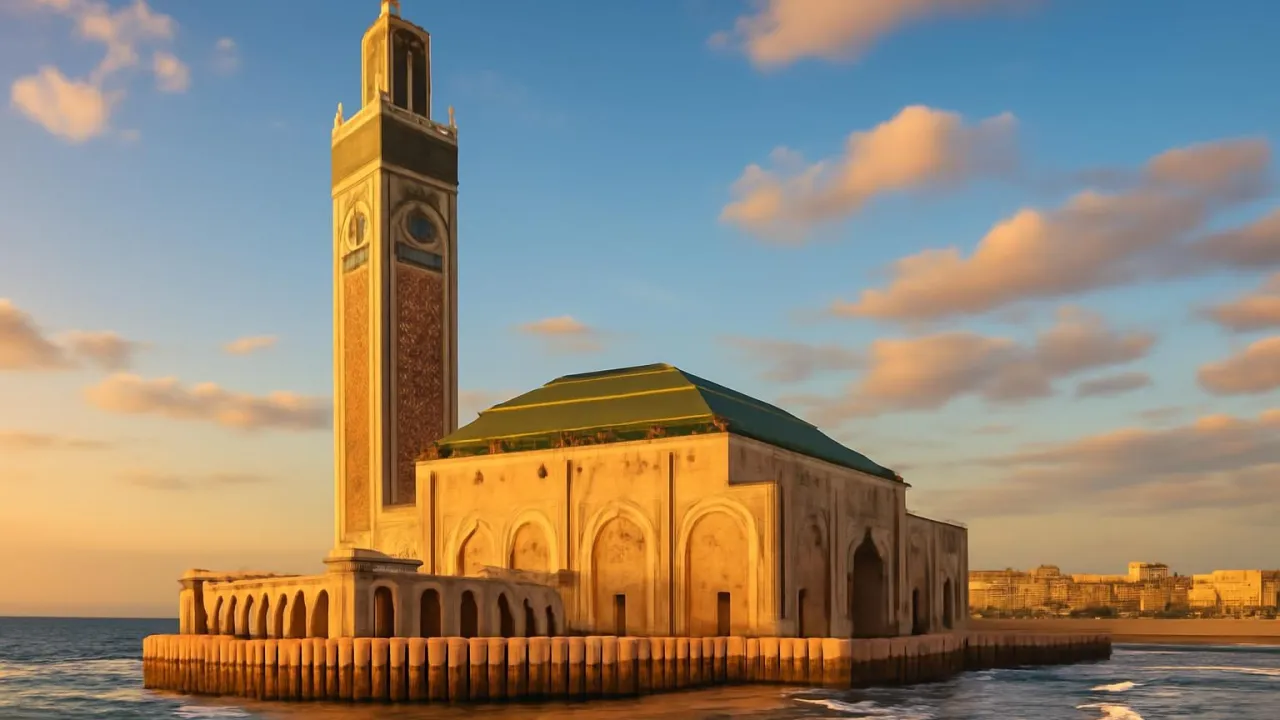
The mosque’s minaret has a green laser that points toward Mecca at night!
✨ Word Sparks (Grade 2 Glossary)
Tap 🔊 to hear
courtyard
An open space outside a building
marble
A shiny, smooth stone
minaret
A tall tower for calling to prayer
🪝
What if you could climb a tower beside the sea?
1
Beside the Atlantic Ocean
The Hassan II Mosque stands right next to the Atlantic Ocean. Its tall rises high above the water, and you can hear the waves from the . People come from all over to see its beauty.
2
Amazing Art and Light
The mosque is covered in colorful tiles and shiny . Sunlight streams through big windows, making patterns on the floor. The huge prayer hall can fit many people at once.
3
A Place for Everyone
Visitors can tour the mosque and learn about its history. People take off their shoes before stepping inside, and everyone is welcome to look at the art. The mosque is a special place for both prayer and learning.
The prayer hall’s roof can slide open to let in sunlight and fresh air!
✨ Word Sparks (Grade 3 Glossary)
Tap 🔊 to hear
mosaic
A picture made from tiny colored pieces
erosion
Wearing away by wind or water
foundation
The strong base of a building
🪝
What secrets does the world’s tallest minaret hold above the ocean?
1
A Marvel by the Atlantic
The Hassan II Mosque rises dramatically at the edge of the Atlantic Ocean in Casablanca. Its minaret, the tallest in the world, stands 689 feet high and can be seen from miles away. The sound of waves mixes with the calls to prayer, creating a peaceful atmosphere. Visitors often pause to admire the mosque’s grand setting and sparkling sea views.
2
Brilliant Design and Patterns
The mosque’s walls are decorated with colorful tiles and carved marble. Sunlight passes through high windows, making bright shapes on the cool stone floor. The huge prayer hall can hold 25,000 people at once, with even more space outside. Builders used special techniques to protect the mosque from ocean .
3
How the Minaret Works
The minaret is a tall tower used for the call to prayer. At night, a green laser shines from the top, pointing toward Mecca, the holy city for Muslims. The tower’s height helps the call to prayer echo across the city. Its strong keeps it steady, even with ocean winds and salty air.
4
A Place for All
People from around the world visit the mosque to learn about Moroccan culture and Islamic art. Guided tours share the mosque’s history and explain its special features. Visitors must remove their shoes to protect the marble floors. The mosque’s beauty and size make it one of the world’s great monuments.
More than 6,000 craftsmen worked day and night to finish the mosque in just seven years.
✨ Word Sparks (Grade 4 Glossary)
Tap 🔊 to hear
artisan
A skilled craftsperson or artist
minaret
A tall tower for calls to prayer
stained glass
Colored glass used for windows
🪝
Imagine standing where marble floors meet the roar of ocean waves—how was this wonder built?
1
A Monument Above the Atlantic
The Hassan II Mosque rises boldly over the Atlantic Ocean, its soaring 689 feet into the Moroccan sky. Built between 1986 and 1993, it was designed by architect Michel Pinseau to celebrate Morocco’s heritage and faith. The mosque’s location, partly over the sea, was chosen to honor a verse from the Qur’an describing God’s throne upon water. Visitors are greeted by the rhythmic sound of waves and the shimmering reflection of the mosque in the ocean.
2
Engineering a Seaside Wonder
Constructing the mosque on the coastline required advanced engineering to resist erosion and saltwater damage. Engineers built a massive concrete foundation anchored deep into the bedrock, using special materials to withstand the ocean’s force. The prayer hall’s sliding roof, made of titanium and cedar wood, can open to let in sunlight and cool sea breezes. The ’s green laser, visible for miles, points directly toward Mecca every night.
3
Artistry in Every Detail
Over 10,000 crafted the mosque’s intricate mosaics, carved plaster, and hand-painted ceilings. The interior is decorated with marble from Agadir, granite columns, and cedar wood from the Middle Atlas Mountains. Sunlight pours through windows, casting colorful patterns across the vast prayer hall, which can hold 25,000 worshippers. The mosque’s blend of traditional Moroccan art and modern engineering makes it a global masterpiece.
4
A Place of Gathering and Learning
The Hassan II Mosque welcomes visitors of all backgrounds to explore its beauty and history. Guided tours explain the mosque’s religious significance and architectural innovations. The site serves as a center for prayer, education, and cultural exchange, strengthening Morocco’s role as a bridge between Africa and the wider world. Its impressive scale and seaside setting inspire awe in everyone who visits.
1. Why did engineers use special materials for the mosque’s foundation?
2. How does the mosque connect tradition and modern engineering?
🤯 Mind-Blowing Fact • Grade 5
The mosque’s sliding roof can open in just five minutes, revealing the sky to 25,000 worshippers below.
✨ Word Sparks (Grade 5 Glossary)
Tap 🔊 to hear
zellij
Tiny colored tiles forming detailed patterns
reinforced concrete
Extra-strong concrete with steel inside
esplanade
A wide, open area for gatherings
🪝
What feats of engineering and artistry let the Hassan II Mosque rise where land meets the roaring Atlantic?
1
A Vision Anchored in Faith and Water
Picture standing at the edge of Africa, where marble floors seem to float above the Atlantic’s crashing surf. The Hassan II Mosque, completed in 1993, was commissioned by King Hassan II to symbolize Morocco’s spiritual and architectural ambition. Its location—partly built over the ocean—was inspired by a Qur’anic verse describing God’s throne upon water. This bold placement required not only visionary design but also groundbreaking engineering to conquer the challenges of wind, waves, and salt.
2
Engineering Against the Elements
To protect the mosque from relentless ocean erosion, engineers constructed a colossal platform anchored into the bedrock below sea level. This foundation absorbs the force of tides and storms, while advanced waterproofing materials prevent saltwater intrusion. The prayer hall’s roof, weighing 1,100 tons, slides open on massive steel tracks, allowing sunlight and ocean breezes to ventilate the vast interior. The mosque’s 689-foot minaret, the tallest in the world, houses a green laser that shines 19 miles toward Mecca each night.
3
Masterpieces in Mosaic and Marble
Over 10,000 Moroccan artisans spent years crafting intricate mosaics, hand-carved cedar ceilings, and marble columns sourced from Agadir. The mosque’s interior features 124 marble fountains, enormous chandeliers, and 53,000 square feet of hand-painted tiles. Sunlight streams through stained glass windows, creating a kaleidoscope of color across the prayer hall’s polished marble floor. The blend of traditional Islamic artistry and modern engineering has made the mosque a global architectural icon.
4
A Center of Worship and World Heritage
The mosque’s prayer hall accommodates 25,000 worshippers, while its vast holds another 80,000. As one of the few major mosques open to non-Muslim visitors, it fosters cultural exchange and understanding. Guided tours highlight the mosque’s religious significance, seismic-resistant structure, and environmental innovations, such as heated floors and ocean water purification for ablutions. The Hassan II Mosque stands as a testament to Morocco’s role at the crossroads of Africa, Europe, and the Islamic world.
5
Legacy of Innovation and Inspiration
Today, the Hassan II Mosque is celebrated not only for its breathtaking beauty but also for its engineering achievements. Its construction required the collaboration of international architects, engineers, and local craftsmen, setting new standards for building in challenging environments. The mosque’s minaret remains a beacon for ships and travelers, while its artistry inspires architects worldwide. As waves crash below, the mosque endures as a symbol of faith, resilience, and Morocco’s enduring connection to the sea.