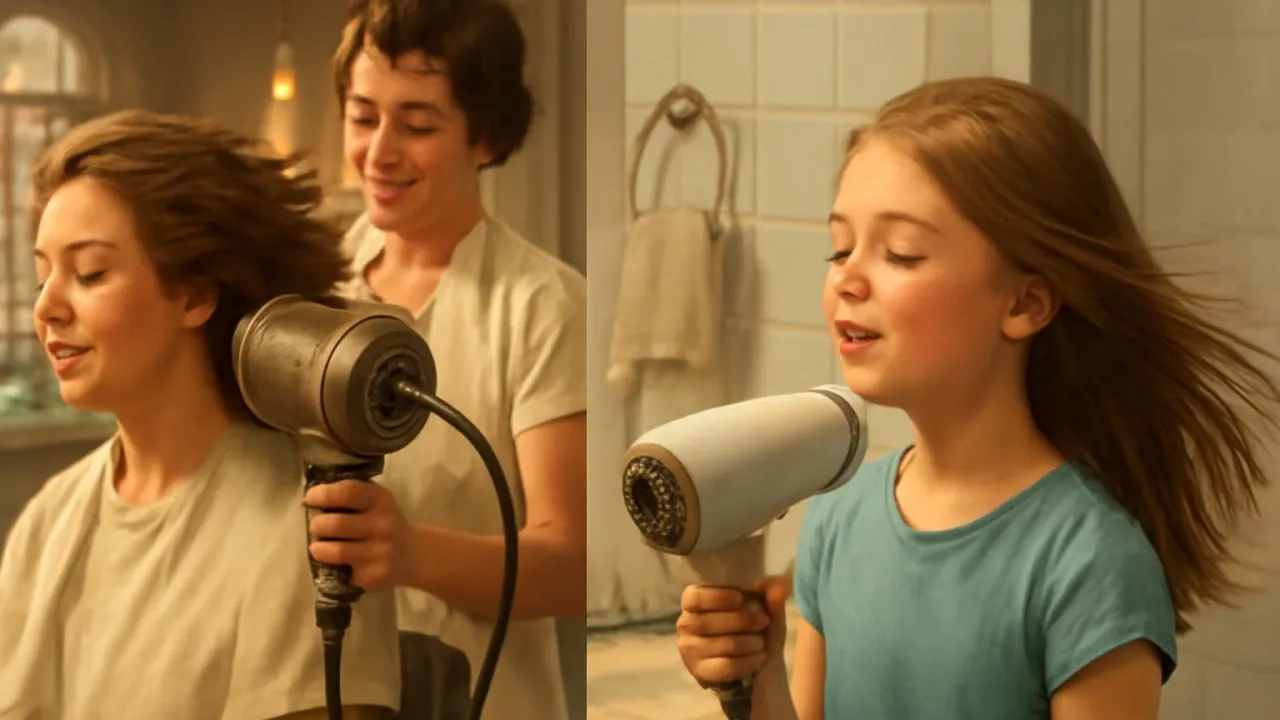
The very first hair dryers were so big, people had to sit under them!
✨ Word Sparks (Grade 2 Glossary)
Tap 🔊 to hear
coil
A wire that gets hot
salon
A place to cut hair
style
To shape or arrange hair
🪝
What would happen if you could blast your hair dry in seconds?
1
A Noisy Helper
Hair dryers make a loud whooshing sound, and they blow warm air quickly. People use them after washing their hair, so it dries much faster. You might see them at home or in a busy hair .
2
How Does It Work?
Inside the dryer, a fan spins and pushes air over a hot . The warm air rushes out and makes wet hair dry fast. Some dryers even have cool settings for gentle drying.
3
Why People Love Them
Dryers help people their hair in fun ways, like making it straight or fluffy. They save time, especially on cold mornings. Some dryers are small for travel, while others are big for .
Some modern hair dryers use ions to help make hair shiny and less frizzy!
✨ Word Sparks (Grade 3 Glossary)
Tap 🔊 to hear
evaporation
When water turns into air
coil
A wire that heats up
vibration
A fast shaking movement
🪝
Can you imagine the buzz and warmth of a hair dryer on a chilly morning?
1
A New Way to Dry
Before hair dryers, people waited hours for hair to air dry. In the 1890s, Alexandre-Ferdinand Godefroy invented the first electric hair dryer for salons in Paris. Early dryers were large and noisy, but they changed how people cared for their hair.
2
Engineering the Blow
A modern hair dryer uses a small electric motor to spin a fan. The fan pushes air over a metal that gets hot when electricity flows through it. This combination of moving air and heat dries hair faster than air alone. Some dryers even use special nozzles to focus the airflow.
3
Vibration and Heat
Inside the dryer, the fan creates a that helps move air quickly. The heated turns electrical energy into thermal energy, making the air feel warm. This warm air evaporates water from wet hair strands. The process is called , and it happens much faster with heat.
4
From Salons to Homes
In the 1920s, smaller handheld hair dryers were invented for home use. Today, dryers come in many shapes and colors, with features like cool air and diffusers. Hair dryers help people style their hair and save time every day. They are now a common tool in homes and salons worldwide.
The hottest hair dryers can blow air at over 140 degrees Fahrenheit—almost as hot as a summer day in the desert!
✨ Word Sparks (Grade 4 Glossary)
Tap 🔊 to hear
thermal energy
Heat energy from electricity
evaporation
Water turning into invisible vapor
nozzle
The part where air comes out
🪝
What if you could invent a machine that dries hair in minutes instead of hours?
1
From Salons to Every Home
In the late 1800s, Alexandre-Ferdinand Godefroy created the first electric hair dryer for his Paris salon. This early machine was large, heavy, and attached to a seat, blowing heated air over customers’ heads. By the 1920s, inventors designed smaller, handheld dryers that could be used at home, making hair drying much faster and more convenient for everyone.
2
How Does a Hair Dryer Work?
A hair dryer uses an electric motor to spin a fan, which pulls air in through the back. The air passes over a heated metal coil, where electrical energy is converted into . The hot air is blown out through the , speeding up from wet hair. Some dryers also have cool settings or diffusers for different hair types.
3
The Science of Evaporation
When warm air from the dryer hits wet hair, it causes water molecules to vibrate and move faster. This extra energy helps the water change from liquid to gas, a process called . By increasing the temperature and air movement, hair dryers make evaporation happen much more quickly than air drying alone.
4
Changing Styles and Cultures
The invention of the hair dryer changed how people cared for and styled their hair around the world. It allowed for new hair fashions, from sleek straight looks to fluffy curls. Today, hair dryers are found in almost every home and salon, and modern designs focus on safety, efficiency, and protecting hair from heat damage.
2. Why did people want smaller hair dryers at home?
🤯 Mind-Blowing Fact • Grade 5
The fastest professional hair dryers can dry long hair in under 5 minutes using more than 2,000 watts of power!
✨ Word Sparks (Grade 5 Glossary)
Tap 🔊 to hear
resistance
How something slows or stops electricity
ionic
Using charged particles to help hair
ergonomic
Designed to fit your hand comfortably
🪝
Have you ever wondered how a hair dryer transforms dripping wet hair into a styled masterpiece in just minutes?
1
A Revolution in Hair Care
In the late 19th century, French inventor Alexandre-Ferdinand Godefroy designed the first electric hair dryer for his Paris hair salon. His original device was essentially a seated hood connected to a gas stove chimney, channeling hot air over the client’s head. By the 1920s, engineers in Germany and the United States developed the first portable, handheld hair dryers, making personal hair drying accessible for homes around the world.
2
Mechanical and Thermal Engineering
A modern hair dryer contains an electric motor that spins a fan at thousands of revolutions per minute. This fan draws in ambient air and forces it over a resistive metal coil, which heats up due to electrical . The heated air is expelled through a narrow nozzle, significantly increasing its velocity and temperature, which accelerates the evaporation of water molecules from hair strands. Many dryers now include ceramic, tourmaline, or technologies to further improve drying efficiency and hair health.
3
Physics of Evaporation and Airflow
The principle behind hair drying is rapid evaporation, driven by increased air temperature and movement. Warm air has more thermal energy, causing water molecules on the hair’s surface to vibrate and escape into the air as vapor. The velocity of the airflow also helps physically push moisture away from the hair. Advanced dryers may use negative ions to break up water droplets, reducing static and frizz for smoother, shinier hair.
4
Impact on Society and Innovation
The hair dryer revolutionized personal grooming, making it possible for people to dry and style their hair quickly regardless of climate or season. This invention contributed to the rise of new hair fashions and the global beauty industry, influencing everything from daily routines to professional salon techniques. Today’s hair dryers are designed with multiple heat and speed settings, safety features, and shapes for comfort and efficiency.
5
From Past to Future
Modern hair dryers can reach air temperatures of 140°F (60°C) and airflow speeds of over 60 miles per hour. Engineers continue to innovate, developing quieter motors, lighter materials, and even smart dryers that automatically adjust heat to protect hair health. The evolution of the hair dryer demonstrates how science and engineering can solve everyday problems and spark creativity across cultures and generations.