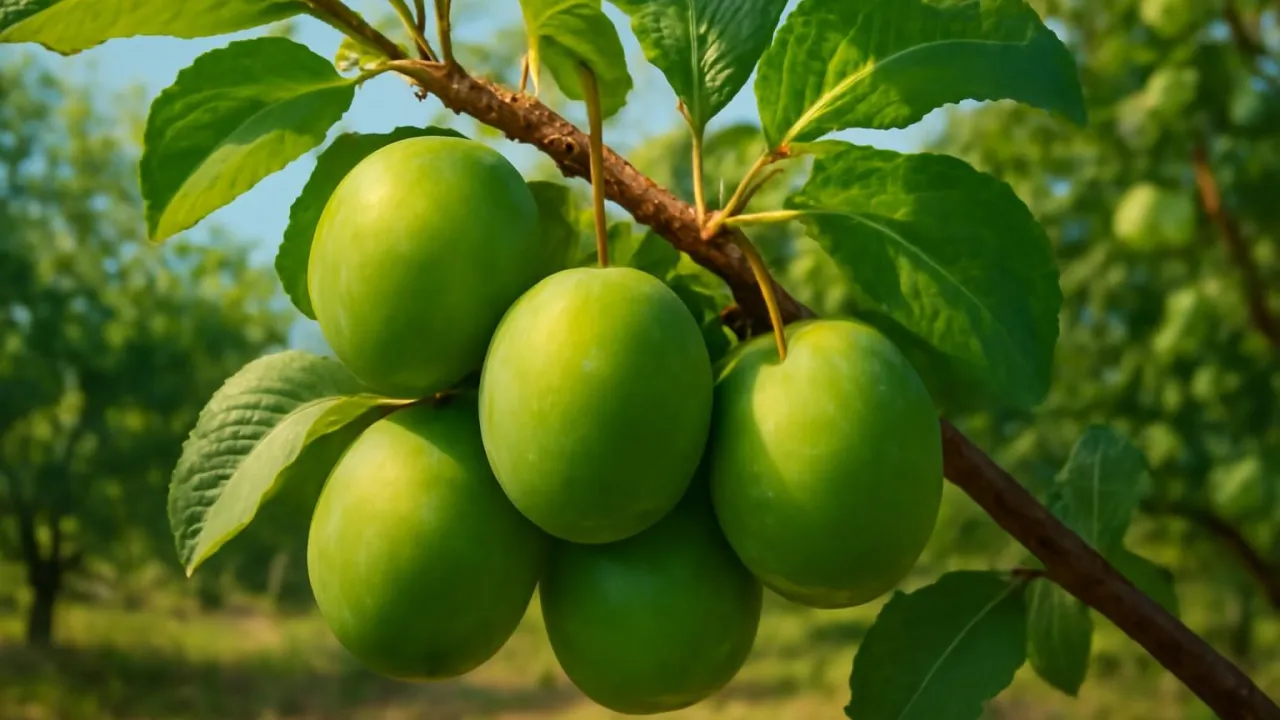
Greengages are a type of plum that has been enjoyed by people for hundreds of years!
✨ Word Sparks (Grade 2 Glossary)
Tap 🔊 to hear
ripe
Ready to eat and sweet
climate
The usual weather in a place
preserve
To keep food fresh for longer
🪝
Did you know greengages are tiny green plums that taste very sweet?
1
What Greengages Look Like
Greengages are small, round fruits that have smooth green skin and a shiny surface. They grow on leafy trees that like sunny places. The fruit is about one inch wide and feels soft when .
2
Where Greengages Grow
These fruits grow best in warm, temperate where there is plenty of sun and water. Greengage trees need good soil and care to produce sweet, juicy fruit. Birds and animals often eat the fruit from the trees.
3
Why Greengages Are Special
Greengages have a very sweet taste that many people enjoy fresh or in desserts. Their smooth skin and juicy flesh make them a favorite fruit. They are also used to make jams and .
Greengages are considered one of the sweetest plums because of their high natural sugar content!
✨ Word Sparks (Grade 3 Glossary)
Tap 🔊 to hear
camouflage
To blend in with surroundings
pollination
When bees help flowers make fruit
nutrients
Food plants need to grow strong
🪝
Have you heard that greengages are a special type of plum with a sweet secret?
1
Greengage Appearance and Texture
Greengages are small, round fruits with smooth, shiny green skin that well in leaves. Their flesh is soft and juicy, perfect for eating fresh or cooking. The fruit’s pit inside holds the seed for new trees to grow.
2
Growing Conditions and Adaptations
These fruits grow on trees in temperate climates where sunlight and water provide for growth. Greengage trees adapt to their environment by shedding leaves in winter and blooming in spring. This cycle helps protect the fruit from cold weather.
3
Role in Nature and Pollination
Greengage flowers attract bees, which help pollinate the trees to produce fruit. is important because it allows new fruits to develop. Birds and insects eat the fruit or seeds, helping spread the seeds to new places.
4
Why People Love Greengages
People enjoy greengages for their sweet, juicy flavor and smooth texture. They are often used in desserts or eaten fresh. The fruit’s natural sugars make it a tasty treat that also provides vitamins.
Greengages have been cultivated since the Middle Ages and were prized by royalty for their sweet taste.
✨ Word Sparks (Grade 4 Glossary)
Tap 🔊 to hear
symbiotic
When two living things help each other
orchard
A place where fruit trees grow
cultivate
To grow plants carefully for food
🪝
Did you know greengages play an important role in food webs and have been grown for centuries?
1
Greengage Growth and Climate Effects
Greengage trees thrive in temperate climates where warm summers and cold winters help them grow strong fruit. If the weather is too hot or dry, the fruit may not develop properly, causing fewer harvests. Good soil and water availability directly affect the sweetness and size of the fruit. Changes in climate can impact the timing of flowering and fruit ripening, influencing harvest success.
2
Ecosystem Roles and Pollination
Greengage trees provide food for many animals like birds and insects, which in turn help spread seeds and pollinate flowers. This relationship supports the health of the ecosystem and nearby plants. Bees are especially important for transferring pollen between flowers. Without pollinators, fruit production would decrease significantly, affecting the entire food web.
3
Human Impact and Agriculture
Humans have cultivated greengages for hundreds of years, selecting for sweeter and larger fruit. Modern farming techniques help protect trees from pests and diseases, improving fruit quality. However, overuse of chemicals can harm beneficial insects and soil health, reducing biodiversity. Sustainable farming practices aim to balance crop yields with environmental care.
4
Geographic Distribution and Uses
Originally from Europe, greengages are now grown in many temperate regions worldwide. They are popular in desserts, jams, and fresh eating. Their cultivation supports local economies and preserves traditional fruit varieties. Growing greengages also encourages biodiversity by maintaining heirloom cultivars and supporting pollinators.
1. What helps greengage trees produce fruit in orchards?
2. How do humans help greengages grow better?
🤯 Mind-Blowing Fact • Grade 5
Greengages contain some of the highest natural sugar levels among plums, making them uniquely sweet.
✨ Word Sparks (Grade 5 Glossary)
Tap 🔊 to hear
drupe
Fruit with a hard pit inside
photosynthesis
How plants make food from sunlight
heirloom
Old plant variety kept for many years
🪝
What makes greengages one of the most treasured plums in botanical and culinary history?
1
Scientific Classification and Botanical Details
Greengages belong to the genus Prunus, species domestica, subspecies italica, placing them within the Rosaceae family. This taxonomic classification groups them with other plums, cherries, and almonds, highlighting their shared evolutionary traits. Their fruit is botanically classified as a , characterized by a fleshy exterior and a single hard pit inside.
2
Physiological Mechanics of Growth
Greengage trees require a temperate climate with well-drained soil and sufficient sunlight to perform efficiently. Their leaves convert sunlight into energy, which supports fruit development over several months. The fruit ripens in late summer, accumulating sugars that give the greengage its distinctive sweet flavor and smooth texture.
3
Conservation and Historical Cultivation
The greengage has been cultivated in Europe since at least the 15th century, with historical records showing its popularity among nobility. Conservation efforts today focus on preserving varieties threatened by modern agricultural practices. Maintaining genetic diversity ensures resilience against pests, diseases, and changing climates.
4
Quantitative Comparisons and Growth Data
Typically, greengage fruits measure around 2.5 centimeters in diameter and weigh approximately 30 grams each. They grow on trees that can reach heights of 4 to 6 meters, producing fruit harvests averaging 20 to 30 kilograms per mature tree annually. Optimal temperatures for growth range between 60 and 80 degrees Fahrenheit.
5
Culinary and Economic Importance
Greengages are prized for their intense sweetness, often containing up to 15 grams of natural sugars per 100 grams of fruit. They are used in jams, desserts, and eaten fresh, contributing to local economies in temperate regions. Their cultivation supports sustainable agriculture by encouraging biodiversity and traditional farming methods.