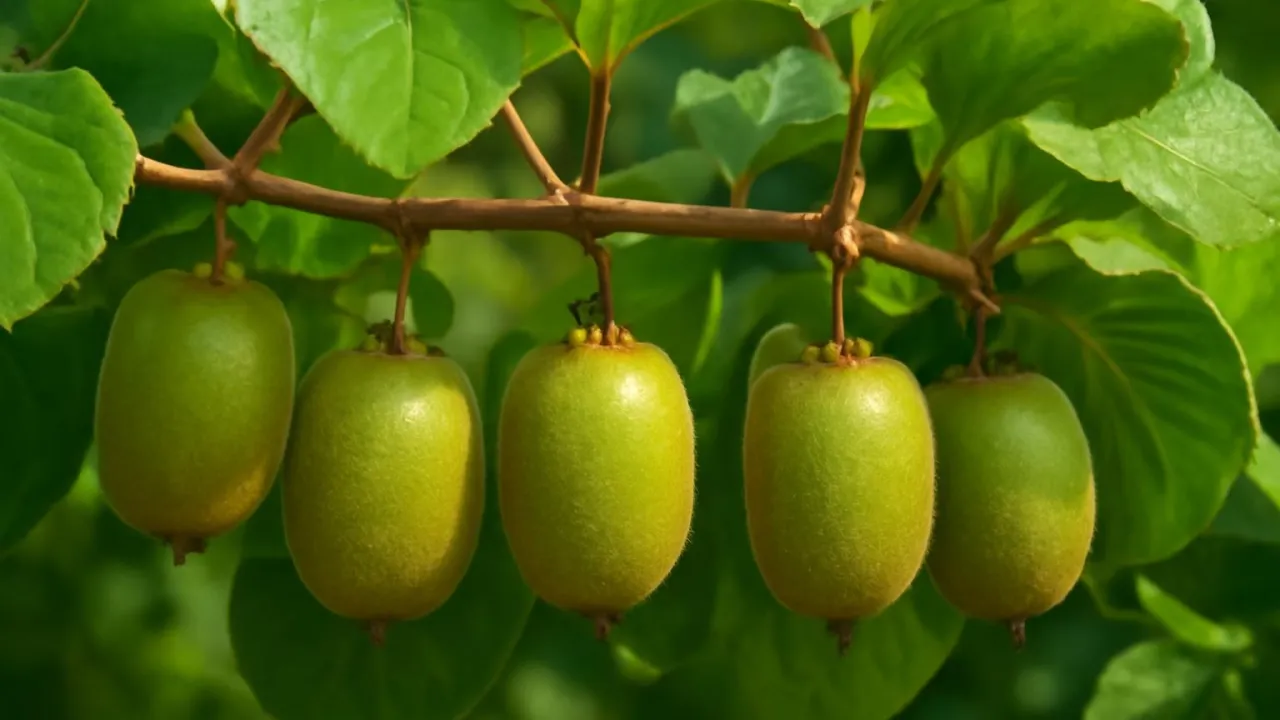
A single green kiwifruit has more vitamin C than an orange!
✨ Word Sparks (Grade 2 Glossary)
Tap 🔊 to hear
pollination
When flowers get pollen to make fruit
vitamin C
A nutrient that helps keep you healthy
flesh
The soft, juicy part inside a fruit
🪝
Have you ever tasted a fruit with tiny black seeds inside?
1
Fuzzy Outside, Bright Green Inside
The green kiwifruit has fuzzy brown skin and bright green inside. It grows on long vines that climb trees or poles. Farmers pick the fruit when it is ripe and juicy. Kids enjoy its sweet and sour taste.
2
Growing in Cool Places
Green kiwifruit plants need full sun and plenty of water to grow well. They are native to China but grow in many cool places worldwide. The vines produce flowers that turn into fruit after . The fruit grows bigger over several months.
3
A Healthy and Tasty Snack
Green kiwifruit is rich in , which helps keep people healthy. It also has tiny black seeds that you can eat safely. The fuzzy skin is usually not eaten because it feels rough. Many people slice the fruit to enjoy its juicy inside.
Green kiwifruit seeds can grow into new plants if planted in soil!
✨ Word Sparks (Grade 3 Glossary)
Tap 🔊 to hear
camouflage
Colors that help hide from animals
pollination
When pollen moves to make fruit grow
nutrients
Food from soil and water for plants
🪝
What helps the green kiwifruit survive on fuzzy vines outdoors?
1
Fuzzy Skin and Bright Green Flesh
The green kiwifruit has fuzzy brown skin that protects it from insects and weather. Inside, the bright green flesh is juicy and filled with tiny black seeds. These seeds help the plant reproduce when animals eat the fruit. The fuzzy skin also helps the fruit keep moisture.
2
Growing on Vines in Cool Climates
Green kiwifruit grows on long vines that climb over trees or trellises for sunlight. The plant thrives in cool, temperate climates with plenty of water. happens when bees move pollen from flower to flower. This process allows the fruit to develop and grow.
3
Adaptations for Survival
The fuzzy skin acts as , blending with brown branches to hide from predators. The fruit’s bright green color attracts animals that help spread seeds. from the soil and water support the fruit’s growth. These adaptations help the kiwifruit survive in its environment.
4
From Flower to Fruit
The kiwifruit starts as a small flower with white petals that bloom in spring. After , the flower changes into a small green fruit. Over months, the fruit grows bigger and sweeter until harvest time. This life cycle is important for the plant’s reproduction.
Green kiwifruit plants can produce over 100 fruits on a single vine each season!
✨ Word Sparks (Grade 4 Glossary)
Tap 🔊 to hear
symbiosis
A helpful relationship between living things
photosynthesis
How plants use sunlight to make food
irrigation
Giving water to plants on farms
🪝
How does the green kiwifruit fit into its ecosystem and help people?
1
Protective Fuzzy Skin and Growth
The green kiwifruit’s fuzzy skin protects it from pests and harsh weather conditions, which helps it survive longer on the vine. It grows best in temperate regions where there is plenty of sunlight and water availability. The vines climb on trellises or trees to reach sunlight, which is essential for . This growth pattern allows the plant to maximize energy for fruit development.
2
Role in Food Webs and Seed Dispersal
When animals eat the kiwifruit, they help disperse its seeds by carrying them to new locations, which supports plant reproduction. This symbiotic relationship benefits both the plant and the animals that rely on it for food. The fruit’s bright green color and sweet taste attract birds and mammals. These interactions are vital for maintaining healthy ecosystems where kiwifruit grows.
3
Agricultural Importance and Human Use
Green kiwifruit is cultivated worldwide for its nutritional value, especially high vitamin C content, which supports human health. Farmers carefully manage and pruning to improve fruit quality and yield. The fuzzy skin is usually peeled before eating because it can feel tough, though it contains fiber. The fruit’s popularity has increased global trade and farming practices.
4
Geographic Distribution and Climate Needs
Originally native to China, green kiwifruit is now grown in New Zealand, Italy, and the United States among other countries. It requires a temperate climate with mild winters and warm summers to thrive. Frost can damage the vines, so farmers protect plants during cold weather. Understanding these climate needs helps growers produce healthy fruit consistently.
Green kiwifruit can have up to 1,000 tiny seeds inside each fruit, all edible and nutritious!
✨ Word Sparks (Grade 5 Glossary)
Tap 🔊 to hear
deciduous
Plants that lose leaves each year
photosynthesis
Plants making food using sunlight
pollination
Transfer of pollen to make seeds
🪝
What scientific secrets make green kiwifruit a powerful and popular fruit worldwide?
1
Taxonomy and Botanical Classification
Green kiwifruit belongs to the genus Actinidia and species deliciosa, within the family Actinidiaceae. It is classified as a berry botanically, despite its fuzzy skin and small size. The plant is a woody vine that produces flowers requiring to develop fruit. Understanding its taxonomy helps scientists study its relatives and breeding.
2
Physiological Mechanics and Growth
The fuzzy skin of green kiwifruit contains tiny hairs that reduce water loss and protect against pests. in the vine’s leaves provides energy for fruit development over several months. The fruit accumulates sugars and vitamin C as it ripens, making it nutritious and flavorful. , often by bees, triggers fruit set and seed formation.
3
Conservation, Cultivation, and History
Originally native to mountainous regions of China, green kiwifruit was introduced to New Zealand in the early 20th century, where cultivation techniques improved its yield. Conservation efforts focus on protecting wild relatives and genetic diversity. Modern farming uses irrigation, pruning, and frost protection to maximize production. The fruit’s global popularity has led to extensive agricultural research.
4
Quantitative Comparisons and Nutritional Facts
A typical green kiwifruit weighs about 75 grams and measures 5 to 8 centimeters in length. It contains approximately 92 milligrams of vitamin C per 100 grams, surpassing oranges. The fruit’s sugar content increases from 6 to 10 percent during ripening. Optimal growth temperatures range between 59 and 77 degrees Fahrenheit for best fruit quality.
5
Ecological and Economic Impact
Green kiwifruit cultivation supports local economies by providing income for farmers worldwide, especially in New Zealand and Italy. Ecologically, the plant contributes to biodiversity by offering food for various animals and supporting pollinators. Sustainable farming practices aim to reduce water use and chemical inputs. The fruit’s export value continues to grow annually.