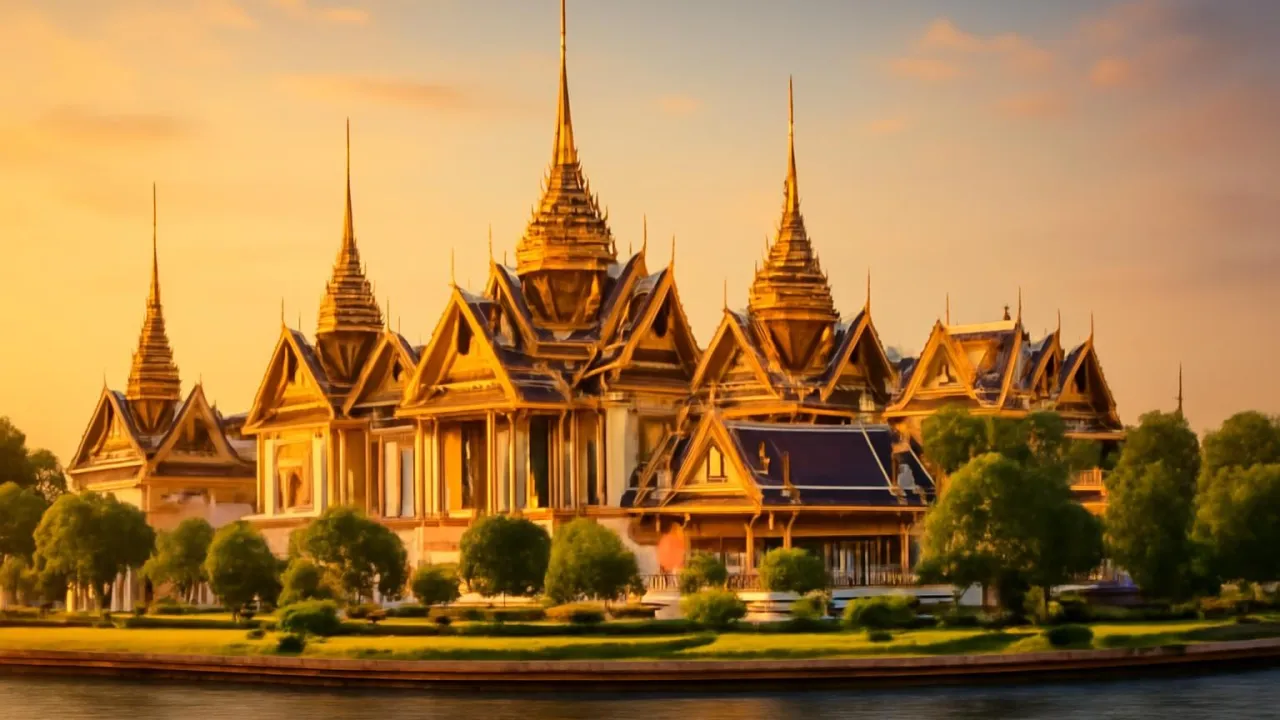
The palace’s golden rooftops sparkle even brighter during Thailand’s sunny days!
✨ Word Sparks (Grade 2 Glossary)
Tap 🔊 to hear
ceremony
A special event or celebration.
guardian
A statue that protects a place.
courtyard
An open space inside a building.
🪝
What would it feel like to walk among golden rooftops in Thailand?
1
Shining in the Sun
The Grand Palace has sparkling gold roofs and colorful walls. It stands in the middle of busy Bangkok, Thailand. Visitors see statues and gardens all around. The palace looks like a magical kingdom from a story.
2
A Home for Kings
Long ago, Thai kings lived and worked in the palace. Now, it is used for special ceremonies and important events. People come from all over the world to visit. They walk through big halls and open .
3
Amazing Details
The palace has over 100 beautiful buildings to explore. Many roofs are covered with shiny glass and gold. Statues of giant stand at the gates. Each part of the palace tells a story of Thai history.
The Emerald Buddha, Thailand’s most sacred statue, sits inside the palace’s Wat Phra Kaew temple.
✨ Word Sparks (Grade 3 Glossary)
Tap 🔊 to hear
spire
A tall, pointed part of a roof.
restoration
Fixing and caring for old buildings.
legend
An old story passed down over time.
🪝
Imagine hearing the chimes of temple bells echoing through golden halls—what secrets might the Grand Palace hold?
1
A Palace Full of Wonders
The Grand Palace in Bangkok glitters with golden and colorful rooftops. Visitors see statues of mythical guardians and dragons at every turn. The palace complex covers a huge area with over 100 buildings. Bright sunlight makes the glass and gold decorations sparkle brilliantly.
2
Royal History
The palace was built in 1782, beginning the Rattanakosin Era of Thailand. Thai kings lived and ruled here for over 150 years, using the palace for important ceremonies. Today, it is still used for royal events and national celebrations. The palace is a symbol of Thai culture and tradition.
3
Amazing Architecture
The palace’s roofs are made with thousands of colored glass tiles. Golden rise high above the buildings, showing off classic Thai architecture. The buildings are arranged around large courtyards and gardens. Statues and murals tell stories from ancient Thai .
4
How It Stays Strong
Builders used brick, wood, and plaster to create sturdy walls and roofs. The sloping roofs help rainwater run off quickly during rainy seasons. Vibrant colors and gold leaf protect the palace from sun and weather. Careful keeps the palace shining for visitors every year.
The palace’s Wat Phra Kaew temple houses the Emerald Buddha, carved from a single block of green jade.
✨ Word Sparks (Grade 4 Glossary)
Tap 🔊 to hear
monarchy
A country ruled by a king or queen.
gilded
Covered with a thin layer of gold.
heritage
Important traditions and history from the past.
🪝
What would you discover if you wandered through the Grand Palace’s sparkling halls and ancient courtyards?
1
A Dazzling Royal Complex
The Grand Palace stands at the heart of Bangkok, dazzling visitors with its golden spires and intricate rooftops. Built in 1782, it marked the beginning of the Rattanakosin Era and the founding of Thailand’s capital city. The palace complex covers over 218,000 square feet and contains more than 100 buildings, each decorated with colorful glass and gold leaf. Its shimmering appearance makes it one of the most recognizable landmarks in Southeast Asia.
2
Home of Kings and Ceremonies
For over 150 years, the Grand Palace served as the official residence and workplace of Thai kings. Important ceremonies, such as royal coronations and state banquets, took place within its grand halls. Today, the palace is still used for special events and remains a powerful symbol of Thailand’s . Tourists from around the world come to admire its beauty and learn about Thai history.
3
Architectural Marvels
The palace’s architecture blends traditional Thai styles with influences from neighboring countries. Its roofs are covered with thousands of colored glass tiles, while spires stretch high into the sky. Large courtyards and lush gardens provide peaceful spaces between the ornate buildings. Statues of mythical creatures and detailed murals illustrate stories from Thai legends and Buddhist teachings.
4
Engineering and Preservation
Engineers designed the palace with sloped roofs to quickly drain heavy monsoon rains. Strong brick and plaster walls help the structures withstand Thailand’s hot, humid climate. Regular restoration projects protect the palace’s delicate decorations from weather and pollution. Thanks to careful preservation, the Grand Palace continues to shine as a living piece of Thai .
1. Why are restoration projects important for the palace?
2. Which temple inside the palace holds the Emerald Buddha?
🤯 Mind-Blowing Fact • Grade 5
The palace’s tallest spire, the Phra Si Rattana Chedi, rises nearly 131 feet (40 meters) above the ground and is covered in pure gold tiles.
✨ Word Sparks (Grade 5 Glossary)
Tap 🔊 to hear
prang
A tall, tower-like spire in Thai temples.
conservation
Protecting and saving important places or things.
legacy
Something valuable passed down through history.
🪝
If you stood beneath the Grand Palace’s golden eaves at sunrise, what stories of kings, engineers, and artists would you uncover?
1
A Jewel in Thailand’s Capital
Rising above the Chao Phraya River, the Grand Palace of Bangkok glimmers with a complex network of gilded roofs, towering spires, and vibrant mosaics. Constructed in 1782, the palace marked the start of the Rattanakosin Era and the establishment of Bangkok as Thailand’s capital. Spanning over 218,400 square feet and encompassing more than 100 buildings, the palace complex is a masterpiece of Thai architecture and a symbol of national identity. Its dazzling appearance attracts millions of visitors each year, eager to experience its royal grandeur.
2
Historical and Cultural Significance
The Grand Palace served as the royal residence and administrative center for Thai monarchs for more than 150 years. Ceremonies such as coronations, royal weddings, and state banquets were held in its lavish halls, reinforcing the monarchy’s importance in Thai society. While the current king no longer lives there, the palace remains a site for official events and religious festivals. Its influence extends beyond Thailand, inspiring architectural styles throughout Southeast Asia and symbolizing the enduring of the Thai royal family.
3
Architectural and Artistic Brilliance
The palace’s architecture fuses traditional Thai elements with influences from China and Europe, creating a unique and harmonious design. Roofs are layered with thousands of colored glass tiles and gold leaf, forming elaborate patterns that shimmer in the sunlight. Tall spires, or , reach skyward, representing sacred mountains in Buddhist tradition. The complex features expansive courtyards, manicured gardens, and intricate murals depicting epic tales from the Ramakien, Thailand’s national legend.
4
Engineering Solutions and Preservation
Engineers constructed the palace using brick, teak wood, and plaster, ensuring stability in Bangkok’s humid, flood-prone environment. Sloping roofs efficiently channel monsoon rains, preventing water damage and erosion. Regular restoration and projects are vital for preserving the palace’s delicate details, as air pollution and tropical weather can threaten its golden surfaces. Modern preservation efforts use both traditional craftsmanship and advanced technology to maintain the palace’s splendor for future generations.
5
A Living Symbol of Thai Heritage
The Grand Palace continues to play a central role in Thai culture, hosting royal ceremonies, Buddhist festivals, and state functions. The revered Wat Phra Kaew temple, within the palace grounds, houses the Emerald Buddha—an ancient statue carved from a single block of jade, believed to protect the nation. The palace’s enduring beauty and historical significance make it a UNESCO World Heritage candidate and a source of national pride. Its blend of artistry, engineering, and tradition offers a living lesson in the power of cultural heritage.