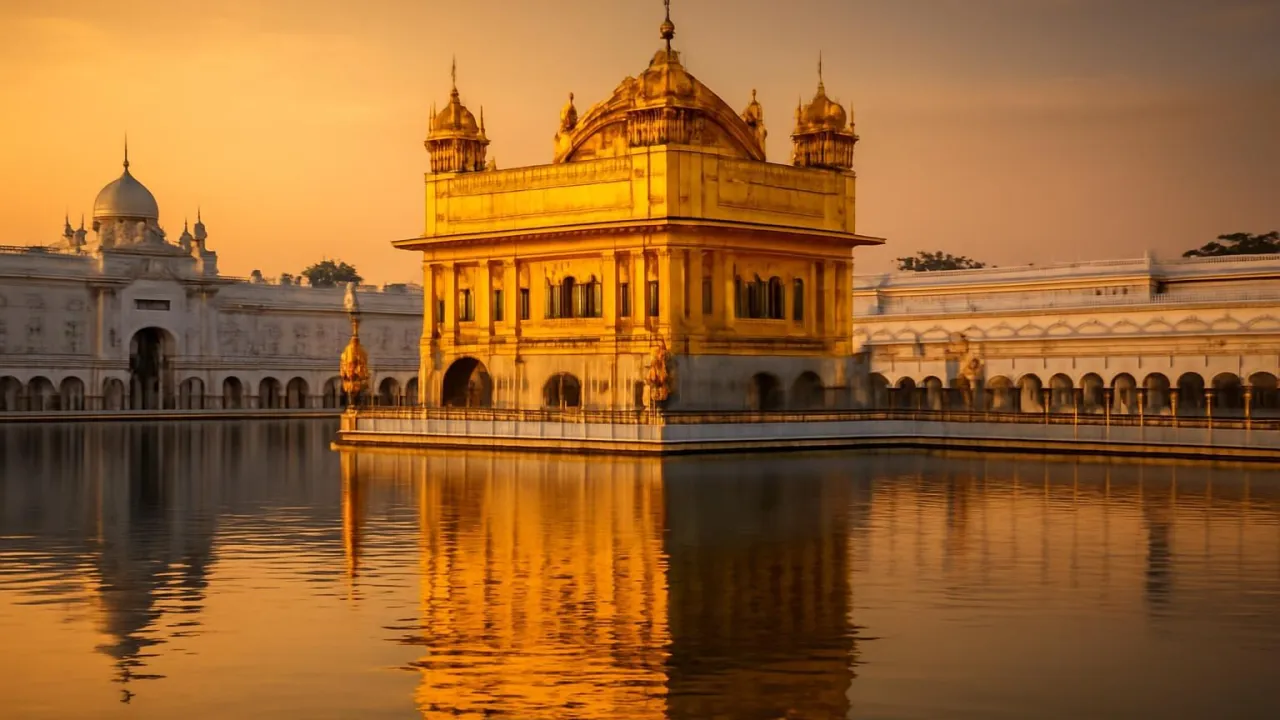
Over 100,000 people eat free meals at the Golden Temple every day!
✨ Word Sparks (Grade 2 Glossary)
Tap 🔊 to hear
dome
A round roof shape
reflection
A picture you see in water
marble
A smooth, hard stone
🪝
What if you saw a golden building floating on water?
1
A Temple That Glitters
The Golden Temple shines in the sunlight, making the water sparkle. Its is covered with real gold, and it looks magical. People see their in the calm pool.
2
A Place for Everyone
Visitors from all over the world come here every day. They walk across a bridge and listen to peaceful music. Inside, helpers serve free meals to everyone, no matter who they are.
3
Special Ways to Show Respect
Before entering, people wash their hands and feet at the gate. They cover their heads and take off their shoes as a sign of respect. The temple is always open for anyone who wants to visit.
The Golden Temple’s kitchen uses over 12,000 pounds of flour daily to feed visitors!
✨ Word Sparks (Grade 3 Glossary)
Tap 🔊 to hear
erosion
Wearing away by water or wind
monument
A building made to honor something
vibration
A fast, tiny shaking movement
🪝
What would it feel like to stand on a bridge and see golden walls glowing over water?
1
A Golden Wonder in India
The Golden Temple sits in the middle of a large, peaceful pool called the Amrit Sarovar. Its dome and upper walls are covered with shining gold, which reflects brightly on the water. Visitors cross a long marble bridge to reach the temple. The golden glow makes it look like the temple is floating.
2
How the Temple Was Built
The temple was built in 1604 using strong marble and bricks. Later, Sikh leaders added layers of real gold to the dome and walls. The building stands on a platform in the water, supported by stone arches. This design helps protect it from and keeps it strong.
3
A Place of Peace and Sharing
The temple is a sacred for Sikhs, but everyone is welcome. Inside, people listen to sacred music called kirtan, which fills the air with calm . The large kitchen, called the langar, serves free meals to thousands every day. Sharing food here shows kindness and unity.
4
Traditions and Respect
Visitors wash their feet before entering and cover their heads with scarves. Shoes are left outside to keep the temple clean and show respect. The temple is open all day and night, welcoming people from every background. Its golden dome shines like a beacon of hope.
The Golden Temple’s gold plating weighs as much as a full-grown polar bear!
✨ Word Sparks (Grade 4 Glossary)
Tap 🔊 to hear
acoustic
Relating to sound or hearing
causeway
A raised path over water
pilgrim
A person who travels for faith
🪝
Have you ever wondered how a temple covered in gold can float peacefully on water for centuries?
1
A Shining Jewel of Sikh Heritage
The Golden Temple, also called Harmandir Sahib, stands at the heart of Amritsar in Punjab, India. Its gleaming gold-covered dome and marble walls have become a symbol of peace and welcome for people worldwide. The temple is surrounded by the Amrit Sarovar, a sacred pool that reflects the building’s golden beauty. and visitors cross a marble , feeling the cool breeze and hearing gentle ripples below.
2
Engineering a Floating Sanctuary
Built in 1604, the temple’s foundation uses stone arches and deep brickwork to support its weight above water. Later, Sikh leaders covered the dome and upper floors with over 880 pounds of real gold. The platform’s arch design helps distribute weight and resist erosion from the pool. This careful engineering has kept the monument stable and shining for more than 400 years.
3
A Place of Harmony and Service
Inside the temple, sacred music called kirtan fills the air, creating soothing vibrations that echo off the marble. The langar, or community kitchen, prepares hot vegetarian meals for up to 100,000 people daily. Volunteers of all backgrounds work together, showing the Sikh values of equality, kindness, and sharing. The Golden Temple is open to everyone, no matter their religion or background.
4
Tradition and Global Impact
Visitors show respect by covering their heads and washing their feet before entering. The temple’s gold dome has inspired architects and artists around the world. Harmandir Sahib remains a powerful symbol of hope, unity, and generosity, attracting millions of visitors each year. Its peaceful glow continues to light the way for people seeking harmony.
1. How does the temple's platform help it last so long?
2. What value does the langar kitchen show?
🤯 Mind-Blowing Fact • Grade 5
The Golden Temple’s kitchen can serve a meal to over 100,000 people in a single day—no ticket or payment needed!
✨ Word Sparks (Grade 5 Glossary)
Tap 🔊 to hear
resonance
A deep, echoing sound that fills space
inlay
Decorative patterns set into a surface
humidity
How much water is in the air
🪝
Imagine sunlight glinting off hundreds of pounds of gold as you walk across a marble bridge, hearing sacred music echo over still water—what secrets might this temple hold?
1
A Masterpiece of Spiritual Architecture
The Golden Temple, or Harmandir Sahib, is the holiest shrine in Sikhism and a global symbol of hospitality and peace. Located in Amritsar, Punjab, the temple was originally completed in 1604 under the guidance of Guru Arjan, the fifth Sikh Guru. Its architecture uniquely blends Islamic, Hindu, and Rajput styles, featuring a gold-plated dome, intricate marble , and a sanctum that appears to float at the center of the sacred Amrit Sarovar pool. The temple’s lower marble level and upper gold-covered floors create a dazzling contrast, especially during sunrise and sunset.
2
Engineering Genius: Floating Foundations and Golden Crowns
The temple’s structural base consists of deep brickwork and stone arches, distributing the building’s weight evenly across the submerged platform. This arch-based engineering resists the erosive forces of water, allowing the temple to remain stable for over four centuries. The gold plating, added in the early 1800s by Maharaja Ranjit Singh, weighs more than 880 pounds (400 kg) and covers the dome and upper walls. The reflective pool not only enhances the temple’s beauty but also helps regulate temperature and , preserving the gold and marble.
3
Acoustics, Sacred Music, and Community Service
Inside the temple, the recitation of the Guru Granth Sahib and continuous kirtan create a unique acoustic , amplified by the marble walls and dome. This resonance produces a calming effect, inviting meditation and reflection among visitors. The langar, or community kitchen, is one of the world’s largest free kitchens, serving up to 100,000 vegetarian meals daily using over 12,000 pounds of flour, 1,500 pounds of rice, and 1,300 pounds of lentils each day. Volunteers from all backgrounds participate, embodying Sikh principles of selfless service and equality.
4
Traditions, Rituals, and Global Influence
Before entering, all visitors must remove their shoes, wash their feet, and cover their heads, demonstrating humility and respect. The temple’s open doors on all sides symbolize acceptance and openness to all faiths and cultures. Harmandir Sahib’s architectural innovations have influenced religious and civic buildings worldwide, and its gold dome is recognized as a beacon of hope and unity. Millions of pilgrims and tourists visit annually, making it one of the most visited spiritual sites on Earth.
5
Legacy of Harmony and Resilience
Throughout history, the Golden Temple has endured invasions, repairs, and restorations, yet it continues to shine as a center of resilience and harmony. Its construction and ongoing service reflect the Sikh values of equality, generosity, and devotion. The temple’s presence in Amritsar has shaped the city’s identity, economy, and culture, fostering a spirit of community and peace. As a UNESCO World Heritage candidate, the Golden Temple stands as a testament to the enduring power of faith, engineering, and human kindness.