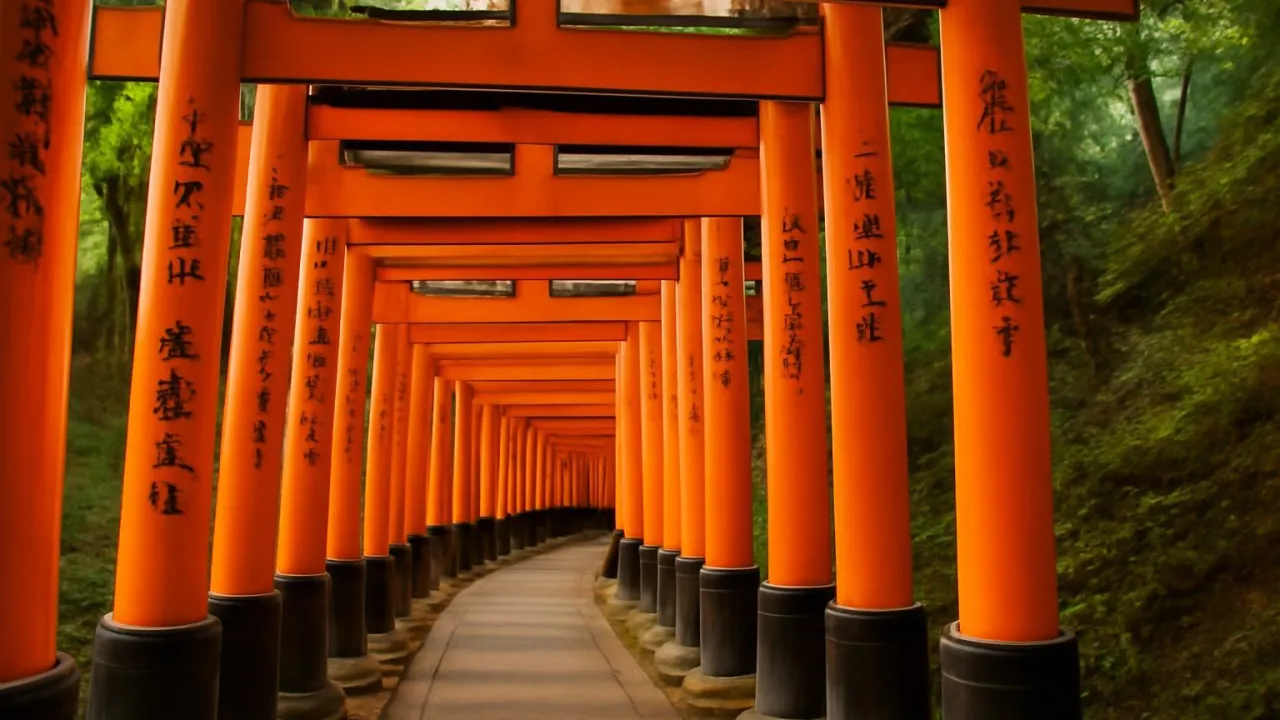
Fushimi Inari Thousand Torii Gates
A Shimmering Path of Crimson Portals
There are over 10,000 red gates to walk through at Fushimi Inari!
What if you could walk through a tunnel of red doors?
1 A Path of Red Gates
Bright red stand tall in a row. They glow in the sunlight. People walk under them every day.
2 Steps Up the Mountain
The go up a green hill. Each step feels like a fun climb. You can see trees and hear birds.
3 A Special Place in Japan
This path is in , Japan. People visit to make . It is a happy, peaceful place.
1. What color are the gates at Fushimi Inari?
2. Where can you find this path of gates?
Some families and businesses donate gates to bring good fortune.
Can you imagine walking under thousands of bright red gates?
1 A Tunnel of Torii
The Fushimi Inari has many tall red gates called . These gates form long tunnels up the mountain. People walk through them and feel like they are in a magical world.
2 Climbing the Mountain
The path winds up a green mountain in Kyoto, Japan. Visitors climb steps and see beautiful trees and birds. Each gate is painted a shiny red color.
3 Why Do People Visit?
People come to make wishes for good luck and happiness. They write their wishes on wooden plaques. The is a peaceful place for everyone.
1. What are the red gates called?
2. Why do people visit Fushimi Inari?
If you walked every path, youâd travel over 2.5 miles (4 kilometers) under the gates!
What would it feel like to walk through a never-ending tunnel of red gates?
1 A Mountain of Crimson Arches
Fushimi Inari Shrine is famous for its thousands of bright red torii gates. These wooden gates form winding paths up Mount Inari in Kyoto, Japan. The gates are painted a color called , which stands out against the green forest. Visitors walk through the arches, hearing the soft crunch of gravel under their feet.
2 How Are the Torii Built?
Each torii gate is made from wood and painted to protect it from rain. The gates are set in rows, creating a tunnel-like effect. Builders use careful measurements to keep the gates straight and evenly spaced. New gates are added every year by people who wish for good fortune.
3 A Place for Wishes and Spirits
Fushimi Inari is a shrine, a place where people pray to the spirit Inari. Visitors write wishes on small wooden plaques called and hang them near the gates. The paths are lined with fox statues, which are believed to be messengers for Inari.
4 A Living Landmark
The shrine has been growing since the year 711 CE. The torii gates are donated by families and businesses who hope for luck and success. Today, over 10,000 torii form a bright, twisting path up the mountain. Fushimi Inari is one of Japanâs most visited and photographed landmarks.
1. What animal statues can you find along the path?
2. Why are new gates added each year?
During festivals, the entire mountain path glows with thousands of lanterns, creating a magical nighttime scene.
Imagine stepping into a glowing red tunnel that stretches up a mountainâwhere does it lead?
1 A Pathway of Endless Torii
Fushimi Inari Shrineâs iconic tunnel of over 10,000 vermilion torii gates winds up the lush slopes of Mount Inari in Kyoto, Japan. These wooden gates create a breathtaking visual effect, especially when sunlight filters through the gaps, painting the stone path with shifting red shadows. Each torii is carefully crafted and painted to resist weathering, preserving its brilliant color for years. Walking beneath the arches, visitors hear the gentle rustle of leaves and distant temple bells.
2 Engineering the Crimson Corridor
The torii gates are constructed using durable Japanese wood, chosen for its strength and resistance to decay. Builders anchor each gate into the earth with stone bases, ensuring stability even during heavy rains and earthquakes. The gates are spaced evenly to create a sense of rhythm and harmony as people walk through. Over centuries, the path has been expanded and restored, blending traditional woodworking techniques with modern preservation methods.
3 Spiritual Significance and Rituals
Fushimi Inari is a sacred Shinto site, dedicated to Inari, the (spirit) of rice, prosperity, and foxes. People visit to pray for success, health, and happiness, often leaving ema plaques with written wishes. Fox statues, known as , are placed along the path as they are believed to be Inariâs messengers. The shrine hosts vibrant festivals, where the gates and mountain come alive with lanterns and music.
4 A Living Heritage of Japan
Founded in 711 CE, Fushimi Inari has grown from a small shrine to a world-famous landmark. Families and businesses donate new torii gates, each inscribed with the donorâs name and wish for good fortune. The continuous addition of gates keeps the path ever-changing, making each visit unique. Fushimi Inariâs red corridor is not only a symbol of Kyoto but also a testament to Japanese craftsmanship and spiritual tradition.
1. How do builders keep the torii gates stable on the mountain?
2. What makes each visit to Fushimi Inari unique?
If all the torii gates at Fushimi Inari were placed end to end, they would stretch farther than 40 Olympic swimming pools lined up together!
What secrets might you discover while passing through thousands of scarlet gates rising into the misty Kyoto hills?
1 Architectural Wonder: The Endless Vermilion Tunnel
As dawn breaks, the Fushimi Inari Shrineâs famous torii gates shimmer with a deep red glow, stretching in seemingly endless rows up Mount Inariâs forested slopes. Each gate, known as a torii, is meticulously crafted from Japanese cypress and painted with layers of , a color believed to ward off evil spirits and preserve the wood. The gates are arranged so closely that they form a continuous tunnel, creating a rhythmic play of light and shadow along the winding 2.5-mile (4-kilometer) path. This architectural marvel draws millions of visitors annually, inviting them to step into a living work of art.
2 Engineering for Endurance and Harmony
The torii gates are engineered to withstand Japanâs humid climate, frequent rainfall, and seismic activity. Each gate is anchored with stone footings set deep into the mountain soil, distributing weight and preventing erosion or tilting. The use of cypress wood, prized for its density and resistance to rot, ensures that the gates endure for decades. Craftsmen employ traditional techniques, fitting beams together without nails, which allows the wood to expand and contract naturally. This combination of ancient methods and modern maintenance preserves both the beauty and stability of the corridor.
3 Cultural and Spiritual Legacy
Fushimi Inari is the head shrine of over 30,000 Inari shrines across Japan, dedicated to Inari Åkami, the Shinto deity of rice, prosperity, and agriculture. The fox, or kitsune, is revered as Inariâs messenger, and hundreds of fox statues line the paths, each holding a symbolic key or jewel. Pilgrims and tourists alike write prayers or wishes on wooden ema plaques, hoping for blessings in business, health, or family. The annual Inari Matsuri festival transforms the mountain with processions, music, and lantern-lit celebrations, connecting centuries of tradition with the present day.
4 Evolution Through Time
Established in 711 CE, Fushimi Inari began as a modest shrine but expanded dramatically during the Edo period, when merchants and tradespeople began donating torii gates as acts of gratitude for prosperity. Each gate bears the name of its donor, creating a living record of community support and individual hopes. The pathâs continual renewalâold gates are replaced as they weatherâreflects the Japanese concept of and the importance of honoring both past and future generations.
5 A Global Icon of Japanese Heritage
Today, Fushimi Inariâs mesmerizing red corridors are recognized worldwide as a symbol of Japanese culture, artistry, and spiritual resilience. The shrineâs seamless blend of natural landscape and human craftsmanship demonstrates deep respect for harmony between people and nature. Its presence in films, photographs, and literature inspires curiosity about Shinto beliefs and Japanese history. As visitors ascend through the torii, they participate in a centuries-old tradition, experiencing firsthand the wonder and tranquility that have made Fushimi Inari a UNESCO World Heritage candidate and a beloved global landmark.
1. Why is Japanese cypress chosen for building the torii gates?
2. How do the torii gates reflect the concept of impermanence?