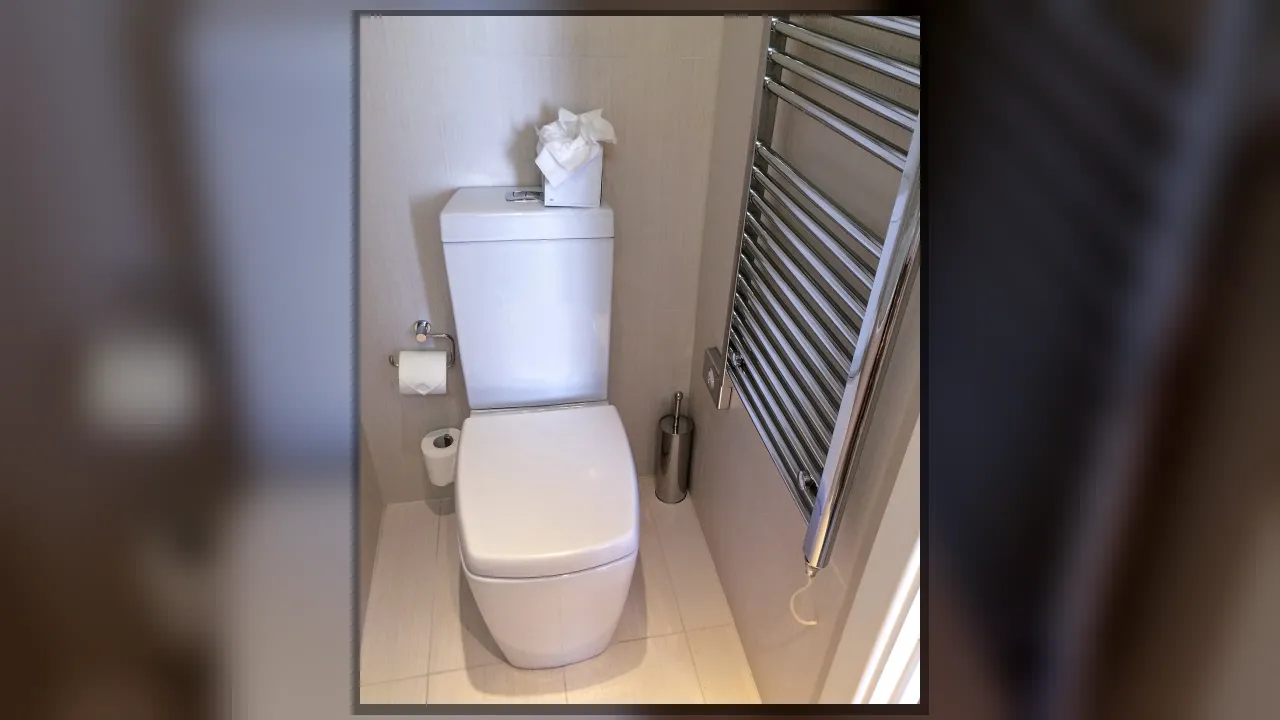
1. What shape is the special pipe under the toilet?
2. Why do people like flush toilets?
🤯 Mind-Blowing Fact • Grade 2
The first flush toilet with an S-trap was invented in 1775 by Alexander Cumming.
✨ Word Sparks (Grade 2 Glossary)
Tap 🔊 to hear
flush
To wash away with water
germ
Tiny thing that can make you sick
invent
To make something new
🪝
Have you ever wondered where the water goes when you flush?
1
The Magic Handle
When you push the handle, water rushes into the bowl and makes a swirling sound. The water pushes everything down the pipe, making it disappear. It feels almost like a magic trick every time!
2
The S-Trap's Job
Under the toilet, there is a bendy S-shaped pipe called the S-trap. This clever pipe holds some water, which blocks stinky air from coming up. It keeps bathrooms smelling fresh and clean.
3
A Clean Invention
toilets help people stay healthy by carrying away and waste. They are used all over the world in homes, schools, and public places. Thanks to the S-trap, cities are much cleaner today.
The S-trap’s water barrier is called a ‘water seal’ and it’s key to blocking odors!
✨ Word Sparks (Grade 3 Glossary)
Tap 🔊 to hear
gravity
The force that pulls things down
seal
Something that blocks or closes
plumbing
Pipes that carry water or waste
🪝
Did you know a clever pipe shape helps your bathroom stay fresh?
1
The Swirl and Whoosh
Every time you flush, water swirls and rushes down the toilet bowl. This swirling action pushes waste and water through a hidden pipe. The sound you hear is water moving quickly through the system. It’s a simple action with a big result.
2
Meet the S-Trap
The S-trap is a curved pipe under the toilet that looks like the letter S. This shape uses water to create a , blocking smelly air from coming back up. The S-trap is a key part of modern . Without it, bathrooms would not smell so nice.
3
How It Works
When you flush, pulls water and waste through the S-trap. The trap always keeps some water inside, which acts as a barrier against sewer gases. This smart design uses the principle of a water to keep homes safe. The S-trap also helps stop bugs from entering through pipes.
4
A World-Changing Invention
Alexander Cumming patented the flush toilet with the S-trap in 1775. Before this, cities struggled with dirty streets and disease. The invention made public health much better. Today, almost every building uses this important idea.
In some places, S-traps are now replaced by P-traps, but both use water to block odors.
✨ Word Sparks (Grade 4 Glossary)
Tap 🔊 to hear
sanitation
Keeping places clean and healthy
patent
A special right for inventors
barrier
Something that blocks or stops
🪝
Imagine a world before bathrooms smelled fresh—how did a simple pipe change everything?
1
The Power of the Flush
When you press the toilet handle, a rush of water swirls waste down the bowl and through the plumbing. This action relies on gravity and water pressure to move everything quickly and efficiently. The swirling water also helps clean the bowl each time. It’s a clever system that keeps bathrooms tidy with every flush.
2
The Ingenious S-Trap
Beneath the toilet sits the S-trap, a pipe shaped like the letter S, which is always partly filled with water. This water creates a physical , known as a water seal, that blocks sewer gases and unpleasant odors from rising into the bathroom. The S-trap’s simple design uses basic physics to keep air and water separated. Without this invention, bathrooms would be much less pleasant.
3
Engineering for Health
Alexander Cumming’s 1775 for the flush toilet with an S-trap revolutionized in cities. Before this, waste often stayed in homes or streets, causing disease and bad smells. The S-trap made it possible to carry waste far away safely. This breakthrough helped cities become healthier and more comfortable for everyone.
4
A Global Impact
Today, flush toilets and S-traps are used in homes, schools, and public buildings all over the world. Their invention led to huge improvements in public health and comfort. Modern plumbing systems have evolved, but the S-trap’s water seal principle remains essential. This simple pipe shape changed the way people live, work, and stay healthy.
A single S-trap water seal can block up to 99.9% of sewer gases from entering your home.
✨ Word Sparks (Grade 5 Glossary)
Tap 🔊 to hear
hydraulic
Powered by moving water pressure
atmospheric pressure
The air’s push all around us
urbanization
How cities grow and spread
🪝
What if a single pipe shape could protect millions from disease and transform city life forever?
1
The Science Behind Every Flush
Each time you activate a flush toilet, a carefully measured volume of water rapidly enters the bowl, creating a swirling motion that sweeps waste toward the drain. This process relies on gravity and pressure to efficiently transport waste through the plumbing system. The swirling action also scrubs the bowl’s surface, minimizing residue and reducing the need for manual cleaning. The flush mechanism and water volume are engineered to balance cleanliness with water conservation. Without this precise engineering, toilets would be less effective and wasteful.
2
The S-Trap: A Plumbing Marvel
The S-trap, invented by Alexander Cumming in 1775, is a curved pipe located beneath the toilet that forms an 'S' shape. This design ensures that a section of the pipe always remains filled with water, creating a water seal that prevents the backflow of sewer gases and odors into living spaces. The S-trap’s effectiveness depends on maintaining the correct water level, which is achieved by the flush’s action. This simple yet ingenious principle is still used in modern plumbing, though sometimes in the form of a P-trap for easier cleaning and installation.
3
Engineering Principles and Public Health
The S-trap’s water seal works through the principle of , which keeps sewer gases from pushing past the water barrier. Before this invention, waste disposal methods often led to contaminated water and air, contributing to deadly outbreaks of diseases like cholera and typhoid. By safely isolating waste and odors, the flush toilet and S-trap dramatically reduced the spread of illness in growing cities. This innovation is a foundational example of how engineering can directly improve public health on a massive scale.
4
From Victorian England to Global Standard
After Cumming’s patent, the flush toilet and S-trap spread rapidly through Victorian England and then across Europe and North America. Advances in materials, such as porcelain and cast iron, made toilets more durable and easier to clean. As indoor plumbing became common, the S-trap’s design was adapted into a variety of fixtures, including sinks and showers. Today, nearly every building in developed countries relies on the water-seal principle to maintain hygiene and comfort.
5
Modern Innovations and Lasting Impact
Contemporary toilets use less water per flush, often between 1.28 and 1.6 gallons, compared to older models that used up to 7 gallons. Engineers continue to refine trap shapes and flushing mechanisms to improve efficiency and environmental sustainability. Despite these advances, the basic idea of using a water seal to block odors remains unchanged since the 18th century. The flush toilet and S-trap are celebrated as inventions that not only improved daily life but also made modern urban civilization possible.