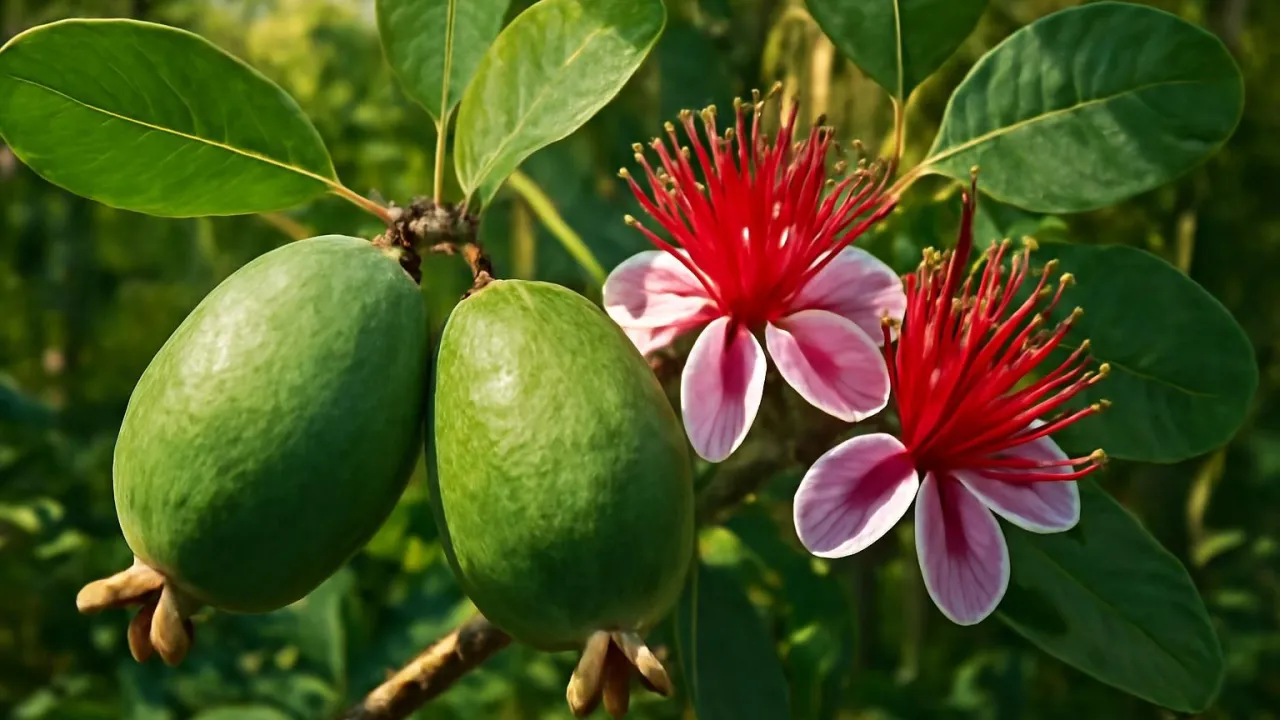
2. What part of the feijoa can you eat besides the fruit?
🤯 Mind-Blowing Fact • Grade 2
Feijoa flowers have bright red and white petals you can eat!
✨ Word Sparks (Grade 2 Glossary)
Tap 🔊 to hear
juicy
Full of tasty liquid inside
petals
Colorful soft parts of a flower
pollination
When bees help flowers make fruit
🪝
Have you ever smelled a fruit that smells like a flower?
1
What Feijoa Looks Like
Feijoa fruit is green and shaped like an egg. It has smooth skin and smells very sweet. The inside is soft and with tiny seeds.
2
Where Feijoa Grows
Feijoa trees grow best in warm, sunny places with good soil. They come from South America but grow in many warm countries now. Birds and bees visit the flowers to help them grow.
3
Tasty Fruit and Flowers
The fruit tastes sweet and a little sour like pineapple. People eat the soft too because they taste sweet and fresh. Feijoa is a fun fruit to try!
Feijoa’s edible petals attract pollinators and add flavor to foods!
✨ Word Sparks (Grade 3 Glossary)
Tap 🔊 to hear
pollination
Bees help flowers make seeds and fruit
adaptation
A change that helps plants survive better
symbiosis
When two living things help each other
🪝
Did you know feijoa fruit smells like a sweet flower and tastes tropical?
1
Feijoa’s Appearance and Smell
The feijoa fruit is oval and covered with smooth green skin. When ripe, it gives off a strong, sweet fragrance. Inside, the soft pulp contains tiny edible seeds. This smell helps attract animals that spread its seeds.
2
Growing and Pollination
Feijoa trees thrive in subtropical climates with warm temperatures and moderate rainfall. Bees and birds pollinate the bright red and white flowers. is crucial for fruit development and seed production. This relationship is an example of .
3
How Feijoa Survives
The feijoa’s smooth skin protects it from pests and drying out. Its sweet scent lures animals that eat the fruit and disperse seeds. This helps the plant spread to new areas. The edible petals also attract pollinators.
4
Fruit Uses and Tastes
People enjoy feijoa for its unique tropical taste with pineapple and guava notes. The juicy pulp is eaten fresh or made into jams. The edible petals add a floral flavor to salads. Feijoa is both a fruit and a flower treat.
Feijoa’s sweet scent and edible petals create a special bond with pollinators and animals.
✨ Word Sparks (Grade 4 Glossary)
Tap 🔊 to hear
ecosystem
All plants and animals living in one place
pollination
Bees and birds help flowers make fruit
adaptation
A feature that helps survival in nature
🪝
How does feijoa’s sweet scent help it survive in nature?
1
Feijoa’s Habitat and Growth
Feijoa trees grow mainly in subtropical regions like South America and New Zealand, where temperatures are warm but not too hot. These trees prefer well-drained soils and require moderate water to thrive. Their ability to adapt to various climates has helped them spread worldwide. Human cultivation also supports their growth in many countries.
2
Pollination and Ecosystem Role
The bright red and white feijoa flowers attract bees and birds, which pollinate the plants as they collect nectar. This process is essential for fruit production and helps maintain biodiversity in their . Feijoa fruits then serve as food for many animals, linking them in local food webs. This mutual relationship benefits both the plant and the pollinators.
3
Adaptations for Survival
Feijoa’s smooth green skin protects the fruit from pests and dehydration, while its strong sweet fragrance attracts animals that aid seed dispersal. The edible petals not only lure pollinators but also provide extra nutrients to them. These increase the plant’s chances of reproduction and survival in competitive environments.
4
Human Uses and Impact
Humans cultivate feijoa for its unique flavor and nutritional value, using the fruit in jams, juices, and desserts. Its cultivation supports local economies and promotes agricultural biodiversity. However, overharvesting or habitat loss could threaten wild populations. Conservation efforts focus on sustainable farming and protecting natural habitats.
Feijoa’s edible petals and fragrant fruit make it a rare plant combining floral and fruit uses in one species.
✨ Word Sparks (Grade 5 Glossary)
Tap 🔊 to hear
taxonomy
How scientists classify living things
pollinators
Animals that help flowers make seeds
conservation
Protecting plants and animals from harm
🪝
What unique traits make feijoa (Acca sellowiana) a fascinating subtropical fruit plant?
1
Taxonomy and Botanical Context
Feijoa, scientifically named Acca sellowiana, belongs to the Myrtaceae family, closely related to guava. This evergreen shrub or small tree produces edible fruits and flowers, native to the highlands of southern Brazil, Paraguay, Uruguay, and northern Argentina. Its classification reflects its tropical origins and botanical characteristics, including fleshy fruit and aromatic flowers.
2
Physiological Adaptations and Mechanics
Feijoa’s fruit develops from pollinated flowers, which feature conspicuous red stamens and white petals that attract like bees and birds. The fruit’s smooth green skin protects its soft pulp from dehydration and pests, while its strong floral scent lures animals for seed dispersal. The plant’s ability to thrive in subtropical climates depends on moderate water availability and full sun exposure.
3
Conservation and Agricultural History
Originally cultivated by indigenous peoples in South America, feijoa spread globally through agricultural trade and horticulture. Today, it is grown commercially in New Zealand, California, and parts of the Mediterranean. efforts emphasize sustainable farming to prevent habitat loss and genetic erosion, ensuring feijoa’s survival amid changing climates and land use.
4
Ecological Role and Food Web Connections
Feijoa flowers contribute nectar and pollen to local , supporting biodiversity within subtropical ecosystems. Its fruit provides food for birds and mammals, facilitating seed dispersal and plant reproduction. This mutualistic interaction integrates feijoa into complex food webs, highlighting its ecological importance beyond human use.
5
Quantitative Comparisons and Growth Metrics
Feijoa fruits typically measure 2 to 3 inches (5 to 7.5 centimeters) in length and weigh between 50 and 100 grams. The plant grows to heights of 10 to 15 feet (3 to 4.5 meters). Optimal fruit development occurs at temperatures between 60 and 75 degrees Fahrenheit (15 to 24 degrees Celsius), with flowering usually in late spring. These metrics guide cultivation and harvesting practices worldwide.