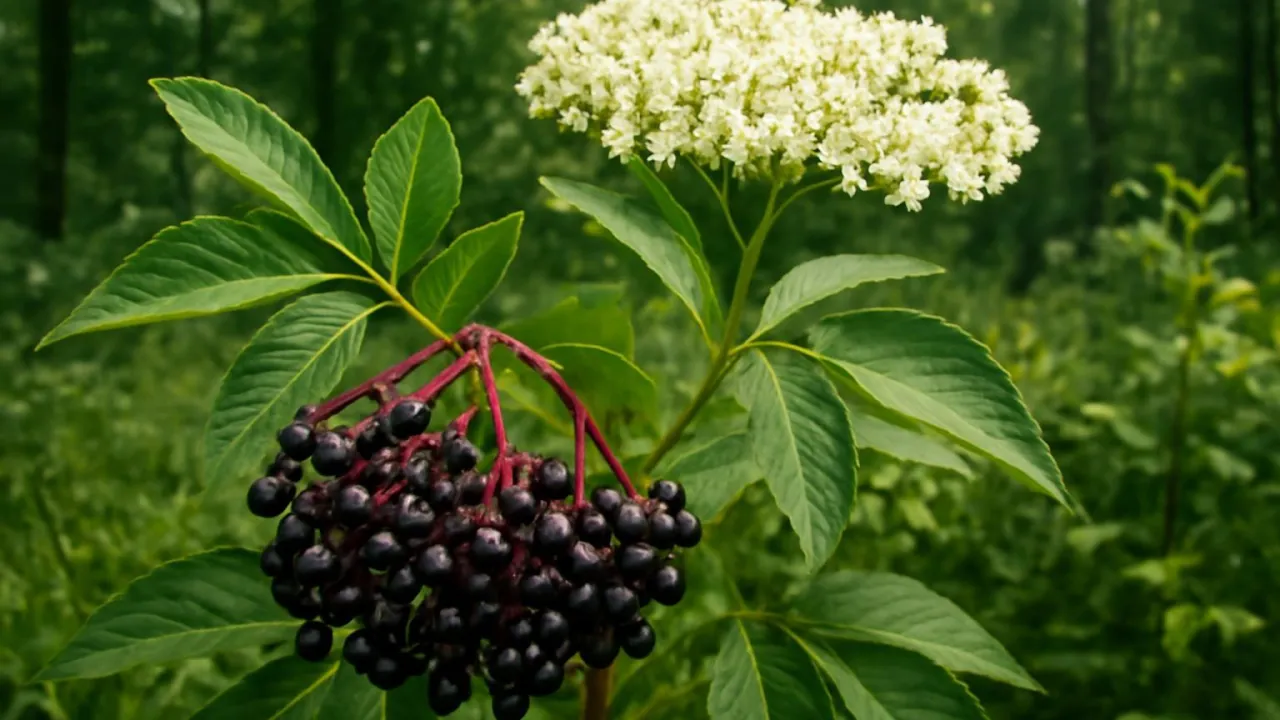
Elderberries have been used for hundreds of years to help fight colds and flu!
✨ Word Sparks (Grade 2 Glossary)
Tap 🔊 to hear
antioxidants
Natural helpers that keep your body healthy
nectar
Sweet juice in flowers that bees drink
moist
A little wet, not too dry or too wet
🪝
Have you ever seen a plant with tiny dark berries and white flowers?
1
Elderberry Berries and Flowers
Elderberries are small and dark purple, growing in bunches on the plant. Before berries appear, white flowers bloom in clusters. These flowers smell sweet and attract many bees and butterflies.
2
Where Elderberries Grow
Elderberry plants grow in sunny places near forests and fields. They need soil to grow well and can reach up to twelve feet tall. People often find them in temperate regions of Europe and North America.
3
A Special Feature
One cool thing about elderberries is they have . These help protect the body from sickness. That is why people use elderberries in syrups and teas to stay healthy.
Elderberries use their dark color as camouflage to protect from hungry animals!
✨ Word Sparks (Grade 3 Glossary)
Tap 🔊 to hear
pollination
When bees help flowers make seeds
camouflage
Colors that help plants hide from animals
nutrients
Food that plants take from soil to grow
🪝
Did you know elderberries have special powers to protect plants and people?
1
Elderberry Plant Features
Elderberry plants produce clusters of small, dark purple berries that ripen in late summer. Before the berries grow, the plant blooms with white, fragrant flowers that attract pollinators like bees. These flowers help with , which is how plants make seeds and new berries.
2
Where Elderberries Live
Elderberries grow best in temperate climates near forests and open fields where sunlight is plentiful. They need moist, well-drained soil to absorb for growth. The plant can grow up to twelve feet tall, which helps it reach sunlight and avoid shade from other plants.
3
How Elderberries Survive
The dark color of elderberries helps them hide from some predators by blending into shadows, a form of . Their bitter taste also protects them from being eaten by many animals. Birds, however, can eat the berries and spread the seeds to new places.
4
Why People Like Elderberries
People use elderberries for their high antioxidant content, which supports immune health and fights sickness. The berries are often cooked before eating because raw elderberries can be harmful. Elderberry syrup is a popular remedy during cold and flu season.
Elderberries help many animals and people stay healthy while supporting their ecosystems!
✨ Word Sparks (Grade 4 Glossary)
Tap 🔊 to hear
symbiosis
When two living things help each other
ecosystem
All plants and animals living together
harvest
To gather plants or fruits from nature
🪝
How do elderberries play a special role in their ecosystem and help people?
1
Elderberry’s Growth and Habitat
Elderberry plants thrive in temperate regions where they receive plenty of sunlight and grow in moist, well-drained soils. Their ability to grow up to twelve feet tall allows them to compete for sunlight in forest edges and open fields. Because they prefer these habitats, elderberries support many local wildlife species.
2
Ecosystem Role and Relationships
Elderberries serve as a vital food source for birds and insects, creating a food web that supports many animals. Bees and butterflies rely on elderberry flowers for nectar, while birds eat the berries and help disperse seeds. This symbiotic relationship helps elderberries spread and maintain healthy .
3
Human Uses and Impact
Humans have harvested elderberries for centuries because of their high antioxidant properties and immune-boosting benefits. Elderberry syrup and teas are popular natural remedies during cold seasons. However, overharvesting and habitat loss can threaten wild elderberry populations, so sustainable picking is important.
4
Geographic Distribution
Elderberries naturally grow across Europe and North America, especially in temperate climates with moderate rainfall. They are often found near forest edges, roadsides, and fields. Their wide distribution shows how well elderberries adapt to different environments while supporting local biodiversity.
Elderberries contain anthocyanins, antioxidants that protect fruit and boost human health!
✨ Word Sparks (Grade 5 Glossary)
Tap 🔊 to hear
anthocyanins
Natural pigments that give berries their dark color
photosynthesis
How plants use sunlight to make food
seed dispersal
How seeds spread to grow new plants
🪝
What makes elderberries scientifically fascinating and vital for nature and health?
1
Scientific Classification and Description
Elderberry, scientifically known as Sambucus nigra, belongs to the Adoxaceae family and is a deciduous shrub. It typically grows between 5 and 12 feet tall and produces clusters of small, dark purple berries. The plant’s white flowers bloom in flat-topped clusters called cymes, which attract many pollinators essential for reproduction.
2
Physiological Adaptations and Mechanics
Elderberry plants have adapted to temperate climates by developing broad leaves that maximize and deep roots that absorb moisture efficiently. The dark pigmentation of the berries contains , powerful antioxidants that protect the fruit from ultraviolet damage and attract birds for . Additionally, the plant produces chemical compounds that deter many herbivores.
3
Conservation and Historical Uses
Historically, elderberries have been used in traditional medicine for centuries due to their immune-boosting properties. Modern research confirms elderberry extracts can reduce cold and flu symptoms. Conservation efforts focus on sustainable harvesting and habitat protection to prevent overexploitation, especially as wild populations face threats from land development.
4
Quantitative Comparisons and Ecology
Elderberry shrubs can grow up to 12 feet tall, with berries measuring about 5 millimeters in diameter. The plant thrives in temperatures ranging from 40 to 85 degrees Fahrenheit and requires 1 to 2 inches of water weekly. Birds such as thrushes can consume dozens of berries daily, aiding over several miles.
5
Human Interaction and Agricultural Importance
Elderberries are cultivated commercially for use in syrups, jams, and supplements due to their rich antioxidant content. Their cultivation requires well-drained soil and full sunlight, with pruning practices to maximize fruit yield. Research into elderberry genetics aims to improve disease resistance and nutritional value for future agricultural benefits.