Have you ever smelled a fruit from across the street?
1
A Spiky Shell
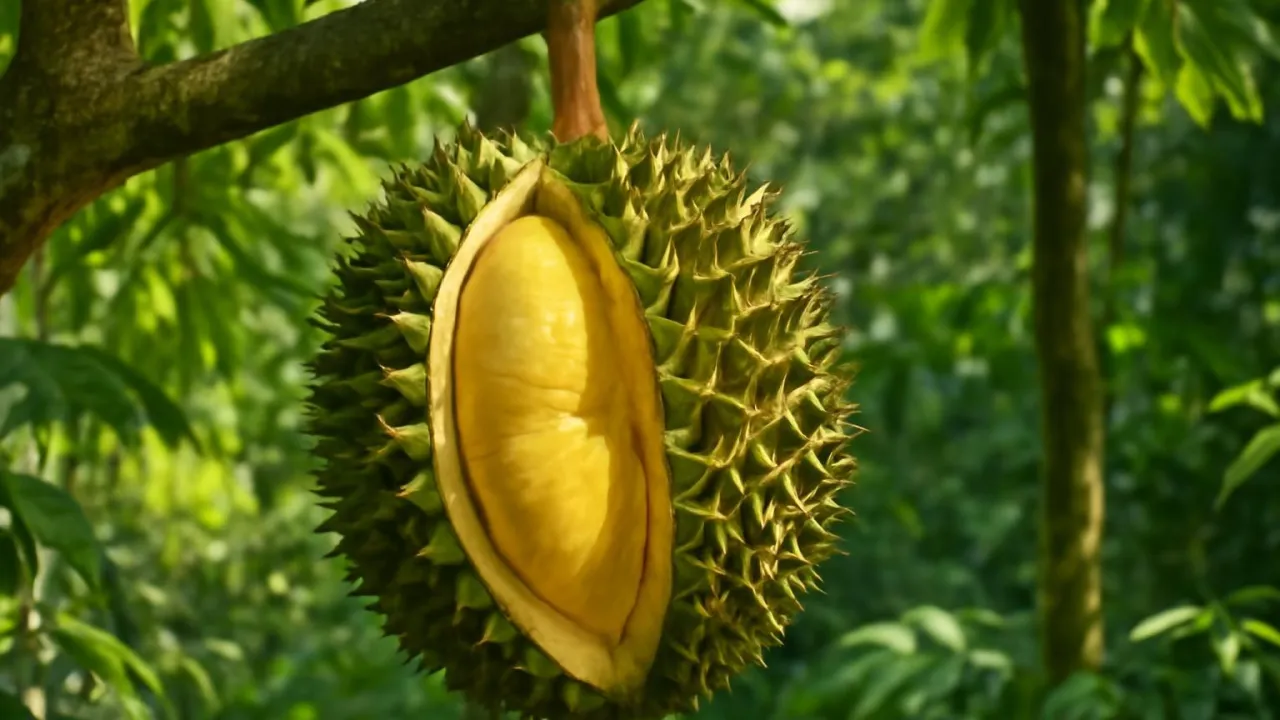
Durian has a thick, spiky green shell that the soft fruit inside. The shell is very hard, so people use big knives to open it. Durian grows on tall trees in warm, rainy places. The trees can be as tall as a house!
2
Super Strong Smell
Durian is famous for its super strong smell, which some people think is stinky and others think is yummy. The smell is so powerful, it can fill a whole room. In some places, people are not allowed to bring durians on buses or trains. The smell helps animals find the fruit in the .
3
Creamy, Sweet Treat
Inside the durian, the fruit is soft, yellow, and creamy like pudding. Many people in Asia love to eat durian as a or snack. Some people put it in ice cream or cakes. Durian seeds can be cooked and eaten too!
Bats help pollinate durian flowers by visiting them at night!
✨ Word Sparks (Grade 3 Glossary)
Tap 🔊 to hear
canopy
The top layer of the forest
adaptation
A special trait that helps survive
pollinate
Help plants make seeds or fruit
🪝
Could a fruit’s smell be so strong it’s not allowed in hotels?
1
Nature’s Spiky Armor
The durian’s thick, spiky shell acts as armor, protecting the fruit from hungry animals. Its green color helps it blend in with the leafy rainforest . Durian trees grow up to 130 feet tall in Southeast Asia’s warm, wet forests. The fruit can weigh as much as a small cat!
2
Aroma That Travels Far
Durian’s powerful smell is a famous that attracts animals like elephants and monkeys. These animals eat the fruit and help spread its seeds through the forest. The scent is so strong that some hotels and taxis in Asia ban durians inside. Scientists say the smell comes from special chemicals in the fruit’s flesh.
3
Creamy Fruit, Big Seeds
Inside the shell, durian has creamy yellow pulp that tastes sweet and rich. People eat it fresh, or mix it into desserts and drinks. The large seeds can be cooked and eaten, too. Durian is a favorite treat for many people, but others find its flavor too strong.
4
How Durian Grows
Durian trees need lots of rain and sunlight to grow healthy and tall. The trees bloom with white flowers, which are pollinated by bats at night. Each flower can turn into a single durian fruit. It takes about three months for the fruit to ripen on the tree.
A single durian fruit can contain over 50 different scent chemicals!
✨ Word Sparks (Grade 4 Glossary)
Tap 🔊 to hear
ecosystem
A community of living things and nature
pollinator
An animal that helps flowers make fruit
humid
Full of moisture or wet air
🪝
Why would a fruit be banned from airplanes just because of its smell?
1
Tough Shell, Tall Trees
Durian fruits grow on towering trees that thrive in the rainforests of Southeast Asia, especially in countries like Malaysia and Indonesia. The fruit’s thick, spiky shell acts as a tough barrier, protecting the soft pulp from animals and insects. This shell also helps the fruit survive falls from high branches, which can be over 80 feet above the ground. When ripe, the fruit drops to the forest floor, signaling to animals that it’s ready to eat.
2
A Scent with a Purpose
Durian’s intense smell is caused by over fifty different chemicals, creating an aroma that can be detected from hundreds of feet away. This strong odor attracts animals like elephants, monkeys, and civets, which eat the fruit and spread the seeds throughout the forest. The scent is so powerful that durians are banned from many hotels, airplanes, and public places in Asia. This adaptation ensures the seeds travel far from the parent tree, helping new durian trees grow.
3
Ecosystem Connections
Durian trees play an important role in their by providing food for a variety of animals and insects. Bats are especially important because they pollinate the durian’s night-blooming flowers, allowing the fruit to develop. Humans also rely on durian as a valuable crop, selling the fruit in markets and using it in traditional dishes and desserts. However, clearing rainforests for farms can threaten wild durian trees and the animals that depend on them.
4
From Flower to Fruit
Durian trees bloom with large, white flowers that open at night, attracting with their sweet scent. After pollination, it takes about three months for the fruit to grow and ripen on the tree. Each durian can weigh up to 7 pounds and contains several large seeds surrounded by creamy, edible pulp. Farmers must be careful when harvesting durians, as the falling fruits can be dangerous due to their size and hard spikes.
A falling durian can reach speeds over 50 miles per hour—faster than a city speed limit!
✨ Word Sparks (Grade 5 Glossary)
Tap 🔊 to hear
volatile
Easily turns into a gas or vapor
genetic diversity
Differences in living things’ DNA
conservationist
A person who protects nature and wildlife
🪝
How can a single fruit’s smell travel farther than the sound of a shout?
1
Taxonomy and Origins
Durian, scientifically known as Durio zibethinus, belongs to the Malvaceae family and is native to the tropical rainforests of Southeast Asia. This region includes countries such as Malaysia, Indonesia, Thailand, and the Philippines, where durian has been cultivated for centuries. Botanically, durian is classified as a true fruit, developing from the flower’s ovary and containing seeds surrounded by edible flesh. There are over thirty recognized species of durian, but only a few are commonly grown for food. The fruit’s cultural and economic importance has earned it the nickname “King of Fruits” throughout Asia.
2
Physiology: Spikes, Scent, and Structure
A mature durian fruit typically measures 6 to 12 inches (15 to 30 centimeters) long and can weigh up to 7 pounds (3 kilograms). Its thick, spiky shell is made of tough, fibrous tissue, providing physical defense against predators and accidental drops from heights exceeding 80 feet (24 meters). The infamous odor comes from over 50 organic compounds, including sulfur-containing chemicals, which can be detected over 500 feet (150 meters) away. Inside, the creamy yellow pulp is rich in carbohydrates, fats, and vitamins, making it a highly nutritious food source for both animals and humans.
3
Ecological Web: Pollinators and Seed Dispersers
Durian trees play a vital role in rainforest ecosystems by supporting a diverse community of animals and insects. Their large, night-blooming flowers are pollinated primarily by fruit bats, which are attracted by the flowers’ sweet scent and abundant nectar. After pollination, the fruit develops over about three months, eventually dropping to the forest floor when ripe. Animals such as elephants, monkeys, and civets consume the fruit and disperse the seeds across wide areas, increasing and helping new durian trees grow far from the parent plant.
4
Human Cultivation and Conservation Challenges
Durian is a major agricultural crop in Southeast Asia, with Thailand alone producing over 1.2 million tons annually. Farmers carefully harvest the fruit by hand to avoid injury from falling durians, which can reach speeds of up to 50 miles per hour (80 kilometers per hour) as they drop. However, wild durian populations face threats from deforestation, habitat loss, and overharvesting. are working to protect rainforest habitats and promote sustainable farming practices to ensure durian’s survival for future generations.
5
Botanical Curiosities and Global Impact
Although durian is botanically classified as a fruit, its strong flavor and aroma have sparked debate and curiosity worldwide. The creamy pulp is used in a variety of traditional Asian desserts, candies, and even savory dishes, while the seeds can be roasted or boiled. Durian’s unique chemical profile has inspired scientific studies into plant defense mechanisms and animal behavior. Despite its divisive reputation, durian remains a symbol of biodiversity and cultural heritage, connecting people and wildlife across tropical Asia.