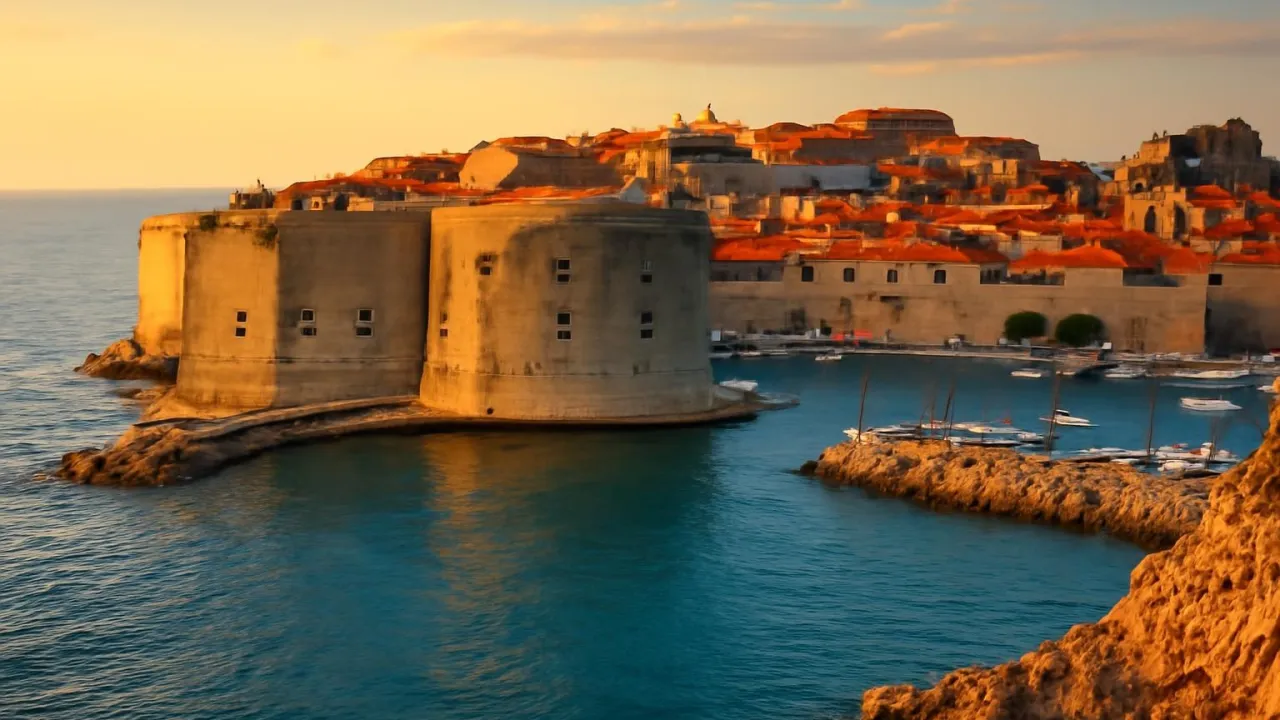
Dubrovnik’s walls are up to 20 feet thick in some places!
✨ Word Sparks (Grade 2 Glossary)
Tap 🔊 to hear
invader
Someone trying to enter a city
guard
A person who keeps things safe
window
A small opening to look out
🪝
What would it feel like to walk high above the sea?
1
Walls That Protect
The old stone walls circle Dubrovnik and keep the city safe. They are very thick and strong, built to stop . People long ago worked together to build them with heavy rocks.
2
Views All Around
Visitors today can walk along the top and see far away. You can spot red roofs, blue sea, and green hills from above. There are towers and tiny along the way.
3
History You Can Touch
The walls are hundreds of years old and full of stories. Kids love to peek through the stone holes and imagine old times. The walls make you feel like a watching the city.
The walls have never been breached by an enemy in over 500 years!
✨ Word Sparks (Grade 3 Glossary)
Tap 🔊 to hear
fortification
A strong wall built for defense
loophole
A small window for archers
erosion
Wearing away by wind or water
🪝
Imagine your footsteps echoing on ancient stones above the sea breeze.
1
A Fortress by the Adriatic
Dubrovnik’s Old Town Walls form a giant stone ring around the city. These medieval were built to protect people from pirates and armies. The walls are made of limestone, a rock that can withstand salty sea air. Walking along the top, you can feel the vibration of your steps echoing through history.
2
Towers and Turrets
There are several tall towers and turrets spaced along the walls. Each tower gave guards a better view of the harbor and hills. Some towers have narrow windows, called , for archers to defend the city. The round Minceta Tower is the highest point, offering panoramic views.
3
Built to Last
The walls are up to 82 feet high and 20 feet thick in places. Builders used special engineering tricks, like sloped bases, to stop from the sea. The thick stone absorbs heat during the day and releases it at night, keeping the walkway comfortable.
4
Living History
Today, visitors from all over the world walk the walls. You can spot fishing boats, hear seagulls, and imagine ancient guards on patrol. The walls are a monument to Dubrovnik’s strength and creativity. They help the city earn its place as a UNESCO World Heritage site.
1. What material are the Dubrovnik walls mostly made from?
2. What is the highest tower called?
🤯 Mind-Blowing Fact • Grade 4
Minceta Tower’s spiral staircase has 108 stone steps leading to the very top!
✨ Word Sparks (Grade 4 Glossary)
Tap 🔊 to hear
battlement
A wall top with spaces for defense
quarry
A place where stone is dug out
preservation
Keeping something safe from harm
🪝
What secrets might the ancient stones of Dubrovnik’s walls still hold?
1
Medieval Marvel by the Sea
Rising above the sparkling Adriatic, the Dubrovnik Old Town Walls are a masterpiece of medieval engineering. Built and improved between the 12th and 17th centuries, these fortifications protected the city from pirates, armies, and earthquakes. Their limestone blocks were quarried nearby and shaped to fit tightly together, creating a nearly seamless barrier. The walls’ strategic location turned Dubrovnik into a powerful trading city.
2
Defensive Design and Engineering
The walls stretch about 1.2 miles, reaching up to 82 feet high and 20 feet thick. Towers like Minceta, Bokar, and Revelin provided overlapping fields of view and strong points for defense. Sloped bases and drainage channels helped prevent erosion from heavy rain and crashing waves. The walls’ thickness allowed soldiers and even horses to move safely along the top.
3
A Living Monument
Today, visitors can walk the entire circuit, passing through gates and along once guarded by watchful sentries. The walls offer breathtaking views of Dubrovnik’s red-tiled roofs, the deep blue sea, and the distant green hills. Every stone seems to echo with stories of merchants, guards, and townspeople who once relied on these defenses. The city’s careful efforts keep the walls strong for future generations.
4
Global Significance
Dubrovnik’s Old Town Walls are recognized as a UNESCO World Heritage site, celebrated for their historical, architectural, and cultural value. They attract people from around the world, inspiring artists, writers, and filmmakers. The walls remind us how creative engineering and teamwork can protect and shape a city for centuries. Their legacy continues to influence how we care for historic places today.
1. How did the walls help Dubrovnik become powerful?
2. Why are sloped bases important for the walls?
🤯 Mind-Blowing Fact • Grade 5
The walls’ limestone blocks are so precisely fitted that some sections have stood for 700 years without mortar!
✨ Word Sparks (Grade 5 Glossary)
Tap 🔊 to hear
fortification
A strong wall or building for defense
promontory
A high point of land over water
seismic
Related to earthquakes or shaking ground
🪝
If you traced your fingers along Dubrovnik’s walls, what centuries-old stories might you feel in the stone?
1
A Fortress Forged in Stone and Strategy
As the sun rises over the Adriatic, Dubrovnik’s Old Town Walls stand as a testament to centuries of resilience and ingenuity. Constructed between the 12th and 17th centuries, these reflect both the city’s turbulent history and its mastery of medieval engineering. The walls were meticulously built from locally quarried limestone, with each block carefully fitted to maximize strength and minimize gaps. Their strategic placement atop rocky cliffs and promontories allowed defenders to spot threats from land or sea long before they reached the city’s gates.
2
Architectural Features and Engineering Innovations
Stretching approximately 1.2 miles (2 kilometers) and soaring up to 82 feet (25 meters) high, the walls average 10 to 20 feet (3 to 6 meters) thick. Defensive towers like Minceta, Bokar, and Revelin anchor the circuit, each designed with unique features—such as rounded shapes to deflect cannonballs and spiral staircases for rapid movement. The sloped bases and integrated drainage systems combat erosion and direct rainwater safely away, while the battlements and loopholes enabled defenders to launch arrows or cannons with maximum efficiency.
3
Historical Evolution and Cultural Impact
Over the centuries, the walls were expanded and reinforced in response to new military technologies, including the introduction of gunpowder artillery. The city’s independent government, known as the Republic of Ragusa, invested heavily in maintenance and innovation, ensuring the kept pace with threats from powerful neighbors. The walls’ unbroken record—they have never been breached by an enemy—helped Dubrovnik flourish as a major maritime trading center, connecting Eastern and Western cultures across the Mediterranean.
4
Preservation and Global Recognition
Today, Dubrovnik’s Old Town Walls are celebrated as a UNESCO World Heritage site, attracting over a million visitors annually. Ongoing preservation projects address challenges such as saltwater erosion, activity, and the impact of tourism. Specialists use both traditional stone-masonry techniques and modern technology to repair and monitor the structure, ensuring its legacy endures. The walls serve as a living classroom, illustrating the importance of heritage conservation and the power of community collaboration.
5
Experiencing the Walls Today
Walking the full circuit takes about two hours, offering panoramic views of terracotta rooftops, bustling harbors, and the shimmering Adriatic Sea. Interpretive signs and guided tours share stories of ancient battles, daring escapes, and the daily lives of guards and townspeople. The walls’ architectural harmony with the landscape inspires artists, historians, and engineers alike. By preserving and exploring these , we honor the creativity, courage, and determination of generations past—and learn how to protect our own communities for the future.