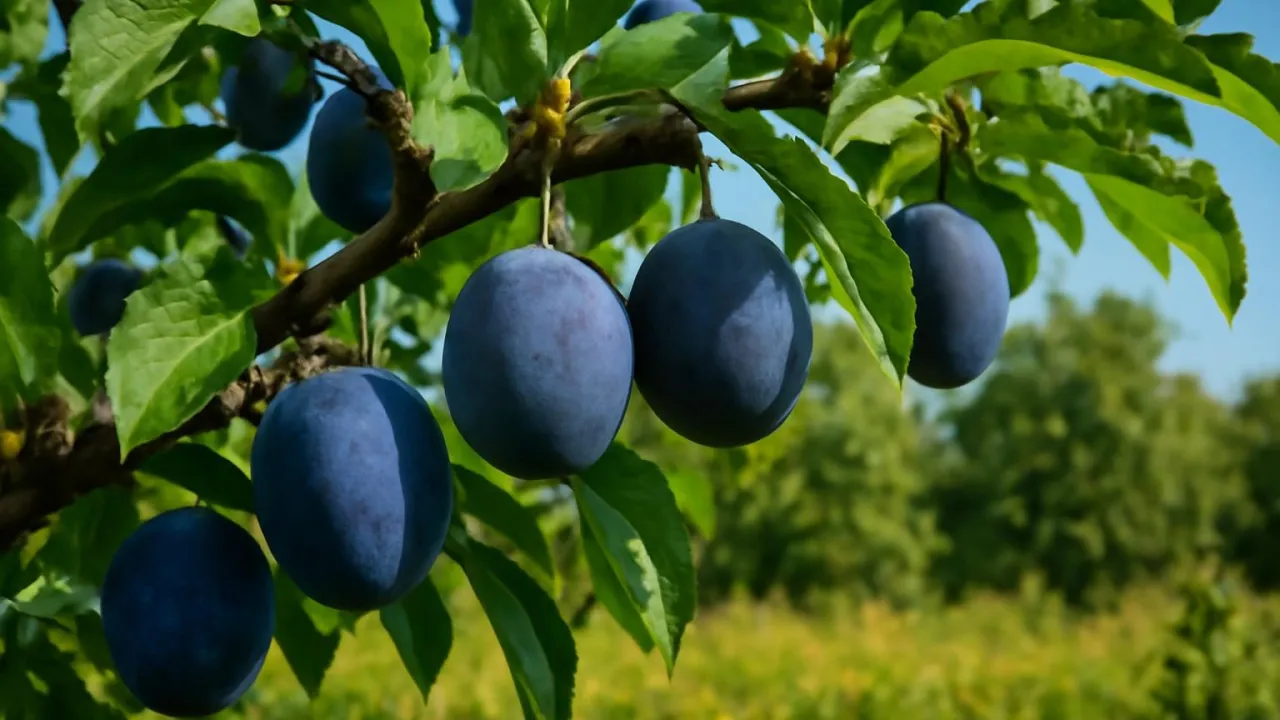
Damson plums have been grown for hundreds of years because of their unique strong flavor.
✨ Word Sparks (Grade 2 Glossary)
Tap 🔊 to hear
tart
A sharp sour taste like lemon
ripe
Fully grown and ready to eat
harvest
Gathering crops from plants or trees
🪝
Have you ever tasted a fruit that is both sour and sweet at the same time?
1
What Damson Plums Look Like
Damson plums are small fruits that grow on trees in sunny places. They have shiny purple skin and are round. Birds often eat these fruits when they are .
2
Where They Grow and Live
These plums grow mostly in Europe and Western Asia where the weather is warm. They need full sun and moderate water to grow well. Farmers pick them in late summer or early fall.
3
Why People Love Them
Damson plums taste but also a little sweet, making them perfect for jams and jellies. Their strong flavor helps jams stay tasty for a long time. People enjoy using them in cooking and baking.
Damson plums’ tartness acts like a natural shield against some animals and insects.
✨ Word Sparks (Grade 3 Glossary)
Tap 🔊 to hear
camouflage
Colors or shapes that help hide something
pollination
Moving pollen to help plants make fruit
nutrients
Food in soil that plants need to grow
🪝
Did you know the Damson plum’s tart taste helps protect it from some animals?
1
Appearance and Adaptation
Damson plums are small, round fruits with smooth purple skin that helps them in trees. Their thick skin protects the fruit from insects and harsh weather. This adaptation helps the fruit survive until it is ripe.
2
Growing Environment
These plums grow best in temperate climates with full sun and moderate water. They thrive in Europe and Western Asia’s woodlands and orchards. The trees need from soil to grow strong and healthy.
3
Life Cycle and Pollination
Damson plum trees bloom with white flowers in spring, attracting bees for . Pollination helps the flowers turn into fruits by moving pollen between blossoms. This process is essential for the tree’s reproduction.
4
Flavor and Uses
The strong tart flavor of Damson plums makes them popular for jams and jellies, which preserve the fruit’s taste. Their sourness also helps keep pests away, protecting the fruit until harvest time. People enjoy their unique taste in cooking.
Damson plums help forests grow by feeding animals that spread their seeds far and wide.
✨ Word Sparks (Grade 4 Glossary)
Tap 🔊 to hear
dispersal
Spreading seeds far from the parent plant
shelter
A safe place for animals to live
sustainable
Using resources without harming nature
🪝
How does the Damson plum’s tart flavor affect its role in the ecosystem?
1
Physical Traits and Survival
Damson plums have thick, purple skins that protect the fruit from damage caused by insects and harsh weather conditions. This tough skin also helps the fruit stay fresh longer, allowing animals and humans to enjoy it. Their small size makes them easy for birds to eat and spread seeds.
2
Ecosystem Role and Food Web
Damson plums serve as food for birds and small mammals, which helps spread their seeds across forests and orchards. This seed supports new tree growth and maintains healthy ecosystems. The trees also provide and food for many insects and animals.
3
Growing Conditions and Human Impact
These plums grow best in temperate climates with full sun and moderate water supply, mostly in Europe and Western Asia. Human farming has increased their spread, but habitat loss can threaten wild trees. farming helps protect Damson plum trees and their environments.
4
Culinary Uses and Cultural Importance
The tart flavor of Damson plums makes them ideal for jams, jellies, and cooking, preserving their taste for months. Their unique taste has made them popular in European cultures for centuries. This cultural value encourages people to grow and protect these trees.
Damson plums’ high acidity and thick skin make them perfect for long-lasting jams and natural pest defense.
✨ Word Sparks (Grade 5 Glossary)
Tap 🔊 to hear
subspecies
A smaller group within a species with special traits
acidic
Having a sour taste like lemon or vinegar
pollinator
An animal that helps plants make fruit
🪝
What scientific features make the Damson plum a unique subspecies of the common plum?
1
Taxonomy and Scientific Classification
The Damson plum is classified as Prunus domestica subsp. insititia, a of the common European plum. It is distinguished by its smaller size, tart flavor, and thicker skin compared to other plums. This classification helps scientists understand its evolutionary relationships and breeding history. Damson plums belong to the Rosaceae family, which includes many other fruit trees.
2
Physiological Adaptations and Mechanics
Damson plums have thick skins that reduce water loss and protect against pests, while their high acidity deters many herbivores. The fruit’s small diameter, about 2.5 centimeters, allows quicker ripening and seed dispersal by birds. Their flowering period in early spring coincides with peak activity, optimizing reproduction. These adaptations help the species thrive in temperate climates.
3
Conservation and Historical Cultivation
Damson plums have been cultivated in Europe for over a thousand years, prized for their strong flavor and preserving qualities. Although widely farmed, wild populations face threats from habitat loss and climate change. Conservation efforts focus on protecting native orchards and promoting sustainable agricultural practices. Preserving genetic diversity is important for future breeding.
4
Ecological Role and Quantitative Comparisons
Damson plum trees contribute to food webs by feeding birds and mammals that disperse seeds across distances up to several kilometers. The fruit’s acidity, with pH around 3.0 to 3.5, is higher than many other plums, influencing their taste and preservation. Trees typically reach heights of 15 to 20 feet, supporting diverse ecosystems. Their fruit weight averages about 15 grams, smaller than most common plums.
5
Cultural and Culinary Significance
The tartness of Damson plums makes them ideal for jams and jellies that can last months without preservatives. Their unique flavor has influenced European culinary traditions, especially in British and Eastern European recipes. Quantitatively, a single Damson plum weighs about 15 grams, smaller than most common plums. The fruit’s strong flavor also inspired traditional recipes that celebrate its taste.