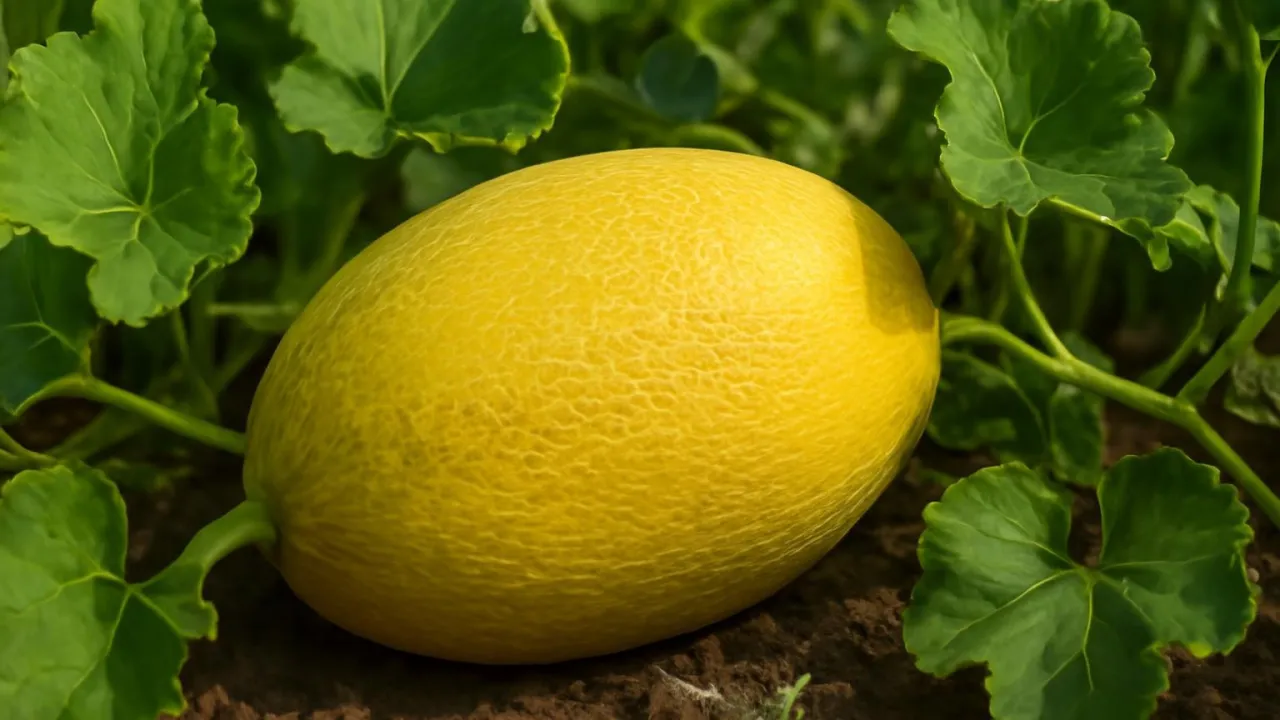
Crenshaw melons can smell so sweet that their scent spreads far from the fruit!
✨ Word Sparks (Grade 2 Glossary)
Tap 🔊 to hear
vine
A plant stem that grows along the ground
flesh
The soft, edible inside part of a fruit
season
A time of year with special weather
🪝
Have you ever smelled a melon that smells like candy?
1
What It Looks Like
Crenshaw melons have smooth, yellow skin with a slightly waxy feel. They grow to about 6 to 8 inches long and are round or oval shaped. Their skin color can sometimes have a faint green tint near the stem. Inside, the is soft and orange or salmon colored.
2
Where It Grows
This melon grows best in warm, sunny places like the southwestern United States and parts of Iran. It needs plenty of sunshine and regular watering to grow juicy and sweet. Farmers plant it in gardens or fields during the warm . The melon grows on a that spreads across the ground.
3
Sweet Smell and Taste
Crenshaw melons have a strong, sweet smell that many people love. The tastes juicy and sweet with a hint of spice. It is softer than some other melons, making it easy to eat. People enjoy eating it fresh or in fruit salads.
The Crenshaw melon’s sweet fragrance helps attract animals that spread its seeds.
✨ Word Sparks (Grade 3 Glossary)
Tap 🔊 to hear
camouflage
Colors or shapes that hide something
pollination
When pollen helps make new seeds
nutrients
Food parts that help plants or animals grow
🪝
Did you know the Crenshaw melon’s sweet smell helps it survive?
1
Physical Features
Crenshaw melons have thick yellow skin that protects the juicy flesh inside. The skin can be slightly waxy, helping to keep moisture inside. Their orange flesh is soft and full of water, which helps the melon stay fresh. This juicy flesh provides and energy to animals that eat it.
2
Growth and Habitat
These melons grow on long vines that spread across warm ground in sunny places. They need full sun and plenty of water to develop their sweet flavor. The vines have large leaves that shade the fruit and reduce water loss. Crenshaw melons are adapted to hot, dry climates like deserts and warm gardens.
3
Survival and Adaptation
The melon’s thick skin acts as , blending with dry soil and plants to avoid predators. Its sweet smell attracts animals that help spread seeds far away. This and seed dispersal help the plant reproduce successfully. The melon’s juicy flesh provides a reward for animals that help it survive.
4
Human Use
People grow Crenshaw melons for their sweet taste and fragrance. They eat the fruit fresh or add it to salads and desserts. Farmers carefully water the plants to produce large, juicy melons. This fruit is a favorite in many warm regions because of its unique flavor and aroma.
1. How does the thick skin help the Crenshaw melon?
2. Why do animals like the Crenshaw melon’s sweet smell?
🤯 Mind-Blowing Fact • Grade 4
Crenshaw melons help spread seeds by feeding animals that carry them far away.
✨ Word Sparks (Grade 4 Glossary)
Tap 🔊 to hear
ecosystem
All plants and animals living together
symbiosis
When two living things help each other
irrigation
Giving water to plants on farms
🪝
How does the Crenshaw melon’s unique traits help it thrive in hot places?
1
Physical Adaptations
The Crenshaw melon’s thick, waxy skin reduces water loss by protecting the juicy flesh inside from drying out in hot climates. Its orange flesh contains high water content, which helps keep the fruit fresh and attractive to animals. The melon’s shape and color help it blend into dry environments, providing natural camouflage from predators. These adaptations allow the melon to survive in desert-like conditions.
2
Role in the Ecosystem
Crenshaw melons serve as a food source for many animals such as birds, insects, and mammals, which eat the fruit and spread its seeds. This seed dispersal helps the melon reproduce and grow in new areas. The plant also supports pollinators like bees that transfer pollen between flowers during pollination. This symbiotic relationship benefits both the melon and the pollinators.
3
Human Cultivation and Impact
Farmers grow Crenshaw melons in warm regions like the southwestern United States and parts of Iran, where the climate suits their needs. and careful watering help produce sweet, juicy fruits that people enjoy fresh or in recipes. Human cultivation has increased the melon’s availability worldwide, but it requires sustainable farming to protect water resources. Crenshaw melons also contribute to local economies by providing seasonal crops.
4
Geographic Distribution
Originally from the Middle East, Crenshaw melons are now widely grown in the southwestern United States, including California and Arizona. They thrive in areas with hot summers and mild winters. The melon’s ability to adapt to dry, warm climates has helped it spread to similar regions around the world. This geographic distribution shows how plants can adjust to new environments over time.
Crenshaw melons can contain up to 14% natural sugars, making them one of the sweetest melon types worldwide.
✨ Word Sparks (Grade 5 Glossary)
Tap 🔊 to hear
cultivar
A plant variety made by people for special traits
transpiration
Water loss from plants through leaves
photosynthesis
How plants make food using sunlight
🪝
What makes the Crenshaw melon a unique member of the Cucumis melo species?
1
Taxonomy and Botanical Context
The Crenshaw melon, scientifically named Cucumis melo 'Crenshaw', belongs to the Cucurbitaceae family, which includes cucumbers and squashes. It is classified as a muskmelon , known for its hybrid origin between cantaloupe and Persian melon types. Botanically, it is a fruit because it develops from the flower’s ovary and contains seeds. This classification helps scientists understand its relation to other melons and gourds.
2
Physiological Mechanics
The thick, waxy rind of the Crenshaw melon minimizes , conserving water in arid environments. Inside, the orange flesh is rich in sugars and water, making it highly palatable and nutritious. The melon’s vine grows by producing tendrils that cling to supports, aiding in stability and nutrient absorption. in the large leaves provides energy for fruit development and ripening.
3
Conservation and History
Crenshaw melons originated from hybrid breeding efforts in the early 20th century in the United States, combining traits for sweetness and hardiness. While not endangered, their cultivation requires sustainable water use due to their preference for warm, dry climates. Conservation efforts focus on preserving heirloom varieties and promoting agricultural practices that reduce environmental impact. This melon remains a popular crop for its unique flavor and aroma.
4
Quantitative Comparisons
Typically, Crenshaw melons weigh between 5 and 8 pounds (2.3 to 3.6 kilograms) and measure about 6 to 8 inches (15 to 20 centimeters) in length. They grow best in temperatures ranging from 70 to 85 degrees Fahrenheit (21 to 29 degrees Celsius). Compared to cantaloupes, Crenshaws have thicker rinds and sweeter flesh, which extends shelf life. Their sugar content can reach up to 14 percent, making them one of the sweetest melon varieties.
5
Ecological and Agricultural Importance
In their ecosystems, Crenshaw melons provide food for various animals, facilitating seed dispersal and maintaining plant diversity. Agriculturally, they contribute to crop diversity and local economies in arid regions by offering a high-value fruit crop. Their cultivation requires careful irrigation management to balance water use with yield. Understanding their ecological role helps farmers optimize growing conditions while supporting biodiversity.