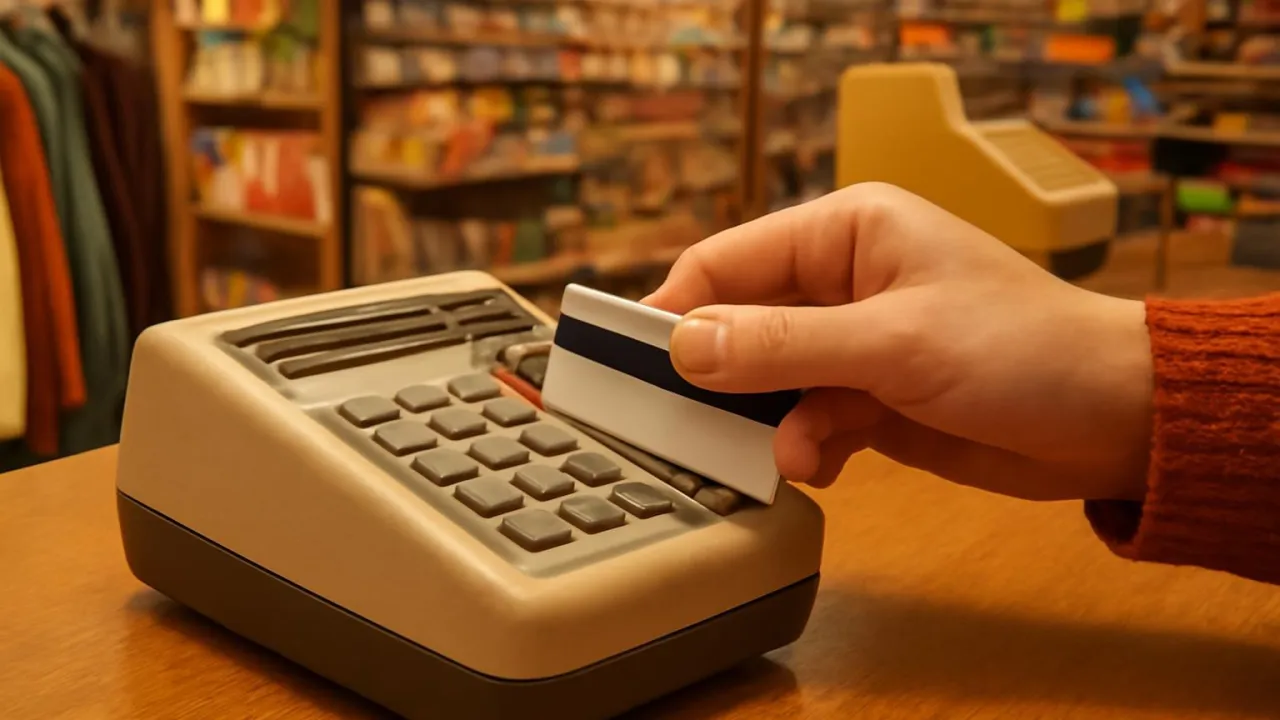
1. What sound might you hear when you swipe a card?
2. What does the stripe on a card help do?
🤯 Mind-Blowing Fact • Grade 2
The magnetic stripe was invented by IBM engineers in 1969!
✨ Word Sparks (Grade 2 Glossary)
Tap 🔊 to hear
secret
Something hidden or not told
reader
A machine that reads cards
code
A way to hide information
🪝
Have you ever seen someone pay by sliding a card?
1
The Magic Stripe
A credit card has a black stripe on the back. When you swipe it, the store hears a beep. That stripe is filled with information. It tells the store who you are.
2
How Does It Work?
The stripe is made of tiny iron bits. These bits hold a special . When the card slides through the , the machine reads the code. That lets you pay without cash.
3
Easy Shopping Everywhere
People use credit cards in many places. You can swipe them at stores, restaurants, and even gas stations. The card makes buying things quick and easy. That’s why so many people use them today.
A magnetic stripe can store about 200 bytes of data—enough for your name and account number!
✨ Word Sparks (Grade 3 Glossary)
Tap 🔊 to hear
magnetic
Able to attract metal
prototype
A first try at making something
account
A place to keep your money
🪝
What secrets might a black stripe on a card hold?
1
The Swipe That Changed Shopping
Imagine hearing a beep every time you pay with a card. That sound means the card’s stripe has been read. The stripe holds special information about your . This lets you buy things without using cash or coins.
2
How the Magnetic Stripe Works
The stripe is made of tiny particles called iron oxide. These particles are arranged in patterns that form a digital code. When you swipe the card, the reader senses changes in magnetism. It turns these changes into numbers the computer understands.
3
From Idea to Everyday Use
Credit cards first appeared in the 1950s, but they needed a better way to store information. In 1969, IBM engineer Forrest Parry invented the stripe. After many , he found a way to stick the stripe onto plastic cards using heat.
4
A World of Fast Payments
Today, billions of credit cards are used around the world. The stripe makes shopping, traveling, and banking much faster. It also helps keep your information safe with secret codes. This invention changed how people buy and sell things forever.
If you lined up all the credit cards ever made, they would stretch around Earth more than 3 times!
✨ Word Sparks (Grade 4 Glossary)
Tap 🔊 to hear
binary
A code using only 0s and 1s
transaction
An exchange of money for goods
secure
Safe from harm or theft
🪝
Can you imagine a world where shopping is slowed down by counting coins?
1
A Revolution in Payment
With a single smooth swipe and a sharp beep, a magnetic stripe card makes shopping almost instant. Before this invention, people had to count cash or write checks, which took much longer. The magnetic stripe stores digital information about your bank account, allowing stores to check your identity quickly. This simple strip of black changed the way people pay all over the world.
2
The Science of the Stripe
The magnetic stripe is made of iron oxide particles, which can be magnetized in different directions to represent code. When you swipe the card, the reader detects the changing magnetic fields and translates them into numbers and letters. This process is called magnetic data storage, and it works much like a tiny tape recorder. The stripe’s data can be erased or rewritten by special machines, making it both powerful and flexible.
3
From Prototype to Global Standard
The first credit cards appeared in the 1950s, but they were not very or fast. IBM engineer Forrest Parry solved this by inventing the magnetic stripe in 1969, after experimenting with heat and glue to attach the stripe to plastic cards. His invention became the standard for banks and stores everywhere, leading to faster and safer .
4
Changing How the World Shops
Today, magnetic stripe cards are used in nearly every country for shopping, travel, and banking. They have made it possible for people to buy things quickly and securely, even far from home. The magnetic stripe also inspired new technologies, like chip cards and contactless payments, which keep improving how we pay. This invention truly transformed the global economy.
1. What does the magnetic stripe use to store information?
2. How did the magnetic stripe change shopping?
🤯 Mind-Blowing Fact • Grade 5
IBM’s first magnetic stripe cards could be read in less than a second, a huge improvement over manual methods.
✨ Word Sparks (Grade 5 Glossary)
Tap 🔊 to hear
magnetic domain
A tiny region that can be magnetized
verification
Checking if something is true or correct
forged
Faked or copied without permission
🪝
What if every purchase you made left behind a trail of coins and paper receipts?
1
A Swipe, a Beep, and a Revolution
Picture the crisp sound of a card swiping through a reader, followed by a quick electronic beep—this tiny moment represents a huge leap in how the world handles money. Before credit cards and magnetic stripes, every transaction required physical money or slow, handwritten checks. The invention of the magnetic stripe in the late 1960s transformed payment systems by allowing secure, nearly instant of identity and funds. This technology made it possible for people to shop, travel, and do business globally with unprecedented speed and convenience.
2
Engineering the Magnetic Stripe
The magnetic stripe on a credit card is a thin band containing millions of microscopic iron oxide particles. These particles can be magnetized in either direction, encoding binary data as a series of tiny magnetic fields. When the card is swiped through a reader, a magnetic sensor detects the sequence of fields, translating them into digital information. This process, called magnetic data storage, is similar to how cassette tapes record sound, but on a much smaller scale. The stripe typically stores up to three tracks of data, including the cardholder’s name, account number, and security codes.
3
From Prototype to Worldwide Standard
The first modern credit cards appeared in the 1950s, but they used embossed numbers and required manual imprinting—a slow and error-prone method. In 1969, IBM engineer Forrest Parry developed the magnetic stripe after struggling to attach magnetic tape securely to plastic cards. His wife suggested using a hot iron, which finally fused the stripe to the card. This breakthrough led to standardized cards and readers, allowing banks and stores worldwide to process payments electronically and securely.
4
Global Impact and Evolution
Today, more than 22 billion magnetic stripe cards are in use worldwide, enabling trillions of dollars in transactions each year. The technology not only sped up shopping but also improved security by making it harder to forge or alter cards. The magnetic stripe paved the way for newer technologies, such as EMV chip cards and contactless NFC payments, which offer even greater security and convenience. Despite newer methods, the magnetic stripe remains an important part of global commerce and everyday life.
5
The Science and Future of Card Payments
Magnetic stripes work by storing data in , which can be read and rewritten by specialized machines. Each stripe can hold about 200 bytes of information—enough for essential account details and security codes. As technology advances, banks are gradually shifting to chip and digital wallet systems, but the magnetic stripe’s legacy endures. Its simple yet powerful design made possible the modern world of fast, secure, and borderless payments. The next time you hear that familiar beep, remember the science and innovation behind every swipe.