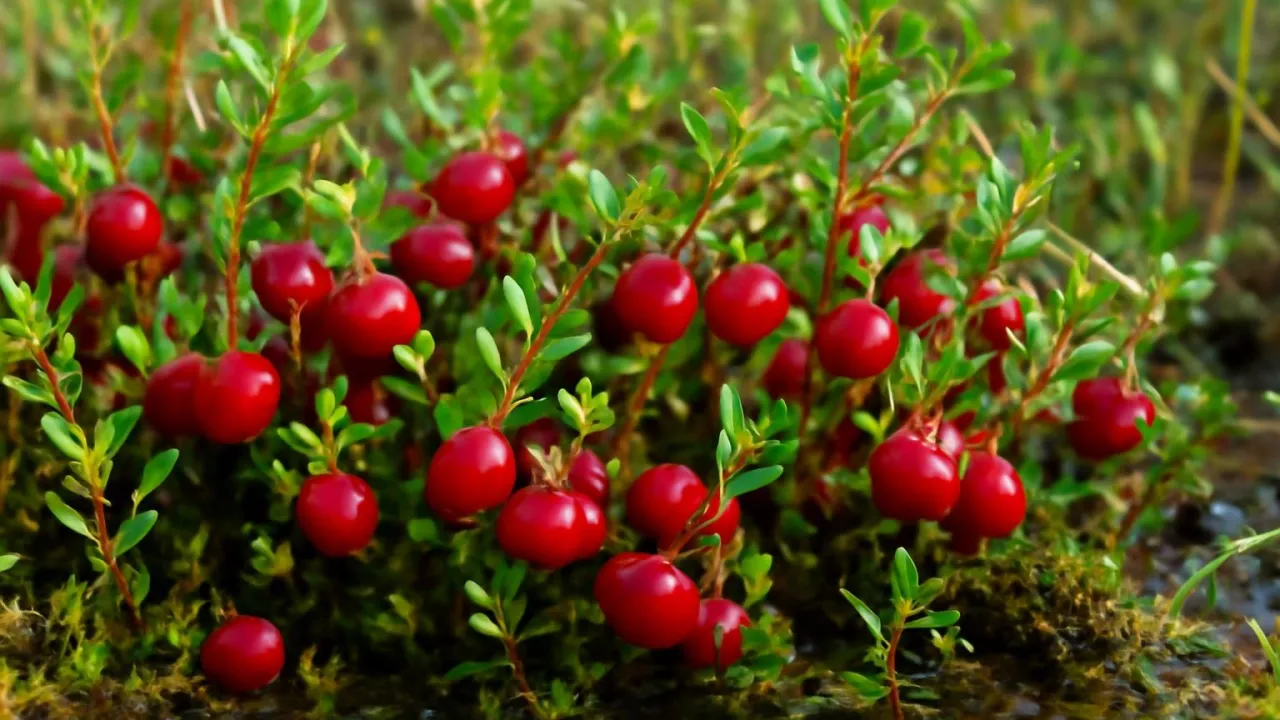
Cranberries bounce because they have tiny air pockets inside their fruit!
✨ Word Sparks (Grade 2 Glossary)
Tap 🔊 to hear
bog
A wet, soft place where plants grow
vine
A plant that grows low and spreads on the ground
harvest
To gather crops when they are ready
🪝
Have you ever seen berries that grow on wet, soft ground?
1
Where Cranberries Grow
Cranberries grow in wet, soft places called or marshes. These places have lots of water and soft soil. The plants spread low and wide over the ground.
2
How Cranberries Grow
Cranberry plants start as small that grow close to the ground. They bloom with small pink flowers in spring. Then, red berries form and ripen in the fall.
3
Special Bouncy Berries
Ripe cranberries are bright red and can bounce like little balls. This happens because they have air pockets inside. Farmers use this to help the berries.
Cranberries’ air pockets let them float, making harvesting easier and protecting fruit.
✨ Word Sparks (Grade 3 Glossary)
Tap 🔊 to hear
pollination
When bees help flowers make fruit
adaptation
A change that helps plants survive
buoyant
Able to float on water or air
🪝
Did you know cranberries grow in watery bogs and bounce when ripe?
1
Cranberry Habitat
Cranberries grow in wetlands called bogs that have soft, acidic soil. These habitats provide the water and nutrients the plants need to survive. The wet environment helps keep the vines cool during hot summer days. This lets cranberries thrive where other plants cannot.
2
Plant Structure and Growth
Cranberry plants are low-growing vines that spread across the ground. Their small pink flowers attract pollinators like bees for . After pollination, bright red berries develop and ripen by autumn. The vines’ tough stems help protect the fruit from predators and harsh weather.
3
Bouncing Berries
Ripe cranberries contain tiny air pockets that make them and able to float on water. This unique feature helps farmers harvest the berries by flooding bogs and shaking the vines. The bouncing also protects the fruit from damage during harvesting. It is a clever for survival.
4
Ecological Role
Cranberries provide food for many animals like birds and small mammals, which help spread seeds. The plants also support wetland ecosystems by stabilizing soil and filtering water. Human farming of cranberries affects these ecosystems, so sustainable practices are important. Cranberries play an important role in their natural food web.
Cranberries’ unique air pockets help them float, making wet harvests easier and protecting fruit.
✨ Word Sparks (Grade 4 Glossary)
Tap 🔊 to hear
hydrology
The study of water flow and distribution
biodiversity
Many different plants and animals living together
dispersal
Spreading seeds far from the parent plant
🪝
What makes cranberries perfect for wet, cold habitats and human farming?
1
Cranberry Habitat and Adaptations
Cranberries grow best in acidic, wetland bogs that provide water and nutrients essential for their survival. Their low, creeping vines help protect them from cold winds and frost damage in northern climates. This growth form also allows them to spread widely across the peat soil, stabilizing the ecosystem. These adaptations make cranberries well suited to their unique habitats.
2
Life Cycle and Pollination
In spring, cranberry plants produce bell-shaped pink flowers that attract pollinators such as bees, which are vital for successful pollination and fruit set. After pollination, berries develop slowly through summer and ripen by autumn, turning bright red. The timing of ripening is critical for avoiding early frost damage and maximizing seed by animals. This cycle ensures the species’ continued survival.
3
Ecological and Agricultural Roles
Cranberries serve as important food sources for birds and small mammals, which help disperse seeds and maintain . Wetland ecosystems benefit from cranberry vines that stabilize soil and filter water, improving habitat quality. However, commercial cranberry farming can alter wetland and requires sustainable practices to protect natural ecosystems. Humans depend on cranberries both ecologically and economically.
4
Harvesting and Unique Features
Farmers harvest cranberries by flooding bogs and shaking the vines, using the berries’ buoyant air pockets to float them for easy collection. This method reduces damage to the fruit and increases efficiency. The bouncing berries also serve as a natural adaptation to survive wet conditions and animal . This harvesting technique highlights the close relationship between cranberry biology and human agriculture.
1. Why do cranberry vines grow low and spread out?
2. How do farmers collect cranberries during harvest?
🤯 Mind-Blowing Fact • Grade 5
Cranberry plants have waxy leaves and buoyant berries, perfectly adapted to wetland survival and farming.
✨ Word Sparks (Grade 5 Glossary)
Tap 🔊 to hear
Ericaceae
The plant family of cranberries and blueberries
buoyancy
The ability to float on water or other liquids
hydrology
The science of water movement and distribution
🪝
How do cranberries’ biology and farming methods reflect their wetland origins?
1
Taxonomy and Scientific Context
Cranberries belong to the genus Vaccinium within the family, closely related to blueberries and lingonberries. The species Vaccinium macrocarpon is native to North American wetlands, especially in cooler climates. Their classification reflects shared traits like evergreen leaves and acidic soil preference. Understanding their taxonomy helps scientists study their evolutionary adaptations and relationships.
2
Physiological Adaptations and Mechanics
Cranberry plants have specialized evergreen leaves with a waxy coating that reduces water loss in wet but sometimes cold environments. Their trailing vines root at nodes, allowing efficient nutrient uptake from acidic peat soils. The berries’ internal air pockets provide , enabling them to float during water-based harvests. These physiological traits optimize survival and reproduction in challenging wetland habitats.
3
Conservation and Agricultural History
Native Americans first cultivated cranberries for food and medicinal uses, recognizing their nutritional benefits. Modern commercial farming began in the 19th century, transforming wild bogs into managed wetlands. Conservation efforts today focus on balancing cranberry production with wetland preservation to protect biodiversity and water quality. Sustainable practices include water recycling and habitat restoration to maintain ecosystem health.
4
Quantitative Comparisons and Growth
Cranberry vines typically grow less than 12 inches (30 cm) tall but can spread over several feet horizontally. The berries measure about 0.3 to 0.6 inches (8 to 16 mm) in diameter and weigh roughly 1 gram each. During harvest, water levels in bogs rise to about 6 to 12 inches (15 to 30 cm) to float the berries. These measurements illustrate the plant’s compact but extensive growth and unique harvesting requirements.
5
Ecological Impact and Human Use
Cranberries contribute to wetland ecosystems by stabilizing soil and supporting diverse animal species through seed dispersal. Their cultivation supports local economies and provides antioxidants beneficial to human health. However, intensive farming can alter and nutrient cycles, requiring careful management. Understanding cranberry biology aids in developing sustainable agriculture that protects both the environment and crop yields.