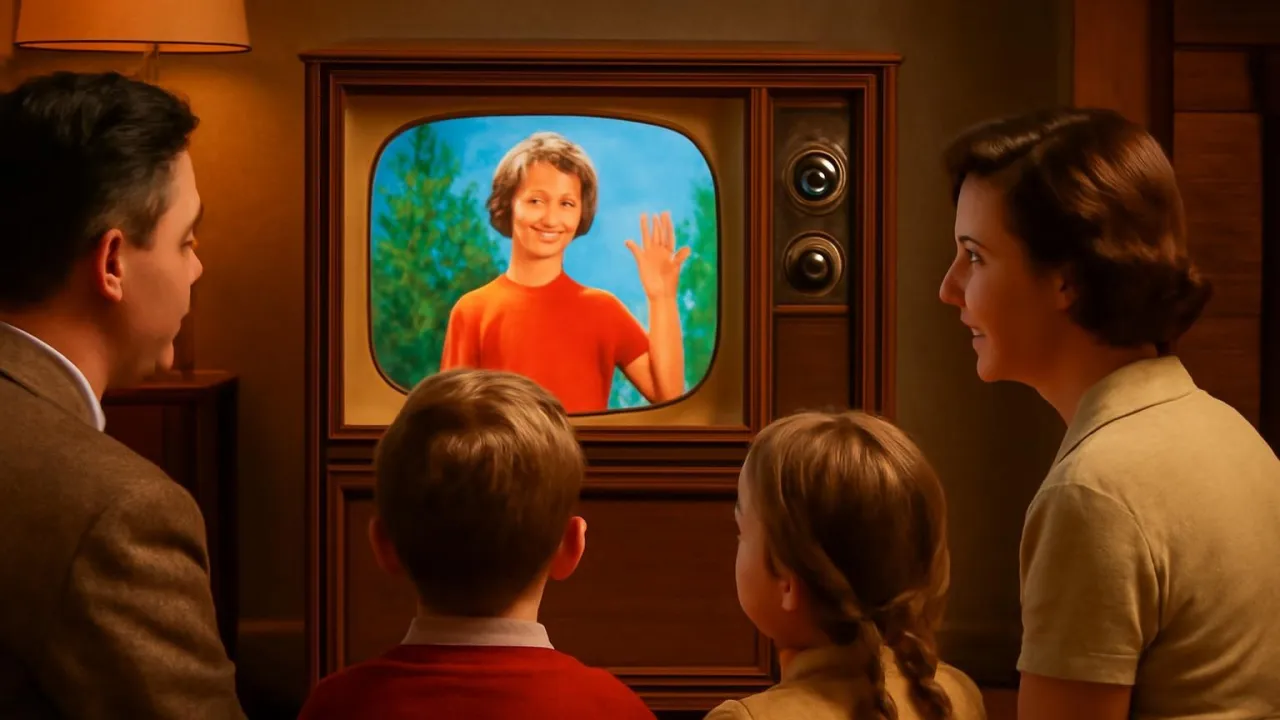
The first color cartoon on TV was 'The Flintstones' in 1962!
✨ Word Sparks (Grade 2 Glossary)
Tap 🔊 to hear
cartoon
A funny drawing that moves
blend
To mix things together
action
Something moving or happening
🪝
Can you imagine seeing your favorite show in full color?
1
A New Way to Watch
When color TV arrived, people were amazed and excited. Suddenly, and movies looked bright and real. Families gathered to watch together, sharing the fun. The living room became full of laughter and color.
2
How Color TV Works
Color TVs use tiny red, green, and blue lights. These lights together to make every color you see. The TV changes the lights very quickly to show moving pictures. This lets you see colorful , not just black and white.
3
Changing the World
Color television made news and sports more exciting to watch. People could see real colors from faraway places. It helped everyone feel closer to the world. Color TV made watching shows even more fun.
Early color TVs weighed over 100 pounds and had giant glass tubes inside!
✨ Word Sparks (Grade 3 Glossary)
Tap 🔊 to hear
phosphor
A tiny material that glows
broadcast
Sending shows through the air
signal
A message sent to a device
🪝
What if your world on TV suddenly burst into color one day?
1
A Colorful Surprise
Imagine turning on your television and seeing a parade of colors. Before color TV, all shows were in black and white. When color television arrived, families were amazed by the bright, lively images. It was like bringing a rainbow into their living rooms.
2
How Color TV Works
Color televisions use a technology called RGB, which stands for red, green, and blue. Inside the screen, tiny dots called glow in these three colors. The television mixes these lights using electronic to create every color you see. This process is called color mixing, and it happens very quickly to make moving pictures.
3
Inventors and Inventions
Many inventors helped create color TV, including Guillermo González Camarena and the RCA team. They designed special color cameras and new systems. The first color TV broadcast in the United States happened in 1953. Soon, more homes wanted to see their favorite shows in color.
4
Changing the World
Color TV made news, sports, and cartoons much more exciting. People could see the real colors of events from around the world. This invention helped people feel connected to faraway places. Color television changed how everyone shared stories and information.
By 1972, more color TVs were sold than black-and-white sets in America!
✨ Word Sparks (Grade 4 Glossary)
Tap 🔊 to hear
additive
Adding things together to make more
NTSC
A color TV standard in America
electron beam
A stream of tiny fast particles
🪝
Can you picture the excitement when families saw color TV for the first time?
1
A Revolution in Living Rooms
When color television first appeared in the 1950s, it dazzled viewers who were used to black-and-white screens. Families gathered to watch parades, nature shows, and cartoons in vibrant new hues. The living room became a window to a world bursting with color and excitement. This invention quickly became a symbol of progress and modern life.
2
Engineering the Rainbow
Color TVs use a clever system called RGB, which stands for red, green, and blue. Inside each screen, strike tiny phosphor dots that glow in these three colors. By changing the strength of each beam, the TV creates millions of different colors through a process called color mixing. This technology relies on fast electronic signals to keep the pictures moving smoothly and brightly.
3
Inventors and Breakthroughs
Guillermo González Camarena invented one of the first color TV systems in Mexico, while the RCA team developed the standard in the United States. Their inventions included special cameras, color filters, and new broadcast signals. The first official color broadcast in America aired in 1953, and soon, color TV sets appeared in homes around the world. This teamwork across countries sped up the spread of color television.
4
A World Connected by Color
Color television changed how people experienced news, sports, and entertainment. Viewers could see the green of football fields and the bright costumes in parades. It helped people understand distant cultures by showing true colors from around the globe. Color TV became a powerful tool for sharing stories and shaping culture everywhere.
2. Which inventor helped create a color TV system in Mexico?
🤯 Mind-Blowing Fact • Grade 5
Modern 4K color TVs can display over one billion different shades of color!
✨ Word Sparks (Grade 5 Glossary)
Tap 🔊 to hear
additive color
Mixing colored lights to make new colors
phosphor
A substance that glows when hit by energy
NTSC
An early American color TV system
🪝
What if you could invent a way to broadcast every color of the rainbow into every home?
1
From Black-and-White to Living Color
Imagine the surprise when, after years of black-and-white broadcasts, a television screen suddenly shimmered with vibrant reds, greens, and blues. Early color television was a marvel of engineering, captivating families worldwide and transforming the living room into a stage for dazzling new stories. The shift from monochrome to color was not just a technical leap but a cultural one, forever changing the way people experienced news, sports, and entertainment.
2
The Science Behind Color TV
Color television relies on the principle, where red, green, and blue light combine to produce millions of colors. Inside a traditional cathode ray tube (CRT) TV, three electron guns fire beams at a screen coated with dots arranged in repeating RGB patterns. By precisely controlling the intensity of each electron beam, the TV creates every hue and shade visible to the human eye. This process occurs at a rapid rate—about 30 frames per second—ensuring smooth, lifelike motion.
3
Inventors, Standards, and Global Impact
Pioneers like Guillermo González Camarena in Mexico and the RCA research team in the United States were instrumental in developing color television. Camarena’s 'trichromatic sequential system' and RCA’s (National Television System Committee) standard solved key challenges in color signal transmission and compatibility with black-and-white sets. The first commercial color broadcast in the United States aired in 1953, and by the 1970s, color TV had become the global standard, connecting people across continents through shared images and events.
4
Cultural Transformation and Lasting Legacy
The arrival of color television revolutionized visual storytelling, making news reports more vivid and sports broadcasts more thrilling. It allowed viewers to witness the true colors of distant places, from Olympic games to natural wonders, fostering a sense of global connection. Color TV also influenced advertising, fashion, and even politics, as the impact of color images shaped public opinion and cultural trends in powerful new ways.
5
Modern Color Displays and Future Innovations
Today, color television technology has evolved far beyond the CRT, with flat-panel displays using liquid crystal (LCD), light-emitting diode (LED), and organic LED (OLED) technologies for sharper images and richer colors. Modern TVs can display over a billion colors and ultra-high-definition resolutions, offering immersive experiences for viewers. The legacy of early color TV inventors lives on, inspiring new innovations in how we see and share the world through screens.