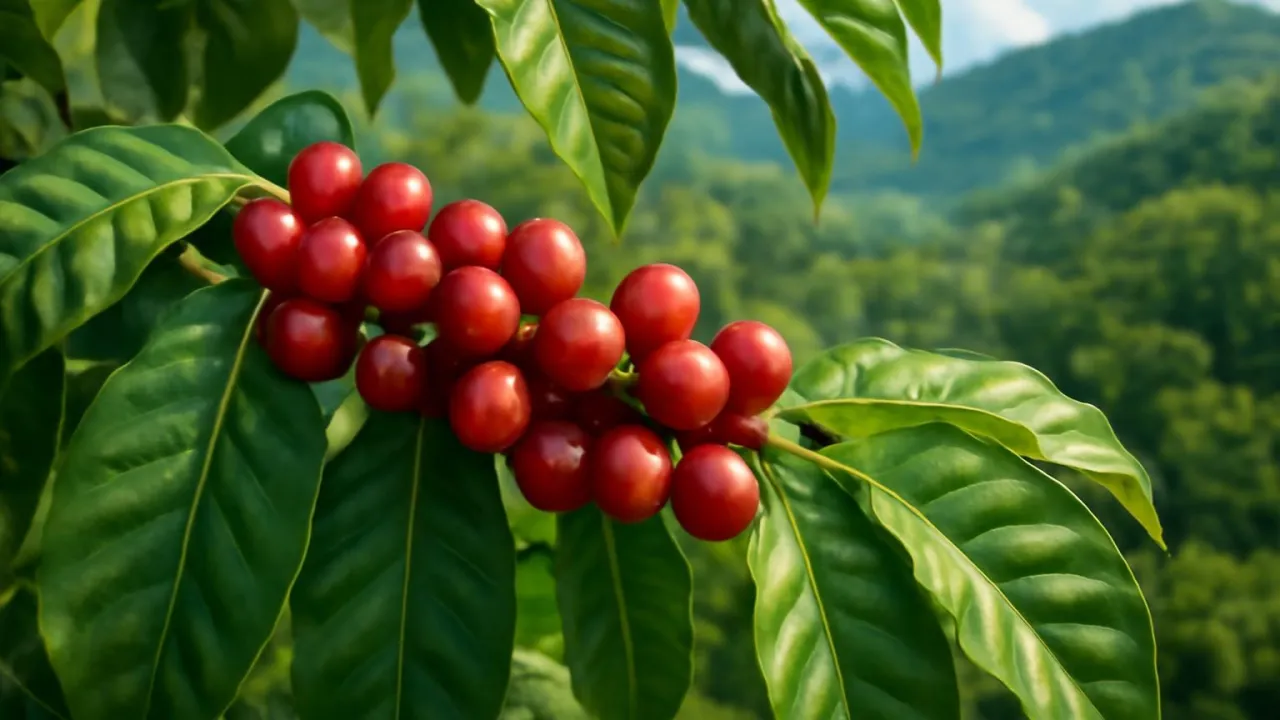
1. What color are coffee cherries when they are ripe?
2. What is inside a coffee cherry?
🤯 Mind-Blowing Fact • Grade 2
Coffee cherries hide the beans that turn into the coffee you drink every day!
✨ Word Sparks (Grade 2 Glossary)
Tap 🔊 to hear
ripe
Ready to eat or pick from the plant
roast
To heat beans to make them brown and tasty
tropical
Warm places near the equator where plants grow well
🪝
Have you ever wondered where coffee beans come from before your cup?
1
Coffee Cherry’s Bright Color
Coffee cherries grow bright red when they are and ready to pick. They grow on bushes that like warm weather. Birds often eat the cherries because they are sweet and juicy.
2
Inside the Cherry
Inside each cherry are two green coffee beans that farmers carefully remove. These beans are then dried and roasted to make coffee. The beans are hard before roasting but smell good after.
3
Where Coffee Grows
Coffee bushes grow best in highlands with rich soil and steady rain. Farmers water and care for the bushes to help cherries grow well. The right climate helps the cherries become sweet and tasty.
2. What happens to coffee beans after farmers pick them?
🤯 Mind-Blowing Fact • Grade 3
Coffee cherries protect and hide the beans that fuel millions of people worldwide every day!
✨ Word Sparks (Grade 3 Glossary)
Tap 🔊 to hear
adaptation
A change that helps a plant or animal survive
parchment
Thin layer covering coffee beans inside the cherry
nutrients
Food from soil that helps plants grow strong
🪝
Did you know coffee beans start inside a bright red fruit called a cherry?
1
Coffee Cherry’s Color and Shape
Coffee cherries are small, round fruits that turn bright red when ripe. This bright color helps attract birds that eat the fruit. The cherry’s skin protects the seeds inside from drying out. This is an important for survival.
2
Seeds Inside the Cherry
Inside each coffee cherry are two green seeds called coffee beans. These beans are covered by a thin layer called . The beans stay hard until farmers dry and roast them to make coffee. This process changes their flavor and aroma.
3
Where Coffee Grows Best
Coffee bushes grow in tropical highlands with rich soil and steady rainfall. These conditions provide and water that help cherries mature. The bushes use their leaves to capture sunlight for energy. This helps the cherries grow sweet and juicy.
4
Coffee’s Role in Ecosystems
Coffee plants are part of food webs where birds eat cherries and spread seeds. This helps the plant reproduce in new areas. Farmers harvest cherries carefully to keep plants healthy. Coffee bushes also provide shade and shelter for other animals.
1. Why is the coffee cherry’s red color important?
2. What covers the coffee beans inside the cherry?
🤯 Mind-Blowing Fact • Grade 4
Coffee cherries not only hide beans but also play a vital role in forest ecosystems and human economies!
✨ Word Sparks (Grade 4 Glossary)
Tap 🔊 to hear
symbiotic
A helpful relationship between living things
dispersal
Spreading seeds to new places to grow
deforestation
Cutting down many trees in forests
🪝
How does the coffee cherry’s bright fruit help it survive in tropical forests?
1
Bright Fruit and Seed Dispersal
The coffee cherry’s bright red color attracts birds and animals that eat the fruit and spread seeds. This seed helps coffee plants grow in new places and maintain healthy populations. The thick skin protects the seeds from damage during this process. These animals play a key role in the coffee plant’s life cycle.
2
Growing Conditions and Ecosystem Role
Coffee bushes thrive in tropical highlands where rich soil and steady rainfall provide nutrients and water. These bushes contribute to the ecosystem by offering shade and shelter for many animals, creating a relationship. Farmers carefully manage coffee plants to balance harvest and plant health. This management helps maintain biodiversity in coffee-growing regions.
3
From Cherry to Coffee Bean
Inside the cherry, two seeds called coffee beans are protected by a thin parchment layer and thick skin. After harvesting, beans are dried and roasted, which develops their flavor and aroma. This transformation is crucial for producing the coffee people enjoy worldwide. Roasting changes the chemical makeup of the beans to create unique tastes.
4
Geographic Distribution and Human Impact
Coffee plants originally come from Ethiopia but now grow in tropical regions worldwide, including South America and Asia. Coffee farming supports millions of people but also requires careful land use to prevent . Sustainable farming helps protect forests and wildlife habitats. Many farmers use shade-grown methods to reduce environmental harm.
Each coffee cherry’s journey from tropical fruit to roasted bean supports a $100 billion global industry!
✨ Word Sparks (Grade 5 Glossary)
Tap 🔊 to hear
pericarp
The outer fruit layers that protect seeds inside
fermentation
A process that helps develop coffee’s flavor
shade-grown
Coffee grown under trees to protect plants and soil
🪝
What fascinating journey does a coffee cherry take from tropical shrub to your morning cup?
1
Taxonomy and Botanical Classification
The coffee cherry comes from the Coffea genus, primarily Coffea arabica and Coffea canephora species. These plants belong to the Rubiaceae family, which includes flowering shrubs and small trees. Botanically, the coffee cherry is a drupe fruit that encloses the valuable coffee seeds inside a fleshy .
2
Physiological Mechanics of Growth
Coffee plants thrive in tropical highlands between 2,000 and 6,000 feet elevation, where temperature ranges between 59 and 77 degrees Fahrenheit. The cherries develop over several months, changing from green to bright red as chlorophyll breaks down and sugars accumulate. Leaves perform photosynthesis, converting sunlight into energy to nourish fruit growth.
3
From Cherry to Coffee Bean Processing
After harvesting, coffee cherries undergo depulping to remove the fleshy outer layers, revealing the two green coffee beans covered by a parchment layer. Beans are then fermented, washed, and dried to reduce moisture content to about 10-12 percent. Roasting at temperatures near 450 degrees Fahrenheit transforms chemical compounds, producing the aroma and flavor beloved worldwide.
4
Conservation and Agricultural History
Coffee cultivation originated in Ethiopia and spread globally through trade routes, becoming a major economic crop. However, expanding coffee farming has led to deforestation and biodiversity loss in some regions. Sustainable farming practices, such as coffee, help conserve forest ecosystems while supporting local communities.
5
Quantitative Comparisons and Global Impact
Worldwide, over 10 million tons of coffee cherries are harvested annually, producing about 9 million bags of green coffee beans. Each cherry weighs roughly 0.5 grams, while a roasted coffee bean weighs about 0.12 grams. Coffee plants can live up to 50 years, and the global coffee market is valued at over $100 billion, fueling millions of daily coffee drinkers.