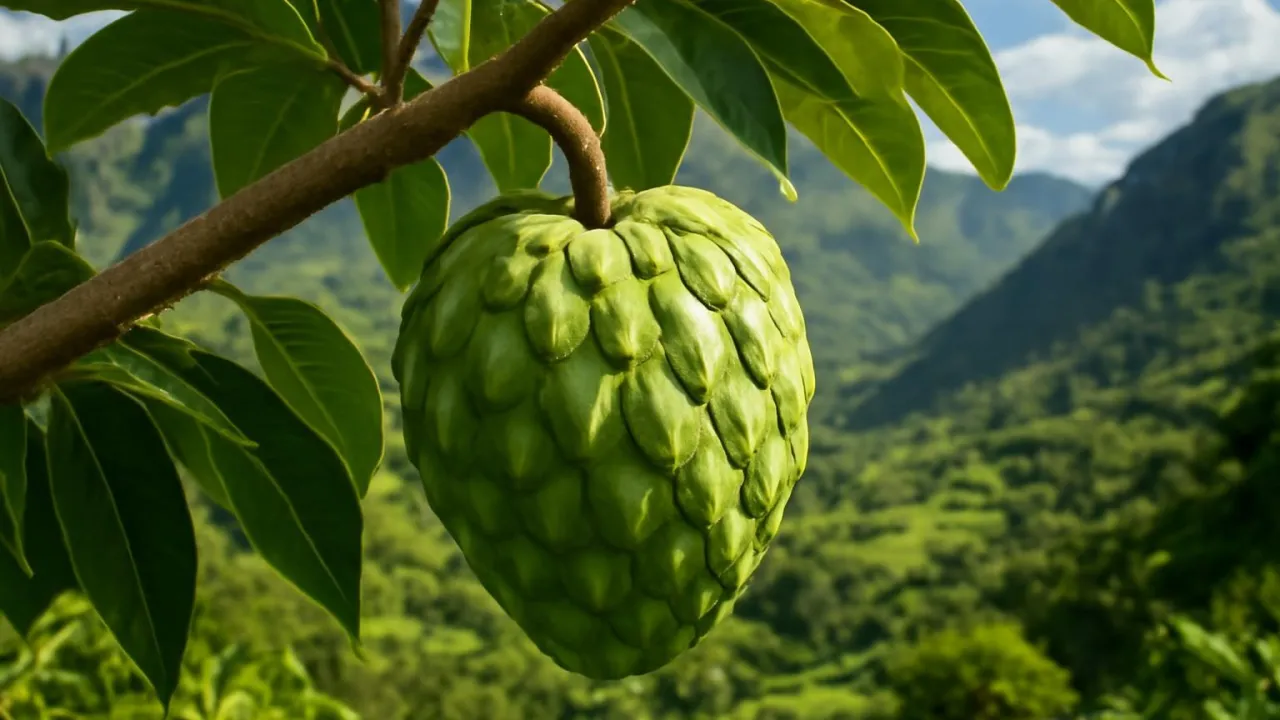
Cherimoya’s creamy flesh is so sweet, people call it 'the ice cream fruit'!
✨ Word Sparks (Grade 2 Glossary)
Tap 🔊 to hear
ripe
Ready to eat and tastes good
seed
A tiny part that grows a new plant
custard
A soft, sweet food like pudding
🪝
Can you imagine a fruit that feels soft and tastes like creamy custard?
1
What Cherimoya Looks Like
Cherimoya has green, bumpy skin and grows on trees in warm places. When , it feels soft and smells sweet. The fruit looks like a heart or cone shape and is called apple. People enjoy its creamy inside because it tastes very sweet.
2
Where Cherimoya Grows
Cherimoya trees grow best in warm, sunny places with plenty of water. They come from the Andes Mountains in South America originally. Farmers now grow cherimoya in many warm countries around the world. The trees need good soil and care to produce tasty fruit.
3
Why Cherimoya Is Special
Inside the fruit is white and creamy with many black inside. It tastes like a mix of banana and pineapple flavors. Birds and animals eat the fruit and spread the seeds around. This helps new cherimoya trees grow in the wild naturally.
Cherimoya’s bumpy skin helps protect it by blending into green leaves around it.
✨ Word Sparks (Grade 3 Glossary)
Tap 🔊 to hear
camouflage
Hiding by looking like the surroundings
nutrients
Food parts plants need to grow
seed dispersal
How seeds spread to new places
🪝
Have you heard of a fruit that wears bumpy green armor and tastes like creamy custard?
1
Cherimoya’s Unique Appearance
Cherimoya has a thick, green skin covered with bumps that protect the soft inside. This bumpy skin acts like to hide the fruit from some predators. The fruit is shaped like a heart or cone, which helps it hang safely on tree branches. When ripe, the skin becomes softer and easier to peel.
2
Growing in the Andes Mountains
Cherimoya trees thrive in warm, mountainous regions with plenty of sunlight and water. The Andes Mountains provide the perfect climate for cherimoya to grow and produce sweet fruits. These trees need rich soil full of to stay healthy and strong. Farmers carefully water and care for the trees to help the fruit grow large.
3
The Fruit’s Sweet, Creamy Inside
Inside the fruit is white, creamy flesh that tastes like a mix of banana, pineapple, and vanilla. This creamy texture is why cherimoya is often called a custard fruit. The fruit contains many black seeds that animals eat and spread to new areas. This helps the cherimoya tree reproduce and survive in the wild.
4
Cherimoya’s Role in Nature
Cherimoya fruits provide food for many animals like birds and monkeys, which helps the ecosystem stay balanced. The trees also contribute oxygen and shade to their environment. Humans have cultivated cherimoya for centuries because of its delicious taste and nutrition. This fruit is an important part of local food webs and agriculture.
Cherimoya’s seed dispersal by animals helps maintain healthy forests and supports biodiversity.
✨ Word Sparks (Grade 4 Glossary)
Tap 🔊 to hear
ecosystem
A community of living things and their home
biodiversity
Many different kinds of plants and animals
conservation
Protecting nature and plants from harm
🪝
How does cherimoya’s bumpy skin help it survive in its mountain home?
1
Protective Skin and Camouflage
Cherimoya’s thick, bumpy skin acts as natural camouflage, blending with green leaves to avoid predators. This protective layer also shields the fruit from harsh weather and insect attacks that could damage it. As the fruit ripens, the skin softens, signaling animals that it is ready to eat and helping seed dispersal. This cause-and-effect relationship allows the fruit to spread its seeds efficiently in the environment.
2
Ecosystem Role and Food Webs
Cherimoya fruits provide important food for birds, monkeys, and insects, which rely on them for energy throughout the year. These animals help disperse the seeds by carrying them far from the parent tree, promoting forest growth. The trees also support soil health by adding organic matter when leaves and fruit fall to the ground. Humans cultivate cherimoya for food and income, influencing local farming and positively.
3
Growing Conditions and Geography
Cherimoya trees thrive in the warm, humid valleys of the Andes Mountains, where temperatures remain mild year-round. These trees require well-drained soil and regular watering to produce large, sweet fruits that attract animals and humans alike. The fruit’s geographic distribution now includes many tropical and subtropical regions worldwide due to cultivation. Climate and soil conditions directly affect fruit quality, size, and yield across different growing areas.
4
Human Impact and Conservation
Farmers have cultivated cherimoya for centuries, selecting the best trees for sweeter fruit and better yields to meet market demand. However, habitat loss and climate change threaten wild cherimoya populations in their native regions, reducing genetic diversity. Sustainable farming practices help protect the species and maintain by preserving natural habitats. efforts focus on preserving genetic diversity and natural habitats to ensure cherimoya’s survival for future generations.
Cherimoya’s sugar content can be as high as 20%, making it one of the sweetest tropical fruits.
✨ Word Sparks (Grade 5 Glossary)
Tap 🔊 to hear
Annonaceae
The plant family cherimoya belongs to
aromatic
Having a strong, pleasant smell
pollinator
An animal that helps plants make seeds
🪝
What makes cherimoya a fascinating fruit with a rich scientific and cultural history?
1
Scientific Classification and Origins
Cherimoya, scientifically named Annona cherimola, belongs to the family, which includes tropical fruit trees. It originated in the Andean valleys of Ecuador, Peru, and Bolivia, where it has been cultivated for thousands of years. This species thrives in subtropical climates with moderate temperatures and high humidity. Its botanical classification helps scientists study its relationships with other custard fruits.
2
Physiological Adaptations and Fruit Mechanics
The cherimoya fruit develops a thick, protective rind composed of overlapping scales that reduce water loss and deter pests. Inside, the creamy pulp contains sugars and compounds that attract animals for seed dispersal. The fruit ripens best between 68 to 77 degrees Fahrenheit (20 to 25 degrees Celsius), softening its skin to signal edibility. Its seeds are hard and black, containing compounds that discourage overconsumption.
3
Cultural Significance and Conservation Efforts
Cherimoya has been prized by indigenous Andean cultures for its sweet flavor and nutritional value. It is often called 'the ice cream fruit' due to its creamy texture and rich taste. Modern cultivation spreads across Mediterranean and subtropical regions, but wild populations face threats from deforestation and climate change. Conservation programs aim to preserve genetic diversity and promote sustainable farming practices.
4
Quantitative Comparisons and Growth Data
Cherimoya fruits typically weigh between 8 to 16 ounces (225 to 450 grams) and measure 4 to 6 inches (10 to 15 centimeters) long. The trees can reach heights of up to 30 feet (9 meters) in optimal conditions. Fruit ripening occurs over 3 to 4 months after flowering. Compared to other custard fruits, cherimoya’s sugar content ranges from 15 to 20 percent, contributing to its sweet flavor.
5
Ecological Role and Agricultural Impact
Cherimoya trees contribute to local ecosystems by providing food for various animals, which aids in seed dispersal and forest regeneration. The species supports like beetles that are essential for fruit set. Commercial cultivation has economic importance in regions like Spain and Chile, influencing agricultural biodiversity. Understanding cherimoya’s ecological interactions helps improve sustainable farming and conservation strategies.