Chayote
The Climbing Squash with a Secret
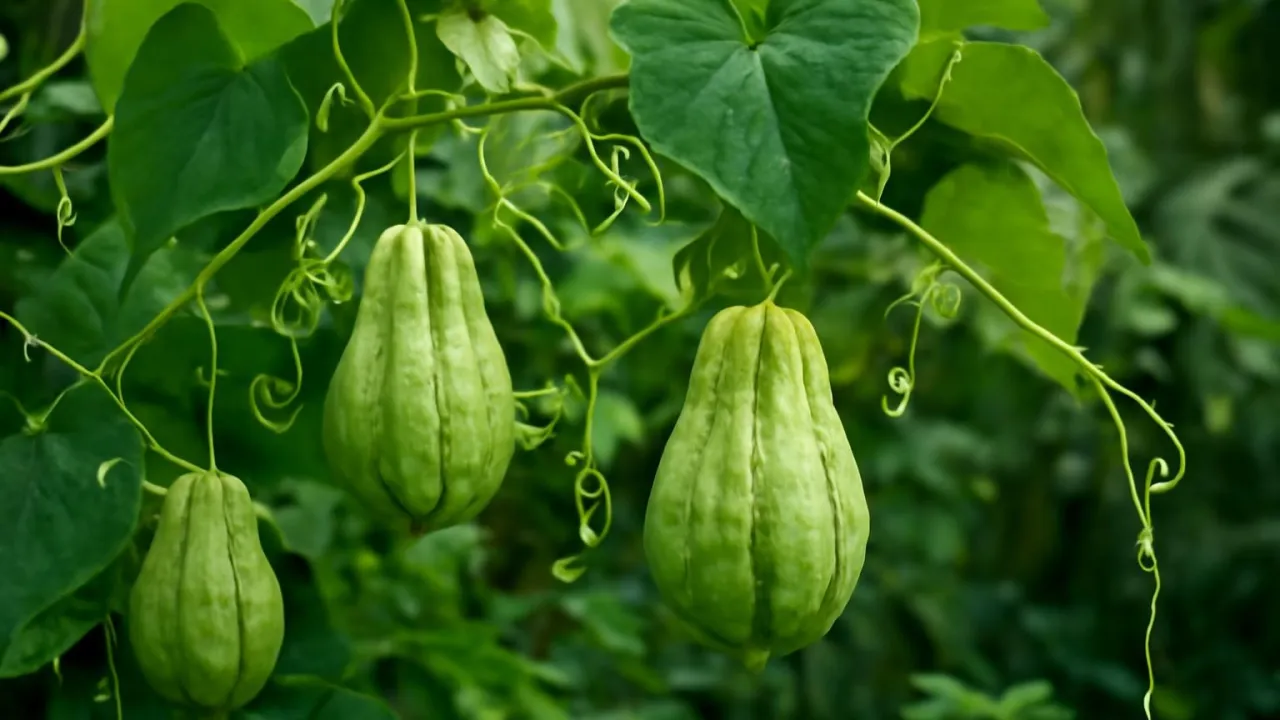
Chayote vines can produce over 100 fruits in a single season—enough to feed a whole family!
1 Chayote’s Scientific Identity
Chayote, known scientifically as Sechium edule, belongs to the gourd family , which also includes cucumbers, pumpkins, and melons. Botanically, chayote is classified as a fruit because it develops from the flower and contains a seed, though it is commonly used as a vegetable in cooking. Its pale green, ridged exterior and pear-like shape make it instantly recognizable among other edible gourds. The plant’s unique reproductive strategy involves sprouting directly from the mature fruit, with the seed germinating inside the flesh before sending out a shoot. This adaptation allows chayote to propagate efficiently in its native tropical environments.
2 Growth and Physiology
Chayote vines can grow more than 30 feet (9 meters) in a single season, rapidly covering trellises, fences, or trees with their dense foliage. The plant uses slender, spiraling tendrils to anchor itself and reach for sunlight, maximizing photosynthesis for energy production. Its large, heart-shaped leaves help capture sunlight, while the waxy skin of the fruit reduces water loss and protects against insect damage. Each fruit contains one large, edible seed that stores nutrients for the next generation. Chayote’s roots can also develop into , which are eaten in some cultures.
3 Ecosystem Connections and Human Uses
In tropical and subtropical regions, chayote vines provide food and habitat for insects, birds, and small mammals, contributing to diverse food webs. The plant’s rapid growth can sometimes lead it to outcompete native species, but it also stabilizes soil and prevents erosion in gardens and farms. Humans have cultivated chayote for centuries, using not only the fruit but also the shoots, leaves, and tuberous roots as nutritious food sources. Its mild flavor and crunchy texture make it a staple in soups, salads, stir-fries, and even desserts across Latin America, Asia, and Africa.
4 History, Distribution, and Conservation
Chayote was first domesticated in Central America by ancient Mesoamerican peoples, who valued its productivity and adaptability. Today, it is grown in tropical and subtropical regions worldwide, including Mexico, the Caribbean, Southeast Asia, and the southern United States. While chayote is not considered endangered, its wild relatives face habitat loss due to deforestation and agricultural expansion. Conservation efforts focus on preserving genetic diversity and sustainable farming practices to protect both cultivated and wild chayote varieties.
5 Quantitative Curiosities and Scientific Impact
A single chayote vine can yield over 100 fruits in one growing season, with each fruit weighing between 0.5 to 2 pounds (225–900 grams). The plant thrives at temperatures between 65°F and 85°F (18°C–29°C), requiring at least 120 frost-free days to produce mature fruit. Chayote contains vitamin C, potassium, and fiber, making it a healthy dietary choice. Its rapid growth rate and ability to sprout from whole fruits make it an excellent subject for plant biology studies. Scientists continue to research chayote’s genetics, disease resistance, and potential for sustainable agriculture in changing climates.
1. Why is chayote considered a fruit by scientists?
2. How many fruits can one chayote vine produce in a season?