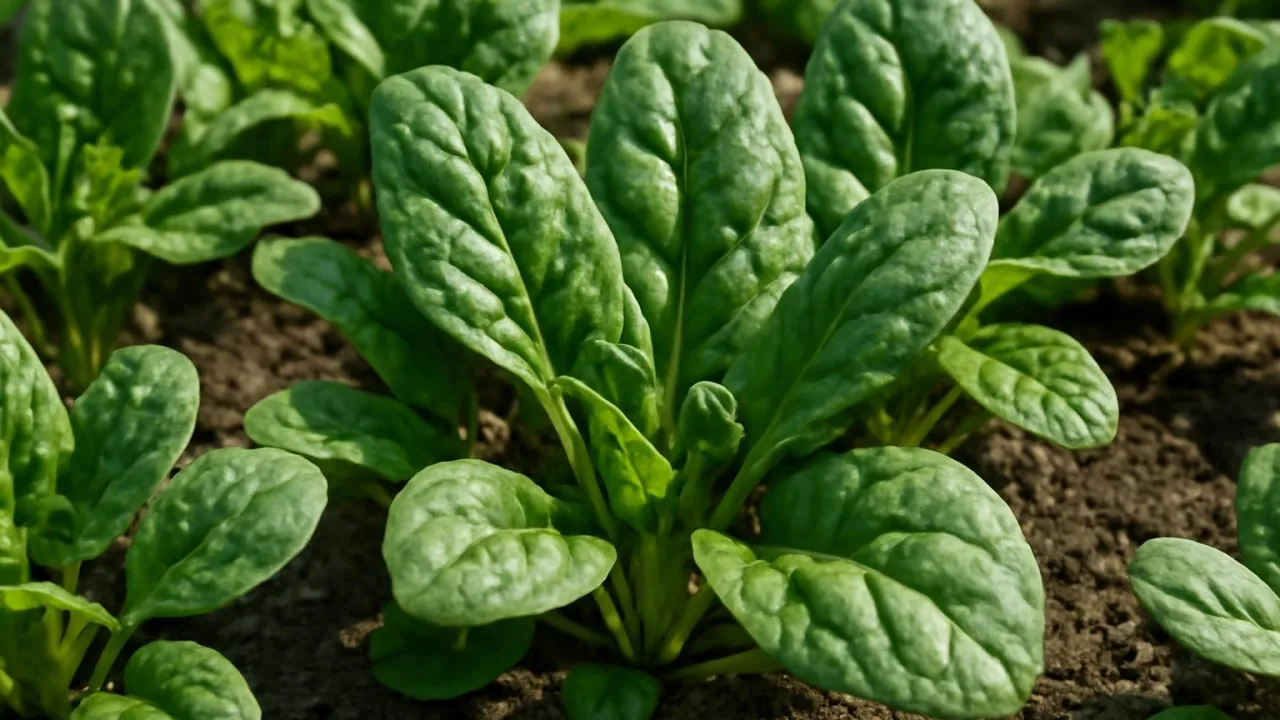
Spinach can grow from seed to harvest in about 40 days!
✨ Word Sparks (Grade 2 Glossary)
Tap 🔊 to hear
nutrients
Good stuff plants and people need to grow
harvest
When people pick plants to eat
vegetable
A plant we eat for food
🪝
Have you ever tasted fresh spinach straight from the garden?
1
Spinach Leaves and Color
Spinach leaves are bright green and soft to touch. They grow close to the soil in bunches. Many animals like to hide near spinach plants.
2
Where Spinach Grows
Spinach grows best in cool weather and needs plenty of sun and water. Farmers plant spinach in gardens and fields. It grows quickly in just a few weeks.
3
Why Spinach is Healthy
Spinach is full of iron and vitamins that help your body stay strong. People eat spinach raw in salads or cooked in meals. It is a very nutritious .
Spinach leaves use photosynthesis to turn sunlight into energy for growth!
✨ Word Sparks (Grade 3 Glossary)
Tap 🔊 to hear
photosynthesis
How plants use sunlight to make food
camouflage
How plants hide by blending in
nutrients
Good stuff plants and people need to grow
🪝
Did you know spinach uses its broad leaves to catch sunlight for food?
1
Spinach’s Leafy Adaptation
Spinach has broad, flat leaves that capture sunlight for . This process helps the plant make food using light energy. The leaves are also soft and green, which helps them blend into garden environments. This protects spinach from some hungry predators.
2
Growing in Cool Climates
Spinach grows best in cool weather, which helps it avoid heat stress. It needs rich soil full of and regular watering to thrive. Spinach plants grow quickly, producing many leaves in a short time. This fast growth helps farmers harvest spinach multiple times in one season.
3
Spinach’s Role in Food Chains
Spinach is a food source for many insects and animals, making it part of local food webs. Humans also cultivate spinach for its nutritious leaves, which contain iron and vitamins. Eating spinach provides important that support healthy blood and strong muscles. This makes spinach an important vegetable for people’s diets worldwide.
4
From Seed to Plate
Spinach seeds sprout quickly when planted in moist soil. After sprouting, seedlings grow leaves that gather sunlight for energy. Farmers harvest the leaves when they are tender and fresh. People then eat spinach raw in salads or cooked in many dishes.
Spinach’s rapid growth and nutrient-rich leaves make it vital for food webs and human nutrition worldwide!
✨ Word Sparks (Grade 4 Glossary)
Tap 🔊 to hear
ecosystem
All living things and their homes together
symbiosis
When two living things help each other
nutrient density
Lots of good vitamins and minerals in food
🪝
How does spinach’s growth affect the food web and human health?
1
Spinach’s Growth and Environment
Spinach grows best in cool, moist environments where the soil is rich in nutrients, which supports healthy leaf development. Because spinach grows quickly, it can be harvested multiple times during a growing season, increasing food availability. The plant’s broad leaves maximize sunlight absorption, enabling efficient photosynthesis that fuels its rapid growth. These adaptations allow spinach to thrive in many parts of the world, including Asia, Europe, and North America.
2
Spinach’s Role in Ecosystems
Spinach serves as a food source for various insects and small animals, playing an important role in local food webs by supporting predators higher up the chain. Its leaves provide shelter and nutrients for many garden insects, creating a symbiotic relationship that benefits both the plant and animals. Spinach also contributes to soil health by adding organic matter when its leaves decompose. Human cultivation of spinach impacts by altering land use and requiring water and soil management.
3
Nutritional Benefits for Humans
Spinach is rich in iron, vitamins A and C, and other nutrients essential for human health, helping to prevent anemia and boost the immune system. Eating spinach regularly supports muscle function and overall energy levels due to its . It is used worldwide in many cuisines, both raw in salads and cooked in various dishes. The vegetable’s popularity has led to agricultural advances to improve yield and disease resistance.
4
Geographic Distribution and Cultivation
Originally native to Central and Southwest Asia, spinach is now grown globally in temperate climates due to its adaptability. Modern farming techniques allow spinach to be cultivated year-round in controlled environments, increasing availability. Its ability to grow in diverse soils and climates makes it a staple vegetable in many countries. Spinach cultivation requires careful water management to prevent disease and ensure optimal growth.
Spinach’s rich iron content and rapid growth make it a vital crop feeding millions worldwide every year!
✨ Word Sparks (Grade 5 Glossary)
Tap 🔊 to hear
chloroplast
Plant cell part that makes food from sunlight
photosynthesis
How plants use sunlight to make food
nutrient density
Lots of good vitamins and minerals in food
🪝
What makes spinach a scientifically fascinating and nutritionally powerful leafy vegetable?
1
Scientific Classification and Origin
Spinach, scientifically named Spinacia oleracea, belongs to the Amaranthaceae family and is native to Central and Southwest Asia. It is a fast-growing, cool-season leafy vegetable that has been cultivated for thousands of years. Spinach’s genetic adaptations allow it to thrive in temperate climates with moderate sunlight and moisture. Its taxonomic classification helps scientists understand its relationships to other leafy greens and its evolutionary history.
2
Physiological Mechanisms of Growth
Spinach’s broad leaves contain that perform , converting sunlight into chemical energy for growth. The plant’s root system efficiently absorbs water and nutrients, especially iron, from the soil to support leaf development. Spinach’s rapid cell division and expansion enable it to grow from seed to harvest in about 40 days. Its physiological adaptations also include tolerance to cooler temperatures and resistance to certain pests.
3
Historical Cultivation and Conservation
Historically, spinach was first cultivated in Persia and spread to Europe during the Middle Ages, becoming a staple in many diets. Modern agricultural practices focus on improving spinach varieties for disease resistance and higher nutrient content. Conservation of heirloom spinach varieties preserves genetic diversity important for future breeding. Sustainable farming methods aim to reduce water usage and pesticide reliance while maintaining crop yields.
4
Nutritional Content and Health Impact
Spinach is exceptionally rich in iron, containing about 2.7 milligrams per 100 grams, which supports red blood cell production and oxygen transport. It also provides significant amounts of vitamins A, C, and K, as well as folate and magnesium, essential for various metabolic processes. Compared to other leafy greens, spinach has a higher , making it a superfood for human diets. Regular consumption of spinach is linked to improved cardiovascular health and stronger bones.
5
Quantitative Growth and Environmental Data
Spinach plants typically grow between 6 and 12 inches tall, reaching maturity in 30 to 45 days depending on conditions. Optimal growth occurs at temperatures between 50 and 65 degrees Fahrenheit, with soil moisture levels maintained consistently. Spinach’s photosynthetic rate allows it to convert sunlight efficiently, supporting rapid biomass accumulation. Globally, spinach production exceeds 25 million metric tons annually, reflecting its importance in agriculture and nutrition.