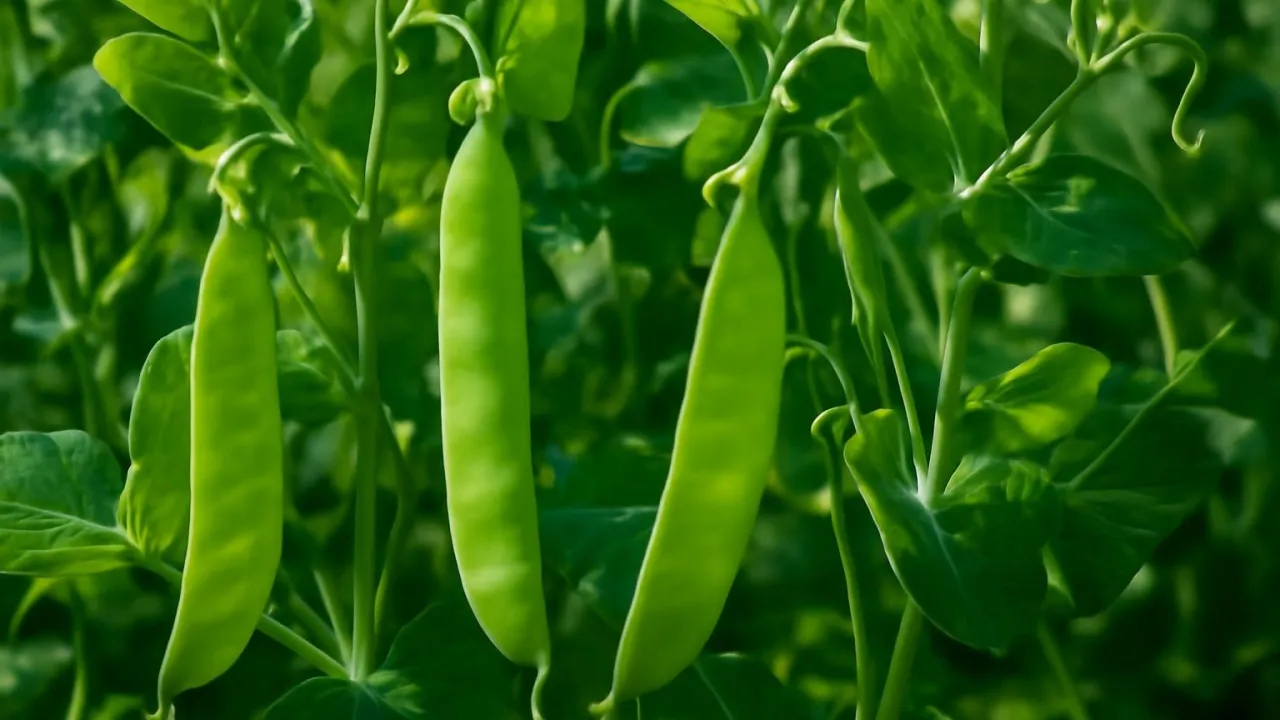
Snow peas are special because their pods are soft enough to eat whole!
✨ Word Sparks (Grade 2 Glossary)
Tap 🔊 to hear
vegetable
A plant we eat for food
vine
A plant that climbs or grows along
temperate
A place that is not too hot or cold
🪝
Have you ever tasted a snow pea’s sweet, crunchy pod?
1
What Are Snow Peas?
Snow peas are green that grow in long pods. The pods are crunchy and sweet to eat. Unlike other peas, you eat the whole pod. They are a tasty snack or part of meals.
2
Where Do They Grow?
Snow peas grow on that climb up fences or poles. They like warm weather with plenty of sun and water. Farmers plant them in gardens or fields during spring and fall. They grow best in climates.
3
How Do We Eat Them?
People eat snow peas raw in salads or cooked in stir-fries. Cooking them a little keeps their crunch and sweetness. They add a fresh, crisp taste to many dishes. Kids often enjoy their mild flavor.
1. What makes snow peas different from other peas?
2. When do farmers usually plant snow peas?
🤯 Mind-Blowing Fact • Grade 3
Snow peas fix nitrogen in soil, helping other plants grow better nearby!
✨ Word Sparks (Grade 3 Glossary)
Tap 🔊 to hear
adaptation
A change that helps plants survive
tendrils
Thin plant parts that grab and hold
nitrogen
A gas in air that plants need in soil
🪝
Did you know snow peas protect their seeds inside crunchy pods?
1
Snow Peas and Their Pods
Snow peas are a type of vegetable that grows in green pods. These pods are edible and protect the seeds inside. The pods are crunchy and sweet, making them tasty to eat raw or cooked. This edible pod helps the plant spread its seeds safely.
2
Growth and Habitat
Snow peas grow on climbing vines that can reach six feet tall. They thrive in temperate climates with full sun and regular watering. The vines use to grip supports, helping them grow upward. This helps snow peas get more sunlight.
3
Role in Nature and Farming
Snow peas play a role in food webs by providing nutrients to humans and animals. Farmers grow snow peas because they are easy to harvest and have many uses. These plants can also improve soil by fixing , which helps other plants grow better. Their growth supports healthy ecosystems.
4
Physical Features and Survival
The edible pods of snow peas protect seeds from predators and harsh weather. Their sweet flavor attracts animals that help spread seeds, aiding reproduction. The plant’s climbing vine structure helps it reach sunlight and avoid ground predators. These features show great for survival.
Snow peas improve soil health by naturally adding nitrogen, benefiting many plants nearby!
✨ Word Sparks (Grade 4 Glossary)
Tap 🔊 to hear
symbiotic
A helpful relationship between two living things
disperse
To spread seeds far from the plant
photosynthesis
How plants make food from sunlight
🪝
How do snow peas’ crunchy pods help them survive and grow?
1
Snow Peas’ Unique Edible Pods
Snow peas have pods that are soft and edible, unlike many other peas with tough pods. This trait allows animals and humans to eat the pods, which helps spread the seeds through droppings. The crunchy texture and sweet taste attract many creatures, creating a relationship between the plant and animals.
2
Growth, Habitat, and Climate
Snow peas grow best in temperate regions with moderate temperatures and full sunlight. They climb tall supports using tendrils, which help them avoid ground predators and reach sunlight efficiently. The plants require regular watering but cannot tolerate waterlogged soil, so good drainage is essential for healthy growth.
3
Role in Ecosystems and Agriculture
Snow peas contribute to ecosystems by fixing nitrogen in the soil, improving fertility for other plants. Farmers cultivate snow peas not only for food but also to enrich the soil naturally. They fit into food webs by providing nutrients to humans, insects, and some animals. Their cultivation supports sustainable farming practices.
4
Cause and Effect of Adaptations
Because snow peas have edible pods, animals help their seeds, increasing the plant’s range. The climbing vine structure allows snow peas to access more sunlight, improving and growth. These adaptations increase the plant’s survival chances in competitive environments and changing climates.
Snow peas are unique because their edible pods are actually fruits that help spread seeds!
✨ Word Sparks (Grade 5 Glossary)
Tap 🔊 to hear
Fabaceae
The pea family of plants with pods and seeds
nitrogen fixation
Plants adding nitrogen to soil naturally
photosynthesis
How plants use sunlight to make food
🪝
What makes snow peas a unique vegetable in botany and agriculture?
1
Scientific Classification and Botanical Traits
Snow peas, scientifically known as Pisum sativum var. saccharatum, belong to the family. They are a variety of garden pea with edible pods, unlike typical peas where pods are discarded. Botanically, these pods are fruits because they contain seeds, making snow peas an interesting example of botanical versus culinary classification. This edible pod trait contributes to their widespread culinary use.
2
Physiological Mechanics and Growth Adaptations
Snow peas grow on climbing vines that use tendrils to attach to supports, enabling vertical growth up to 6 feet tall. Their leaves perform efficiently in full sun, producing energy for pod development. The pods develop quickly and remain tender and sweet, a physiological adaptation that attracts animals for seed dispersal. Additionally, snow peas fix atmospheric nitrogen through root nodules, enriching soil fertility.
3
Conservation, Cultivation History, and Human Impact
Snow peas have been cultivated for thousands of years in Asia and Europe, spreading globally due to their nutritional value and ease of growth. Modern agricultural practices emphasize sustainable cultivation, as snow peas improve soil health by . However, habitat loss and climate change pose challenges to traditional growing regions, making conservation of heirloom varieties important for genetic diversity.
4
Quantitative Comparisons and Environmental Needs
Snow pea vines can grow up to 6 feet (1.8 meters) tall and produce pods roughly 2 to 3 inches (5 to 7.5 centimeters) long. They require daytime temperatures between 55 and 75 degrees Fahrenheit (13 to 24 degrees Celsius) for optimal growth. These plants need moderate watering with well-drained soil to prevent root rot. Compared to other peas, snow peas mature faster and have a shorter growing season.
5
Ecological Role and Agricultural Benefits
Snow peas play a vital role in sustainable agriculture by fixing nitrogen, reducing the need for chemical fertilizers. Their edible pods provide a nutritious food source rich in vitamins and fiber. By supporting soil health and offering a versatile crop, snow peas contribute to food security and ecological balance. Their cultivation also supports pollinators and beneficial insects within integrated farm ecosystems.