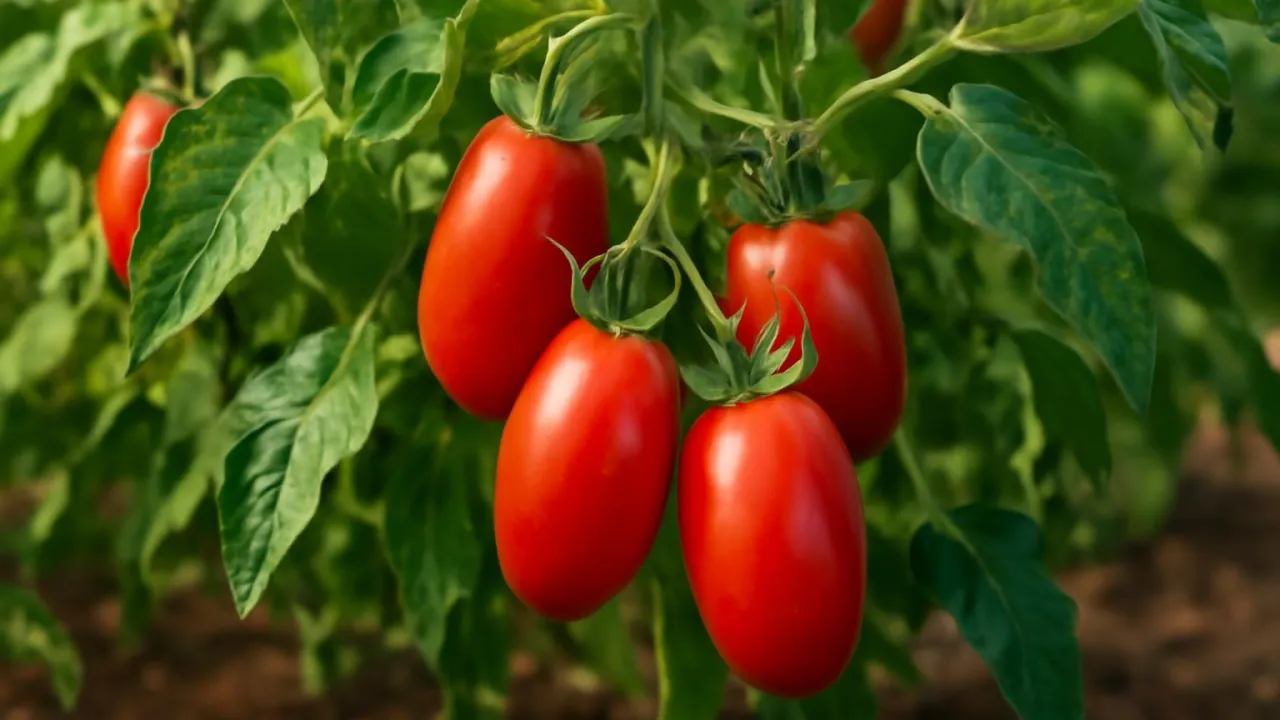
Roma tomatoes have thicker skin than many other tomatoes, helping them stay fresh longer!
✨ Word Sparks (Grade 2 Glossary)
Tap 🔊 to hear
oval
A shape like a stretched-out circle
watering
Giving plants water so they can grow
sauce
A thick liquid that adds flavor to food
🪝
Have you ever seen a tomato that is perfect for making sauce?
1
What Roma Tomatoes Look Like
Roma tomatoes are bright red and shaped like small . They have thick skin that protects them well. Their plants grow about three feet tall in warm weather.
2
Where Roma Tomatoes Grow
Roma tomatoes grow best in warm places with lots of sun. They need regular to stay healthy and strong. Farmers plant them in gardens or fields during summer.
3
Why People Love Roma Tomatoes
People use Roma tomatoes to make and soups because they are less watery. Their thick skin helps them last longer after picking. They taste rich and sweet when cooked.
Roma tomatoes’ thick skin and low water content make them perfect for rich sauces and long storage!
✨ Word Sparks (Grade 3 Glossary)
Tap 🔊 to hear
pollination
When pollen moves to help plants make seeds
nutrients
Food that plants need to grow strong
adaptation
A special trait that helps plants survive
🪝
Did you know Roma tomatoes are special because of their thick skin and shape?
1
Physical Traits and Adaptations
Roma tomatoes have a thick skin that protects them from damage and keeps them fresh longer. Their oval shape helps them hold less water, making them perfect for cooking. The bright red color signals ripeness to animals and humans alike. These features help Roma tomatoes survive and spread their seeds.
2
Growing Conditions and Habitat
Roma tomatoes grow best in warm climates with plenty of sunlight and well-drained soil. They need regular watering to absorb and grow strong. Farmers often cultivate them in Mediterranean-like regions where the temperature stays warm. These conditions support the plant’s growth and fruit production.
3
Role in Ecosystems and Food Chains
Roma tomatoes provide food for many animals, including insects and birds that help with . Pollination helps the plant produce more tomatoes by spreading pollen. Humans harvest Roma tomatoes for cooking, which connects them to food webs. The plant also helps soil by adding when it decomposes.
4
How Roma Tomatoes Help People
Roma tomatoes are popular in cooking because their thick skin and firm flesh make them ideal for sauces and pastes. They contain vitamins like vitamin C and antioxidants that support health. Their ability to last longer reduces food waste. This vegetable is important in many cultures and cuisines worldwide.
1. Why is the thick skin of Roma tomatoes important?
2. What role do insects and birds play for Roma tomatoes?
🤯 Mind-Blowing Fact • Grade 4
Roma tomatoes’ thick skin and firm flesh make them ideal for cooking and long storage worldwide!
✨ Word Sparks (Grade 4 Glossary)
Tap 🔊 to hear
ecosystem
A community of living things and their homes
pollinators
Animals that help plants make seeds by moving pollen
sustainable
Ways to protect nature while farming or living
🪝
Have you ever wondered why Roma tomatoes are so popular in cooking worldwide?
1
Physical Features and Survival
Roma tomatoes have a thick skin that prevents damage during harvesting and transport, which increases their shelf life. Their oval shape reduces water content inside, making them less likely to spoil quickly. The bright red color attracts animals that help spread seeds, aiding reproduction. These adaptations help Roma tomatoes survive in different environments.
2
Growing Environments and Global Spread
Originally from Mexico and Italy, Roma tomatoes thrive in Mediterranean climates with warm temperatures and plenty of sunlight. They require well-drained soil and consistent watering to develop healthy fruit. Farmers cultivate Roma tomatoes worldwide, especially in regions with warm growing seasons. This global spread shows their importance in agriculture and food systems.
3
Ecosystem Roles and Human Impact
Roma tomatoes contribute to food webs by providing nutrients for like bees and birds, which help fertilize plants through pollination. Humans harvest these tomatoes for cooking, influencing agricultural practices and economies. farming methods help protect soil health and reduce pesticide use, benefiting . However, overuse of chemicals can harm pollinators and soil quality.
4
Culinary Importance and Nutrition
Roma tomatoes are favored in sauces and pastes because their firm flesh and low water content create rich flavors. They contain vitamins such as vitamin C and antioxidants that support human health. Their thick skin allows longer storage, reducing food waste in markets and homes. This vegetable plays a key role in many cultural dishes and global cuisines.
1. Why is the thick skin of Roma tomatoes helpful for farmers?
2. How do pollinators help Roma tomatoes?
🤯 Mind-Blowing Fact • Grade 5
Roma tomatoes’ thick skin and firm flesh reduce water loss and damage, making them ideal for global farming and cooking!
✨ Word Sparks (Grade 5 Glossary)
Tap 🔊 to hear
determinate
Plants that grow to a set size and stop
vascular
Tubes inside plants that carry water and food
lycopene
A red pigment that helps protect your heart
🪝
What makes the Roma tomato scientifically unique and so valuable in agriculture and cuisine?
1
Scientific Classification and Botanical Traits
The Roma tomato, scientifically known as Solanum lycopersicum, belongs to the Solanaceae family, which includes potatoes and eggplants. It is a variety, meaning it grows to a fixed size and produces fruit in a short period. The thick skin and firm flesh are adaptations that reduce water loss and physical damage during transport. These traits make Roma tomatoes particularly suited for commercial farming and processing.
2
Physiological Mechanics and Growth
Roma tomato plants typically reach heights of three to four feet and require full sun exposure with temperatures between 70 and 85 degrees Fahrenheit for optimal growth. Their oval fruits have a lower water content compared to other tomatoes, which concentrates sugars and flavors. The plant’s system efficiently transports nutrients and water to support fruit development and ripening over approximately 70 days.
3
Conservation, Cultivation History, and Global Impact
Originally cultivated in Mexico, the Roma tomato was later developed in Italy to improve cooking qualities and shelf life. Today, it is grown worldwide, especially in Mediterranean and temperate regions. Sustainable agricultural practices, including crop rotation and integrated pest management, help conserve soil health and reduce environmental impacts. The Roma tomato’s resilience and culinary versatility have made it a staple in global food systems.
4
Quantitative Comparisons and Culinary Uses
Roma tomatoes typically weigh between 2 to 5 ounces (60 to 140 grams) and measure about 2 to 3 inches (5 to 7.5 centimeters) in length. Their thick skin allows them to withstand transportation speeds and handling without bruising, unlike thinner-skinned varieties. When cooked, their lower water content results in sauces with richer texture and flavor, making them preferred for paste and canning.
5
Nutritional Value and Human Benefits
Roma tomatoes are rich in vitamin C, potassium, and antioxidants such as , which supports heart health and reduces cancer risk. Their firm texture and longer shelf life reduce food waste in markets and homes. These nutritional benefits, combined with their culinary versatility, make Roma tomatoes an important vegetable for both health and gastronomy worldwide.