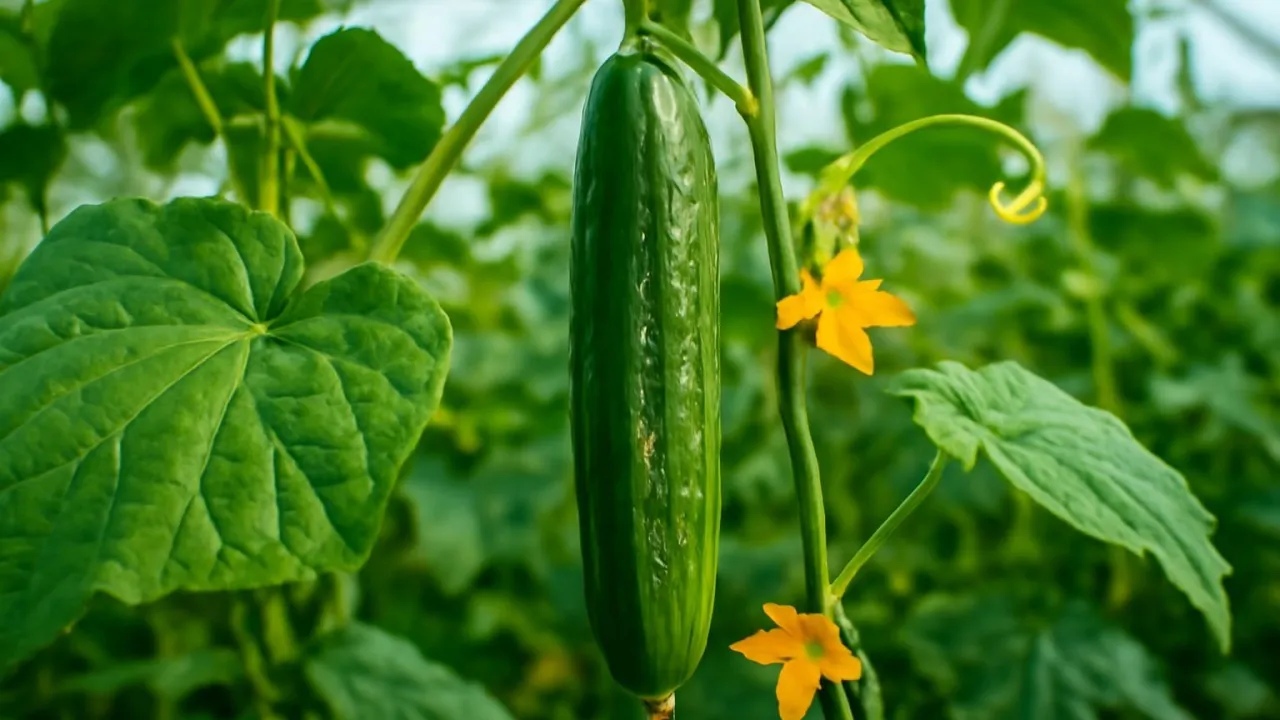
English cucumbers are often grown in greenhouses to keep them fresh and tasty.
✨ Word Sparks (Grade 2 Glossary)
Tap 🔊 to hear
greenhouse
A warm glass house where plants grow.
texture
How something feels when you touch it.
edible
Safe and good to eat.
🪝
Have you ever seen a cucumber that is long and almost seedless?
1
What English Cucumbers Look Like
English cucumbers are long and smooth with dark green skin. They have very few seeds inside. People like their crisp and mild taste.
2
Where English Cucumbers Grow
They grow best in warm or gardens with plenty of sun. The plants climb on vines and need regular watering. This helps the cucumbers grow big and healthy.
3
Why They Are Special
English cucumbers have thin, skin that does not need peeling. Their almost seedless inside makes eating easier. This makes them popular in salads and sandwiches.
English cucumbers have very thin skin that you can eat without peeling it!
✨ Word Sparks (Grade 3 Glossary)
Tap 🔊 to hear
vine
A plant that climbs and grows long.
nutrients
Food parts plants need to grow strong.
adaptation
A change that helps plants survive better.
🪝
Did you know the English cucumber is almost seedless and very long?
1
Physical Features
The English cucumber is long and slender with smooth, dark green skin. It has very few seeds, which makes eating easier. Its thin skin is edible and adds to its crisp texture. This vegetable is prized for its mild flavor and freshness.
2
Growth and Habitat
English cucumbers grow on climbing that need support structures. They thrive in greenhouses or warm garden areas with plenty of sunlight. Regular watering provides the necessary for healthy growth. These conditions help cucumbers avoid drying out or becoming bitter.
3
Adaptations for Survival
The thin skin of the English cucumber helps reduce water loss and protects it from pests. Its almost seedless interior is an for easier seed dispersal by humans. The ’s climbing habit allows it to reach sunlight and avoid ground predators. These features improve the cucumber’s chances of survival.
4
Uses and Benefits
People often eat English cucumbers fresh in salads or sandwiches because of their crisp texture. They are rich in water content, which helps keep the body hydrated. The cucumber’s mild flavor makes it popular worldwide. It also plays a role in healthy diets as a low-calorie vegetable.
Greenhouse-grown English cucumbers stay fresh longer because they are protected from pests and weather.
✨ Word Sparks (Grade 4 Glossary)
Tap 🔊 to hear
symbiosis
When two living things help each other.
pollinator
An animal that helps plants make seeds.
greenhouse
A warm glass house where plants grow.
🪝
Have you ever wondered how English cucumbers stay fresh and seedless?
1
Physical Characteristics and Growth
English cucumbers are long, slender vegetables with smooth, dark green skin that is thin and edible. They grow on climbing vines that require support structures to reach sunlight efficiently. These cucumbers thrive in warm or temperate garden climates where they receive ample sunlight and water. Their nearly seedless interior makes them easier to eat and more appealing to consumers.
2
Cause and Effect in Growth Conditions
When English cucumbers receive sufficient sunlight and regular watering, they develop crisp textures and mild flavors. Lack of water or sunlight can cause bitterness and poor growth. Growing them in protects the plants from pests and harsh weather, which increases yield. This controlled environment helps maintain the cucumber’s freshness and quality throughout the season.
3
Role in Ecosystems and Human Use
English cucumbers contribute to food webs by providing nutrients to humans and some animals that may consume fallen fruits. They have a symbiotic relationship with like bees, which help the plants reproduce. Humans cultivate these cucumbers extensively for fresh markets and salads, impacting agricultural practices positively. Their popularity encourages sustainable farming methods that reduce pesticide use.
4
Geographic Distribution and Impact
Originally from South Asia, cucumbers have spread worldwide and are now grown in many temperate regions. English cucumbers are primarily produced in in North America and Europe to meet market demand. Their cultivation supports local economies and provides fresh produce year-round. Advances in greenhouse technology continue to improve their production efficiency and environmental footprint.
English cucumbers develop nearly seedless fruit through a natural process called parthenocarpy.
✨ Word Sparks (Grade 5 Glossary)
Tap 🔊 to hear
parthenocarpy
Fruit growing without seeds or fertilization.
trellis
A frame that helps plants climb upwards.
selective breeding
Choosing plants with good traits to grow.
🪝
Did you know the English cucumber is a cultivated variety prized for its seedless fruit and delicate skin?
1
Scientific Classification and Origins
The English cucumber, scientifically known as Cucumis sativus, belongs to the Cucurbitaceae family. It is a cultivated variety developed from wild cucumbers native to South Asia. has produced its long, slender shape and nearly seedless interior. This vegetable is widely grown in temperate climates using modern agricultural techniques.
2
Physiological Features and Growth Mechanics
English cucumbers grow on climbing vines that require for support and optimal sunlight exposure. Their thin, waxy skin reduces water loss and protects against pests and diseases. The nearly seedless fruit results from parthenocarpic development, where fruit forms without fertilization. These physiological adaptations improve fruit quality and shelf life.
3
Conservation and Agricultural History
Historically, cucumbers have been cultivated for thousands of years, with the English cucumber variety emerging through in Europe. Greenhouse cultivation has increased production efficiency and reduced pesticide use, promoting sustainable farming. Conservation efforts focus on preserving heirloom varieties and genetic diversity within cucumber species.
4
Quantitative Comparisons and Environmental Needs
English cucumbers typically measure 12 to 16 inches long and weigh between 10 to 14 ounces. They require temperatures between 70 and 85 degrees Fahrenheit for optimal growth. Compared to other cucumber varieties, they have thinner skin and fewer seeds, which enhances their crispness and consumer appeal. Regular watering and well-drained soil are essential for maximum yield.
5
Economic Importance and Global Distribution
English cucumbers are commercially significant in North America and Europe, where greenhouse production dominates. Their year-round availability supports fresh produce markets and food industries. Advances in greenhouse technology continue to improve yield, reduce environmental impact, and meet consumer demand. This vegetable plays an important role in global agricultural economies.