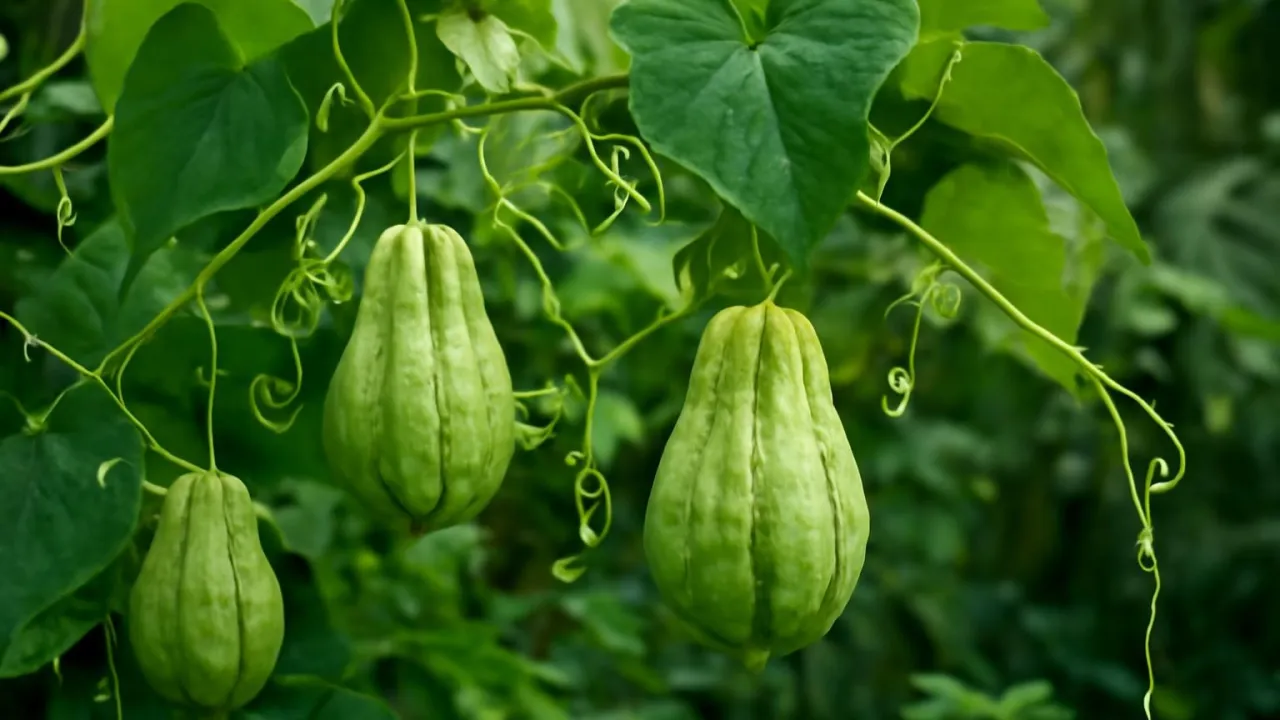
Did you know some vegetables grow up tall fences like a climbing plant?
1
Chayote’s Climbing Adventure
Chayote grows on a vine that climbs up walls and trees. The vine has curly that help it hold on tightly. Chayote fruits hang down from the vine and look like green pears. They can grow as big as your hand.
2
Where Chayote Lives
Chayote likes to grow in warm, sunny places with lots of rain. It is found in gardens in Central America and other hot countries. The plant needs rich, moist soil to grow strong and healthy. Farmers plant chayote seeds in the springtime.
3
Eating Chayote
People eat chayote raw in salads or cooked in soups and stews. The fruit has a mild, crunchy taste that many people enjoy. You can also eat the leaves and of the plant. Chayote is healthy and full of .
Chayote vines can climb taller than a giraffe in one season!
✨ Word Sparks (Grade 3 Glossary)
Tap 🔊 to hear
tendril
A curly stem for grabbing things
botanical
Related to plants and plant science
photosynthesis
How plants make food from sunlight
🪝
What if you found a vegetable that could climb higher than your head?
1
A Vegetable That Climbs
Imagine a plant that scrambles up fences and trees, reaching for the sun. That’s what chayote does, using its skinny, curly to grab onto anything nearby. The chayote fruit dangles down, shaped like a wrinkled green pear with smooth, shiny skin. In just a few weeks, the vine can grow taller than most people!
2
Where Chayote Grows Best
Chayote loves warm, tropical places with lots of sunlight and rain. It originally grew in Central America, but now people plant it all around the world. The vine grows quickly in rich, moist soil and needs plenty of space to spread. Farmers often build tall trellises to help the plant climb and make harvesting easier.
3
A Surprising Fruit
Even though people call it a vegetable, chayote is actually a fruit. It grows from a flower and has a seed inside, just like a pumpkin or cucumber. The fruit, shoots, leaves, and even roots can be eaten in different dishes. Chayote is crunchy and mild, and it’s used in soups, salads, and stir-fries.
4
Chayote’s Clever Tricks
Chayote’s curly help it climb up to reach sunlight for . Its thick, waxy skin keeps the fruit moist and safe from bugs. The vine grows quickly, so it can beat weeds to sunlight and nutrients. All these tricks help chayote survive in busy gardens and wild forests.
Chayote can cover a whole backyard fence in just one summer!
✨ Word Sparks (Grade 4 Glossary)
Tap 🔊 to hear
pollination
Moving pollen so plants can make fruit
trellis
A frame that helps plants climb up
ecosystem
All living things sharing a place
🪝
What plant grows like a jungle explorer, swinging and climbing to reach the sun?
1
A Vine on the Move
Instead of sitting still like many vegetables, chayote races upward, wrapping its coiled tendrils around anything it can find. Its pale green, wrinkled fruits dangle from high above, sometimes hidden among big, heart-shaped leaves. This climbing habit lets chayote soak up sunlight that other ground plants can’t reach. By growing quickly and spreading wide, chayote can cover fences, , or even trees in just one season.
2
Life Cycle and Survival Skills
Chayote starts life as a single large seed inside its fruit, which sprouts right from the whole fruit when planted in soil. The vine grows both male and female flowers, making and fruit growth possible on the same plant. Its thick, waxy skin helps the fruit stay moist and safe from bugs or hot sun. The plant’s curly tendrils act like little ropes, helping it climb and avoid hungry ground insects.
3
Chayote’s Place in Nature
Chayote vines create shady spots and hiding places for insects, birds, and small animals in tropical gardens and forests. Because it grows so fast, chayote can sometimes take over space from other plants, but it also helps keep soil from washing away. People eat not only the fruits but also the shoots, leaves, and roots, making chayote a valuable food for families. Its ability to grow in many countries supports food webs and local markets.
4
From Ancient Gardens to Modern Tables
Long ago, people in Central America grew chayote for its tasty fruits and easy growing. Today, you can find chayote in Asia, Africa, and the southern United States, where it’s called names like "vegetable pear" or "mirliton." Farmers use to help the vines climb high and keep the fruits clean. Chayote’s mild flavor and crunchy bite make it a favorite in stir-fries, soups, and even desserts around the world.
1. How does chayote reach sunlight above other plants?
2. What is one way chayote helps nature?
🤯 Mind-Blowing Fact • Grade 5
Chayote vines can produce over 100 fruits in a single season—enough to feed a whole family!
✨ Word Sparks (Grade 5 Glossary)
Tap 🔊 to hear
Cucurbitaceae
The plant family of gourds and squashes
tuber
A thick, underground plant part that stores food
germinate
When a seed starts to grow into a plant
🪝
What if a single plant could feed people, climb trees, and travel across continents?
1
Chayote’s Scientific Identity
Chayote, known scientifically as Sechium edule, belongs to the gourd family , which also includes cucumbers, pumpkins, and melons. Botanically, chayote is classified as a fruit because it develops from the flower and contains a seed, though it is commonly used as a vegetable in cooking. Its pale green, ridged exterior and pear-like shape make it instantly recognizable among other edible gourds. The plant’s unique reproductive strategy involves sprouting directly from the mature fruit, with the seed germinating inside the flesh before sending out a shoot. This adaptation allows chayote to propagate efficiently in its native tropical environments.
2
Growth and Physiology
Chayote vines can grow more than 30 feet (9 meters) in a single season, rapidly covering trellises, fences, or trees with their dense foliage. The plant uses slender, spiraling tendrils to anchor itself and reach for sunlight, maximizing photosynthesis for energy production. Its large, heart-shaped leaves help capture sunlight, while the waxy skin of the fruit reduces water loss and protects against insect damage. Each fruit contains one large, edible seed that stores nutrients for the next generation. Chayote’s roots can also develop into , which are eaten in some cultures.
3
Ecosystem Connections and Human Uses
In tropical and subtropical regions, chayote vines provide food and habitat for insects, birds, and small mammals, contributing to diverse food webs. The plant’s rapid growth can sometimes lead it to outcompete native species, but it also stabilizes soil and prevents erosion in gardens and farms. Humans have cultivated chayote for centuries, using not only the fruit but also the shoots, leaves, and tuberous roots as nutritious food sources. Its mild flavor and crunchy texture make it a staple in soups, salads, stir-fries, and even desserts across Latin America, Asia, and Africa.
4
History, Distribution, and Conservation
Chayote was first domesticated in Central America by ancient Mesoamerican peoples, who valued its productivity and adaptability. Today, it is grown in tropical and subtropical regions worldwide, including Mexico, the Caribbean, Southeast Asia, and the southern United States. While chayote is not considered endangered, its wild relatives face habitat loss due to deforestation and agricultural expansion. Conservation efforts focus on preserving genetic diversity and sustainable farming practices to protect both cultivated and wild chayote varieties.
5
Quantitative Curiosities and Scientific Impact
A single chayote vine can yield over 100 fruits in one growing season, with each fruit weighing between 0.5 to 2 pounds (225–900 grams). The plant thrives at temperatures between 65°F and 85°F (18°C–29°C), requiring at least 120 frost-free days to produce mature fruit. Chayote contains vitamin C, potassium, and fiber, making it a healthy dietary choice. Its rapid growth rate and ability to sprout from whole fruits make it an excellent subject for plant biology studies. Scientists continue to research chayote’s genetics, disease resistance, and potential for sustainable agriculture in changing climates.