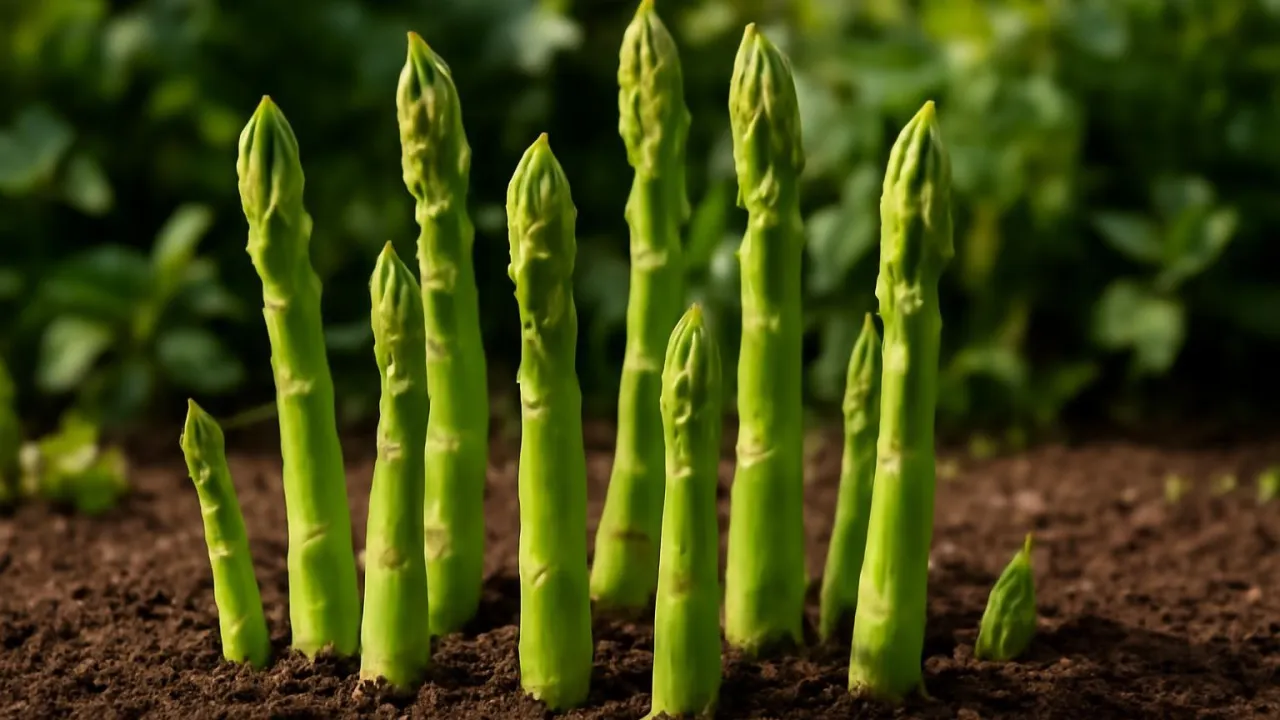
Some asparagus spears can grow up to 7 inches in just 24 hours!
✨ Word Sparks (Grade 2 Glossary)
Tap 🔊 to hear
spear
A long, thin, pointed stick
nutrients
Food parts plants need to grow
harvest
When farmers pick plants to eat
🪝
Have you ever seen a plant grow very fast like asparagus?
1
What Does Asparagus Look Like?
Asparagus grows tall green that look like thin sticks. These spears come out of the ground in spring. They are fresh and crisp when eaten.
2
Where Does Asparagus Grow?
Asparagus grows best in warm places with plenty of sun. It likes soil that drains water well and is rich with . Farmers plant it in fields during early spring.
3
Why Is Asparagus Special?
Asparagus can grow very fast, sometimes seven inches in one day. This fast growth helps it reach sunlight quickly. People enjoy eating asparagus because it tastes fresh and healthy.
1. When do asparagus spears come out of the ground?
2. Why does asparagus grow fast?
🤯 Mind-Blowing Fact • Grade 3
Asparagus spears can grow up to 7 inches in just one day, one of the fastest plant growth rates!
✨ Word Sparks (Grade 3 Glossary)
Tap 🔊 to hear
photosynthesis
How plants use sunlight to make food
pollination
When insects help plants make seeds
adaptation
A way plants change to survive better
🪝
Did you know asparagus uses special tricks to grow tall and strong?
1
Asparagus Appearance and Growth
Asparagus grows as tall, thin green spears that shoot up from underground roots. These spears are actually young shoots that will become fern-like leaves later. The plant uses rapid cell growth to push spears above the soil surface quickly. This fast growth helps the plant capture sunlight early in the season.
2
Habitat and Life Cycle
Asparagus thrives in temperate climates with well-drained soil and full sun exposure. It grows from thick underground roots called crowns that store nutrients during winter. In spring, new spears emerge rapidly from these crowns. After harvesting, the spears develop into feathery foliage that produces food through .
3
Adaptations for Survival
The plant’s underground crowns protect it from cold winters and drought. Its tall spears help avoid shade from other plants. Asparagus also uses a waxy coating on spears to reduce water loss. These allow it to survive and grow in different environments.
4
Pollination and Reproduction
Asparagus plants produce tiny flowers on mature ferns that attract insects for . After pollination, berries form containing seeds for new plants. This reproduction method helps asparagus spread naturally in the wild. Farmers often propagate asparagus by dividing crowns to grow new plants.
Asparagus supports ecosystems by feeding pollinators and birds that spread its seeds far away.
✨ Word Sparks (Grade 4 Glossary)
Tap 🔊 to hear
perennial
A plant that lives for many years
pollinator
An insect that helps plants make seeds
sustainable
Using resources without harming nature
🪝
How does asparagus play an important role in gardens and ecosystems?
1
Growth and Environment
Asparagus grows best in temperate regions where it receives full sunlight and well-drained soil. Its underground crowns store nutrients that help it survive cold winters and dry seasons. This ability to store energy allows asparagus to regrow each spring, making it a vegetable. Because it grows tall quickly, asparagus can outcompete weeds for sunlight.
2
Ecosystem Role and Pollination
Mature asparagus plants produce small flowers that attract such as bees and wasps. These insects help pollinate flowers, enabling the plant to produce berries with seeds. These berries provide food for birds, which help spread asparagus seeds in the wild. Thus, asparagus supports local food webs by feeding insects and birds.
3
Agricultural Impact and Human Use
Farmers cultivate asparagus worldwide because it is nutritious and profitable. Harvesting asparagus requires careful timing to pick spears before they become tough. Overharvesting can weaken plants, so farming practices are important. Asparagus is rich in vitamins and antioxidants, making it a valuable crop for healthy diets.
4
Geographic Distribution and Adaptations
Originally native to Europe, North Africa, and Asia, asparagus has spread globally due to cultivation. It adapts well to different soils and climates, especially temperate zones. The plant’s waxy spear coating reduces water loss, helping it survive in dry conditions. These adaptations allow asparagus to thrive in diverse environments worldwide.
1. Why do farmers need to harvest asparagus carefully?
2. How do birds help asparagus plants?
🤯 Mind-Blowing Fact • Grade 5
Asparagus can grow 7 inches in one day, making it one of the fastest-growing vegetables worldwide.
✨ Word Sparks (Grade 5 Glossary)
Tap 🔊 to hear
perennial
A plant that lives and grows for many years
photosynthesis
How plants make food using sunlight
cuticle
A waxy layer that helps plants keep water
🪝
What makes asparagus a fascinating perennial vegetable with unique biology and global importance?
1
Taxonomy and Botanical Features
Asparagus officinalis belongs to the Asparagaceae family and is a flowering plant. It produces edible young shoots called spears, which are harvested before they develop into fern-like foliage. Botanically, asparagus is a vegetable, but its spears are actually young stems. The plant’s ability to photosynthesize through mature fern-like leaves supports its growth after harvesting.
2
Physiological Growth Mechanics
Asparagus spears grow rapidly due to cell elongation and division within underground crowns. These crowns store carbohydrates and nutrients accumulated during the previous growing season. Growth rates of up to 7 inches per day allow spears to quickly reach above soil and capture sunlight. A waxy on spears reduces water loss during this rapid growth phase.
3
Conservation and Agricultural History
Historically, asparagus was cultivated by ancient Egyptians and Romans for its flavor and medicinal properties. Today, it is grown worldwide, with major production in China, Peru, and the United States. Sustainable farming practices help maintain soil health and prevent overharvesting, which can damage the crowns. Conservation efforts focus on preserving genetic diversity among asparagus cultivars.
4
Ecological Role and Food Web Connections
Asparagus flowers attract a variety of pollinators, including bees and wasps, which are essential for seed production. The berries produced feed birds, which disperse seeds across habitats, aiding natural propagation. This plant-insect-bird interaction supports local biodiversity and maintains ecosystem balance. Additionally, asparagus competes with weeds, reducing the need for herbicides in cultivation.
5
Quantitative Growth and Nutritional Comparisons
Asparagus can grow up to 7 inches (18 centimeters) in 24 hours under optimal conditions. Mature plants can reach heights of 6 feet (1.8 meters). Nutritionally, asparagus is low in calories but rich in vitamins A, C, and K, plus antioxidants. Compared to other vegetables, it has a unique combination of fiber and folate that supports human health. Its rapid growth and nature make it an efficient crop for farmers.