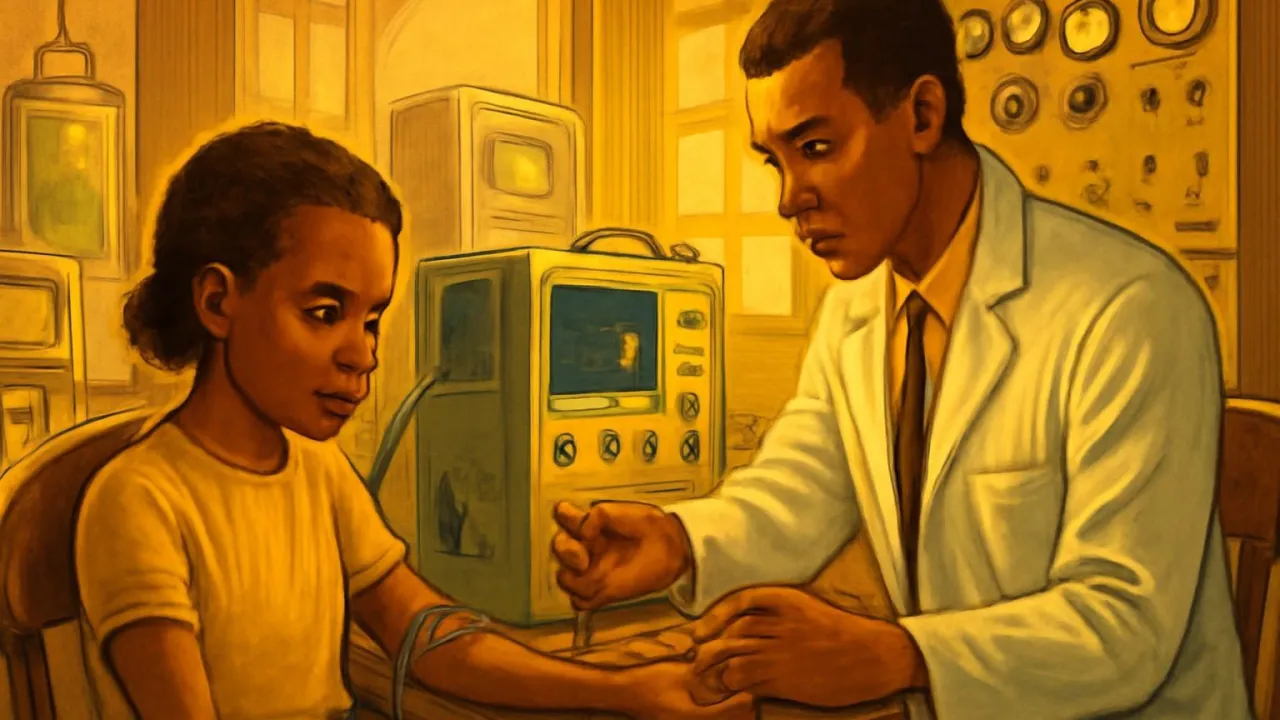
The first person with a pacemaker lived for over 40 years with it!
✨ Word Sparks (Grade 2 Glossary)
Tap 🔊 to hear
electrical
Using tiny bits of energy
pulse
A small beat or zap
steady
Always the same, not stopping
🪝
Have you ever heard a heart beep with help from a tiny machine?
1
A Tiny Helper for Hearts
Some people’s hearts do not beat just right, so doctors use a small tool called a pacemaker. This device is placed under the skin near the heart, and it helps the heart keep a beat. The pacemaker is about the size of a cookie, but it does a very big job.
2
How Pacemakers Work
A pacemaker sends gentle to the heart when it needs help. These signals tell the heart when to beat, so the person can feel healthy and strong. Doctors use special wires to connect the pacemaker to the heart.
3
Changing Lives
With a pacemaker, many people can run, play, and live normal lives again. It is a life-saving invention that helps people around the world every day. This tiny machine is a true hero in hospitals.
Modern pacemakers can sense when you run or sleep and adjust your heartbeat automatically!
✨ Word Sparks (Grade 3 Glossary)
Tap 🔊 to hear
vibration
A tiny shaking movement
prototype
The very first working model
rhythm
A regular, repeating pattern
🪝
What if a gentle electrical signal could keep your heart beating safely every day?
1
The Heart’s Special Rhythm
Your heart is like a drum that keeps a steady , but sometimes it needs help. Some people’s hearts beat too slowly or skip beats, which can make them feel tired or dizzy. Doctors created a special device called a cardiac pacemaker to help. It uses electricity to keep the heart’s rhythm strong and even.
2
How Does a Pacemaker Work?
A pacemaker is a small device placed under the skin near the heart. It has a battery and thin wires called leads that connect to the heart muscle. When the heart’s is off, the pacemaker sends a gentle electrical to start a heartbeat. This keeps the heart beating at a healthy speed.
3
Inventing the Pacemaker
The first wearable pacemaker was invented in Sweden in 1958 by Rune Elmqvist and Åke Senning. They made a that could be placed inside the body, instead of outside. This invention changed the way doctors help people with heart problems.
4
A Life-Saving Invention
Today, millions of people around the world have pacemakers. These devices let people play sports, travel, and live full lives. Pacemakers are tested to last many years and are safe in most daily activities. This tiny invention has saved countless lives.
Some pacemakers can be monitored and adjusted by doctors using wireless technology—no surgery needed!
✨ Word Sparks (Grade 4 Glossary)
Tap 🔊 to hear
impulse
A quick burst of energy
insulated
Covered to keep electricity safe
sensor
A part that detects changes
🪝
Imagine hearing a soft beep inside your chest—could a tiny device really keep your heart in perfect time?
1
Why Hearts Need Help
The human heart depends on electrical signals to keep its steady rhythm, but sometimes these signals become irregular. When this happens, a person’s heart may beat too slowly, too quickly, or skip beats, which can make them feel weak or faint. Doctors use a cardiac pacemaker to restore the correct rhythm by sending carefully timed electrical pulses. These pulses help the heart pump blood efficiently throughout the body.
2
Engineering the Pacemaker
A pacemaker is a small, battery-powered device that doctors implant just under the skin near the chest. Thin wires, called leads, are threaded through veins and attached to the heart muscle. When the pacemaker senses an abnormal rhythm, it sends a gentle electrical to stimulate a heartbeat. Modern pacemakers can even adjust their signals based on the person’s activity, using and advanced programming.
3
History and Invention
The first implantable pacemaker was developed in Sweden in 1958 by engineer Rune Elmqvist and surgeon Åke Senning. Earlier pacemakers were large and had to be plugged into the wall, but this new design was small enough to fit inside the body. The invention revolutionized heart care, giving hope to people with dangerous heart rhythms. Today’s pacemakers are even smaller, safer, and can last up to 10 years or more.
4
Changing Lives Worldwide
Millions of people around the world rely on pacemakers to live active, healthy lives. Pacemakers have made it possible for children and adults with heart rhythm problems to play, work, and travel safely. This invention has inspired new advances in medical technology, including wireless and MRI-safe devices. The cardiac pacemaker remains one of the most important life-saving inventions in modern medicine.
1. How do modern pacemakers adjust to your activity?
2. Why was the 1958 pacemaker special?
🤯 Mind-Blowing Fact • Grade 5
The world’s smallest pacemaker is less than the size of a vitamin pill and can be implanted using a thin catheter!
✨ Word Sparks (Grade 5 Glossary)
Tap 🔊 to hear
arrhythmia
An irregular or unusual heartbeat
depolarization
A change in a cell that starts a beat
catheter
A thin tube for putting things inside the body
🪝
What would happen if your heart’s natural electrical system suddenly failed—could a tiny engineered device take over and keep you alive?
1
The Heart’s Electrical Symphony
Every heartbeat starts with an electrical signal from the sinoatrial node, the heart’s natural pacemaker, but sometimes this system malfunctions due to disease or aging. When this happens, the heart may develop —irregular rhythms that can lead to fatigue, fainting, or even life-threatening complications. Cardiac pacemakers were invented to restore normal rhythm by delivering carefully timed electrical impulses directly to the heart muscle. These impulses ensure that the atria and ventricles contract in the correct sequence, maintaining efficient blood flow throughout the body.
2
Engineering Marvel: How Pacemakers Work
A modern cardiac pacemaker is a sophisticated biomedical device, typically weighing 20–50 grams and measuring about 5 centimeters across. It consists of a pulse generator (battery and circuitry) and one or more insulated leads that are threaded through veins into the heart chambers. The pacemaker constantly monitors the heart’s electrical activity and, when it detects a missed or slow beat, it emits a precisely calibrated electrical pulse (typically 0.5–5 volts) to trigger a contraction. Advanced models include rate-responsive sensors that can adjust pacing based on physical activity, breathing rate, or even body temperature.
3
A Brief History of Innovation
The first fully implantable pacemaker was developed in Sweden in 1958 by engineer Rune Elmqvist and surgeon Åke Senning, marking a breakthrough in biomedical engineering. Earlier external pacemakers were bulky, required wall power, and limited patient mobility, but the new implantable prototype used a mercury-zinc battery and could be placed entirely inside the chest. Over the decades, pacemakers have evolved to use lithium batteries, microprocessors, and MRI-safe materials, dramatically improving safety, longevity, and patient comfort. Today, some pacemakers are even leadless, inserted directly into the heart via a .
4
Global Impact and Modern Advances
More than three million people worldwide currently rely on pacemakers, with over 600,000 new devices implanted each year. Pacemakers have saved countless lives and allowed people with severe to live active, independent lives. The technology has inspired innovations such as defibrillators, biventricular pacemakers for heart failure, and remote monitoring systems. As biomedical engineering advances, future pacemakers may use energy harvesting, wireless charging, and artificial intelligence to further personalize heart care.
5
The Science Behind the Spark
Pacemakers work by exploiting the heart’s natural excitability—the ability of cardiac muscle to respond to electrical stimulation. The device’s electrical pulse creates a rapid in the heart cell membrane, initiating a contraction just as the natural sinoatrial node would. Engineers must carefully balance the pulse’s voltage and duration to avoid tissue damage while ensuring reliable pacing. The invention of the cardiac pacemaker stands as a testament to the power of science, engineering, and compassion to transform lives.