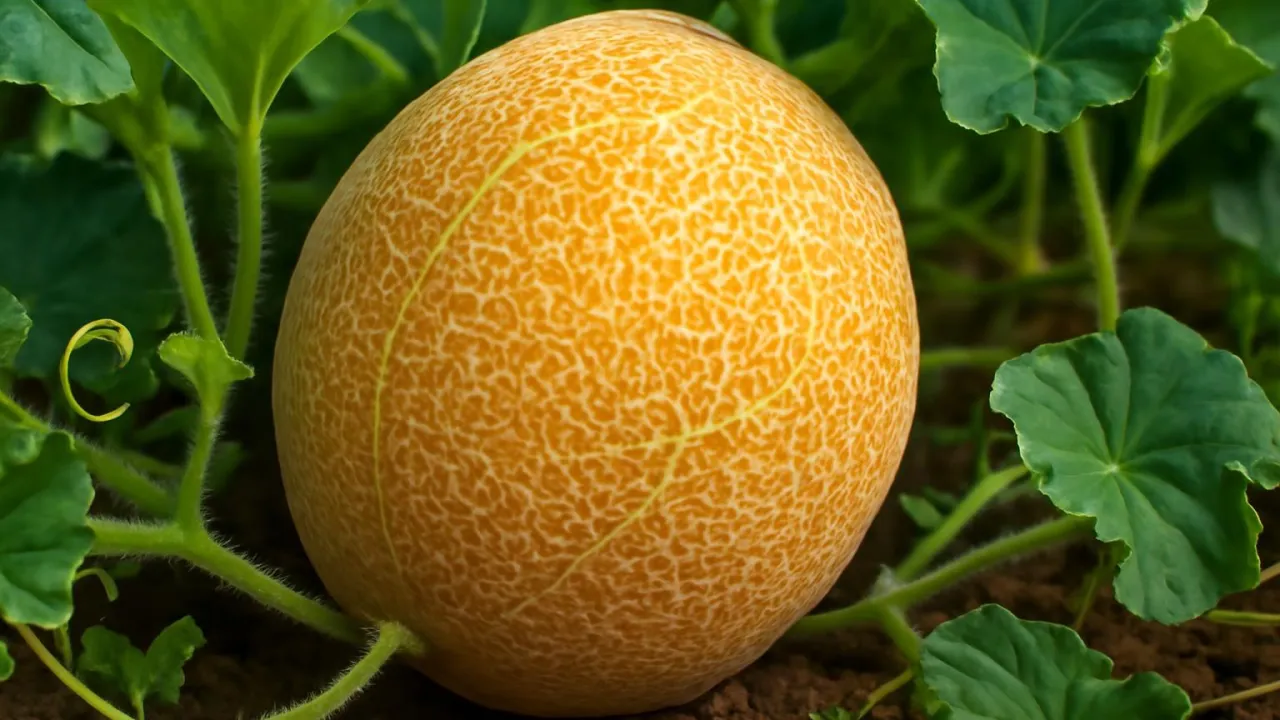
Cantaloupes have a rough skin that protects their juicy, sweet orange inside!
✨ Word Sparks (Grade 2 Glossary)
Tap 🔊 to hear
netted
Covered with a pattern that looks like a net
vine
A plant that grows long and low on the ground
juicy
Full of tasty liquid inside
🪝
Have you ever tasted a cantaloupe’s juicy orange inside?
1
Rough Skin and Color
Cantaloupes have rough, skin that is light tan in color. Their skin protects the soft fruit inside. The fruit is round and about the size of a small melon.
2
Where They Grow
They grow on long green that spread across warm soil. Cantaloupes need full sun and plenty of water to grow well. They are often grown in gardens and farms.
3
Sweet and Juicy Inside
Inside, cantaloupes have bright orange flesh that is very sweet and . Many animals, including birds and insects, enjoy eating the fruit. People like to eat cantaloupe fresh or in fruit salads.
1. What helps protect the cantaloupe’s soft inside?
2. What do cantaloupes need to grow well?
🤯 Mind-Blowing Fact • Grade 3
Cantaloupe’s netted skin acts like camouflage to protect it from hungry animals!
✨ Word Sparks (Grade 3 Glossary)
Tap 🔊 to hear
camouflage
Colors or patterns that help hide from others
pollination
When insects help flowers make fruit
nutrients
Food and vitamins plants and animals need
🪝
Did you know cantaloupes use their rough skin to hide from predators?
1
Cantaloupe’s Rough Skin
The cantaloupe’s netted skin helps it among dry soil and plants. This rough texture protects the fruit from pests and damage. The skin’s pattern is an adaptation to its environment. It helps the melon survive until ripe.
2
Growing on Vines
Cantaloupes grow on long vines that spread across the ground. These vines collect and water from the soil. The fruit grows heavy and round at the vine’s end. The plant’s leaves provide shade to protect the fruit from sun damage.
3
Sweet Orange Flesh
Inside the cantaloupe is juicy orange flesh that attracts animals for seed dispersal. This sweet flesh contains that help animals stay healthy. by insects helps the plant produce fruit. The seeds inside the fruit help new plants grow.
4
Life Cycle and Survival
Cantaloupes start as flowers that bloom in warm weather. After , the fruit begins to grow and ripen. The plant adapts to hot climates by needing lots of water. This helps the cantaloupe survive in dry, sunny places.
1. How does the cantaloupe’s skin help it survive?
2. What helps cantaloupes make fruit?
🤯 Mind-Blowing Fact • Grade 4
Cantaloupes help spread seeds by feeding animals that carry them far away!
✨ Word Sparks (Grade 4 Glossary)
Tap 🔊 to hear
ecosystem
A place where plants and animals live together
predator
An animal that hunts other animals for food
cultivate
To grow plants for food or use
🪝
How does the cantaloupe’s rough skin help it in its ecosystem?
1
Skin Protects and Camouflages
The cantaloupe’s rough, netted skin protects it from and damage by blending into dry soil. This camouflage reduces the chance of being eaten early. The skin’s texture also guards against insects that might harm the fruit. Because of this, the fruit can ripen safely and fully develop its sweet flavor.
2
Role in Food Webs
Cantaloupes provide food for many animals like birds, insects, and mammals in their habitats. Animals eat the sweet flesh and help spread seeds, aiding plant reproduction. Humans also cantaloupes for food and economic benefit. This makes cantaloupe an important part of agricultural .
3
Growing Needs and Effects
Cantaloupe plants require warm climates with full sun and regular watering to thrive. If water is scarce, the plant’s growth slows and fruit quality decreases. Farmers must manage water carefully to produce healthy crops. This shows how environmental factors directly affect cantaloupe production.
4
Geographic Distribution
Originally from Africa and Southwest Asia, cantaloupes are now grown worldwide in warm regions. They thrive in sandy, well-drained soils and temperate climates. Their spread is aided by human cultivation and seed trade. This wide distribution shows their adaptability to various environments.
1. Why does the cantaloupe’s skin help it survive?
2. How do animals help cantaloupes in nature?
🤯 Mind-Blowing Fact • Grade 5
Cantaloupe’s carotenoid-rich orange flesh supports animal health and human nutrition worldwide!
✨ Word Sparks (Grade 5 Glossary)
Tap 🔊 to hear
carotenoids
Natural pigments that help plants and animals stay healthy
taxonomy
How scientists group and name living things
genetic diversity
Different genes in plants that help them survive
🪝
What makes cantaloupe a fascinating fruit in biology and agriculture?
1
Scientific Classification and Origin
Cantaloupe, scientifically known as Cucumis melo var. cantalupensis, belongs to the Cucurbitaceae family. It originated in Africa and Southwest Asia before spreading worldwide through cultivation. This species is a variety of muskmelon with distinct netted rind and sweet flesh. Its helps scientists understand its relation to other melons and gourds.
2
Physiological Adaptations
The cantaloupe’s netted rind provides mechanical protection and reduces water loss in hot environments. Its orange flesh contains , which are antioxidants important for animal nutrition. The plant’s extensive vine system efficiently absorbs nutrients and water from soil. These adaptations enable cantaloupes to thrive in warm, arid climates.
3
Conservation and Agricultural History
Cantaloupe cultivation dates back thousands of years and has been important for human diets globally. Modern farming techniques have improved yield and disease resistance. However, water scarcity and climate change pose challenges to sustainable production. Conservation efforts focus on preserving and adapting cultivation practices.
4
Quantitative Comparisons
A typical cantaloupe weighs between 3 to 5 pounds (1.4 to 2.3 kilograms) and measures 6 to 12 inches (15 to 30 centimeters) in diameter. It requires about 70 to 90 days from planting to harvest under ideal conditions. The fruit’s sugar content can reach up to 14 percent, contributing to its sweet flavor. These measurements help farmers optimize growth and harvest timing.
5
Ecological and Economic Importance
Cantaloupes play a vital role in ecosystems by providing food for wildlife and humans alike. They contribute to agricultural economies worldwide through fresh markets and processing industries. Understanding their biology aids in improving crop resilience and sustainability. This knowledge supports both ecological balance and food security.