Canal Lock System
How Water Lifts Boats Up and Down
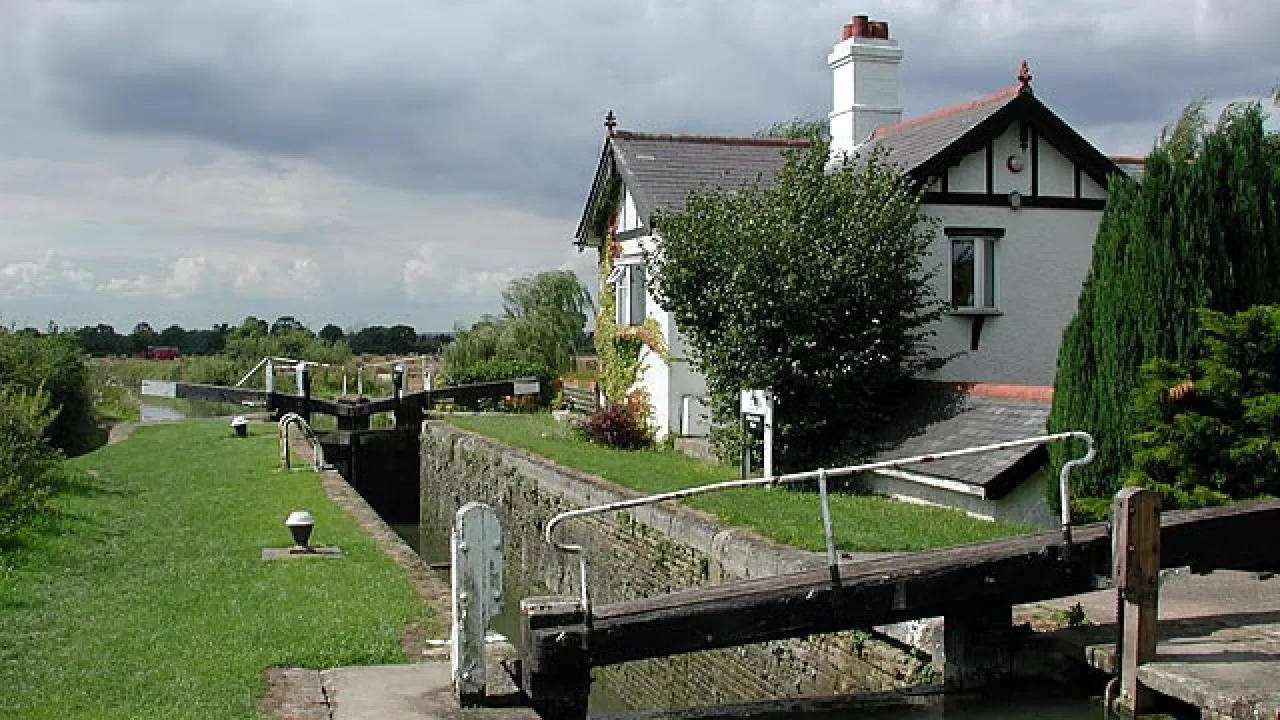
Some canal locks can lift boats as high as a house!
What if a boat could climb a hill?
1 Boats Go Up and Down
Splash! Water fills a big box. The boat floats up high. The boat goes over the hill.
2 Big Doors Hold Water
Tall doors open and shut tight. The water stays in the box. The boat waits for the door.
3 A Special Water Elevator
The works like a lift. It helps boats move up. It helps boats move down.
1. What does the canal lock help boats do?
2. What holds the water in the lock?
The Panama Canal has over 12 giant locks for ships!
Have you heard boats splashing up a water hill?
1 A Water Staircase for Boats
Canal locks are like water stairs for boats. They help boats move up or down hills. The lock fills with water to lift the boat. It empties to lower the boat gently.
2 How the Lock Works
Gates at each end open and close tight. Water flows in or out through special . The boat waits while the water level changes. Then the gate opens and the boat sails away.
3 Traveling Far with Locks
Locks let boats cross long canals and rivers. People can travel to new cities and towns. Locks make moving heavy things much easier. They help connect places all over the world.
1. What do canal locks help boats do?
2. What opens to let the boat out?
The biggest canal locks today can lift ships over 25 meters high!
Can you imagine a boat rising higher than the river?
1 Solving the River Climbing Puzzle
Long ago, people wondered how boats could travel over hills. Engineers created canal locks to solve this puzzle. A lock is a chamber with gates at both ends. It lets boats move up or down by changing the water level.
2 Inside the Lock: Water and Gates
When a boat enters, the lower gate closes tightly behind it. Water flows in through valves, making the water rise and lifting the boat. If the boat needs to go down, water is drained out, and the boat gently lowers. The process uses the principle of water and .
3 A World of Connected Waterways
Canal locks connect rivers, lakes, and cities across the world. The famous Panama Canal uses huge locks to lift ships between oceans. Locks make it possible to transport goods and people where natural rivers cannot go.
4 Words from the Waterways
Engineers call the lock a invention because it uses water power. The gates must be strong to hold back the water pressure. Each lock is carefully measured so boats fit inside safely. The invention of canal locks changed how people traveled and traded goods.
1. What happens when water enters the lock chamber?
2. Why are canal locks important for travel?
The largest lock in the world, in Belgium, can lift ships as tall as a 10-story building!
What if a ship could ride an invisible water elevator up a mountain?
1 The Ancient Innovation of Canal Locks
Centuries ago, engineers faced the challenge of moving boats over hills and uneven land. In 10th-century China, Qiao Weiyue designed the first true canal lock, revolutionizing water travel. A lock is a watertight chamber with massive gates at both ends, allowing boats to rise or fall with the water level. This breakthrough allowed boats to travel farther than ever before, connecting distant cities.
2 Hydraulic Mechanics: How Locks Lift and Lower
The lock system works by controlling water flow with precision valves and sturdy gates. When a boat enters, the lower gate closes, and water is either added or drained to change the water level. This process uses and the principle of , which makes objects float when water supports their weight. The lock chamber must be engineered to withstand enormous water pressure and keep boats stable.
3 Global Impact: Linking Continents and Trade
Canal locks have connected rivers, lakes, and even oceans, transforming global trade and travel. The Panama Canal, with its massive locks, lets ships cross between the Atlantic and Pacific Oceans, saving weeks of travel time. Locks have enabled the movement of goods, people, and cultures, helping cities and countries grow closer together. Today, locks are found on famous waterways like the Erie Canal and the Suez Canal.
4 Engineering Vocabulary: From Prototype to Powerhouse
Designing a lock requires understanding terms like , which means the first working model. Engineers must calculate water displacement and test how gates handle water pressure. The acoustic sound of rushing water and clanking gates signals the lock in action. Each lock is a marvel of civil engineering, blending ancient ideas with modern technology.
1. Why must lock gates be very strong?
2. What engineering principle helps boats float in a lock?
The Kieldrecht Lock in Belgium is so large that it can hold more water than 20 Olympic swimming pools at once!
Can you picture a ship rising silently, as if on a magic water elevator, to cross a mountain ridge?
1 From Ancient Canals to Modern Marvels
Long before highways and airplanes, engineers in ancient China faced the extraordinary challenge of moving boats over changing landscapes. In 984 CE, Qiao Weiyue invented the first pound lockâa chamber with gates at both endsâushering in a revolution for inland water transport. This innovation allowed canal boats to traverse steep terrain, connecting distant cities and boosting trade across entire regions. Today, canal lock systems remain essential to global commerce, linking rivers, lakes, and even oceans.
2 Engineering the Water Elevator: Physics in Action
A canal lock operates by harnessing principles, including water displacement, hydraulic pressure, and buoyancy. When a vessel enters the lock chamber, the lower gate is sealed, and water is either pumped in or drained out through carefully engineered valves. This change in water level lifts or lowers the boat, using the force of gravity and the upward push of buoyancy. The lockâs gates and chamber walls must withstand pressures exceeding 100,000 kilograms per square meter in large systems, demanding precise calculations and robust materials.
3 Quantitative Specs: Giant Locks Around the World
Modern canal locks can be truly massive. For example, the locks of the Panama Canal are 33.5 meters wide, 305 meters long, and can lift ships 26 meters in three stages. The world's largest lock, the Kieldrecht Lock in Belgium, measures 500 meters long and 68 meters wide, accommodating ships up to 366 meters in length. These engineering feats enable the passage of supertankers and cargo ships that carry thousands of containers, transforming global trade routes.
4 Evolution and Impact: Changing How the World Connects
The invention of the canal lock system dramatically expanded the reach of river and canal navigation. Before locks, boats could only travel where water was naturally level, limiting trade and movement. With locks, engineers could design canals that crossed hills, valleys, and even mountain ranges. This breakthrough led to the construction of famous waterways like the Erie Canal, the Suez Canal, and the Panama Canal, each reshaping economies and cultures by making distant places accessible.
5 From Prototype to Powerhouse: The Science Behind the Scenes
Designing a canal lock involves creating detailed prototypes to test water flow, gate strength, and vessel stability. Engineers must account for acoustic , water turbulence, and the effects of on concrete and steel. Modern locks use sensors, electric motors, and computer controls to operate gates and valves with precision. The canal lock system stands as a testament to human ingenuity, blending ancient wisdom with cutting-edge technology to move the worldâs ships safely and efficiently.
1. What physical principle allows a boat to rise when water fills the lock chamber?
2. Why do engineers build prototypes before constructing a full canal lock?